
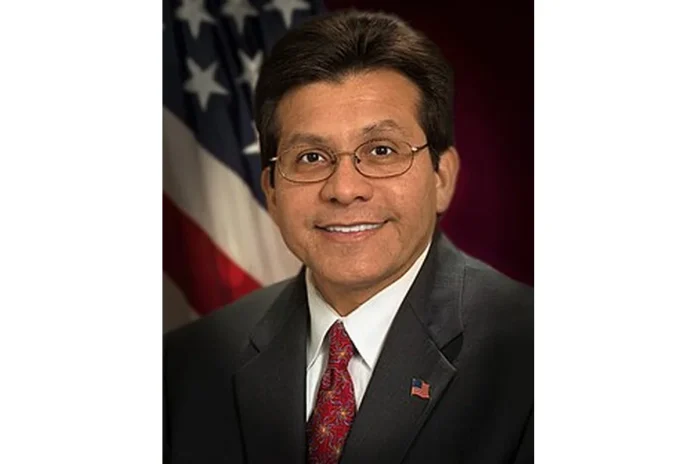
Alberto Gonzales Bio
Alberto Reynaldo Gonzales, born on 4 August 1955 in San Antonio, Texas, is an American lawyer, judge, and academic who served as the 80th United States Attorney General from 2005 to 2007. A longtime ally of George W. Bush, Gonzales previously served as White House Counsel, Secretary of State of Texas, and as a justice on the Texas Supreme Court. His tenure as attorney general was marked by controversy over warrantless domestic surveillance, legal opinions authorizing enhanced interrogation techniques, and the dismissal of several United States Attorneys.
After leaving government in 2007, Gonzales practiced mediation and consulting, taught at Texas Tech University, and later became dean of Belmont University College of Law in Nashville, Tennessee, where he teaches national security law.
Early Life and Background
Alberto Reynaldo Gonzales was born in San Antonio, Texas, and raised in Humble, Texas, a small town outside of Houston. Of Mexican descent, he was the second of eight children born to Maria (Rodriguez) Gonzales and Pablo M. Gonzales. His father, who died in 1982, was a migrant worker and later a construction worker with a second-grade education, while his mother worked at home raising the children and had a sixth-grade education. Gonzales and his family of ten lived in a small two-bedroom home built by his father and uncles, without a telephone or hot running water.
An honors student at MacArthur High School in unincorporated Harris County, Gonzales enlisted in the United States Air Force in 1973 for a four-year term. He served one year at a remote radar site at Fort Yukon, Alaska, before being released to attend the Air Force Academy Preparatory School and receiving an appointment to the United States Air Force Academy. Prior to beginning his third year, he left the academy and transferred to Rice University in Houston, where he was a resident of Lovett College and was selected as the Charles Parkhill Scholar of Political Science.
Gonzales earned a Bachelor of Arts degree with honors in political science from Rice University in 1979. He then went on to earn a Juris Doctor degree from Harvard Law School in 1982.
Path to US Politics
After law school, Gonzales joined the Houston law firm Vinson and Elkins in 1982, where he worked in private practice for twelve years and became a partner, one of the first Hispanic partners in the firm’s history. During this period he primarily represented corporate clients and also provided pro bono legal services to community organizations, including the Host Committee for the 1992 Republican National Convention in Houston.
In 1994, Gonzales was named general counsel to then-Governor George W. Bush of Texas, beginning a working relationship that would shape his subsequent career. He rose to become Secretary of State of Texas in 1997 and was named to the Texas Supreme Court in 1999, both appointments made by Governor Bush. He won his Republican primary election bid in 2000 and was elected to a full six-year term on the Texas Supreme Court in the November 2000 general election.
Alberto Gonzales Career
Early Career (1982-2001)
Gonzales began his legal career at Vinson and Elkins in Houston in 1982, working his way up to partner over twelve years in private practice. He served on the board of directors of the State Bar of Texas from 1991 to 1994 and as a board trustee of the Texas Bar Foundation from 1996 to 1999, building a strong reputation in the Texas legal community. In 1999, he was named Latino Lawyer of the Year by the Hispanic National Bar Association.
His transition into government began in 1994 when he became general counsel to Governor George W. Bush. As the Governor’s counsel, Gonzales advised Bush on clemency requests and helped manage high-profile legal matters. In 1997, he was elevated to Secretary of State of Texas, and in 1999, Governor Bush appointed him to the Texas Supreme Court.
White House Counsel Era (2001-2005)
Gonzales left the Texas Supreme Court to serve as White House Counsel to President George W. Bush beginning in 2001, becoming the first Hispanic American to hold that office. In this role, he approved the legal framework for the administration’s anti-terrorism efforts in the wake of the September 11, 2001 attacks, including the drafting of Executive Order 13233, which placed restrictions on the Freedom of Information Act and limited access to presidential records.
He also authored a January 2002 memo exploring whether the Geneva Convention applied to Al-Qaeda and Taliban fighters, and he oversaw the Office of Legal Counsel at the time the controversial August 2002 Bybee memo was issued, providing the legal framework for so-called enhanced interrogation techniques. As White House Counsel, Gonzales fought to keep Vice President Dick Cheney’s Energy Task Force documents shielded from congressional review, a position ultimately upheld by the courts.
Attorney General Era (2005-2007)
On November 10, 2004, President George W. Bush announced his intention to nominate Gonzales to replace Attorney General John Ashcroft for his second term. Gonzales was regarded by some as a moderate compared to Ashcroft, though he had publicly opposed racial quotas. His nomination was confirmed by the United States Senate on February 3, 2005, by a vote of 60-36, largely along party lines, and he was sworn in the same day.
As the 80th United States Attorney General, Gonzales became the highest-ranking Hispanic American in the executive branch of the United States government. His tenure was marked by sustained controversy, including questions about warrantless surveillance of U.S. citizens, the legal authorization of enhanced interrogation techniques, and the dismissal of several United States Attorneys who had refused White House directives.
Resignation and Scrutiny (2007)
Calls for Gonzales’s resignation intensified from members of both parties following his April 19, 2007 congressional testimony. On May 24, 2007, Democratic Senators Charles Schumer, Dianne Feinstein, and Sheldon Whitehouse proposed a no-confidence resolution in the Senate Judiciary Committee, and Representative Adam Schiff introduced a similar measure in the House. A June 11, 2007 Senate cloture vote to end debate on the resolution failed, 53 to 38.
On August 26, 2007, Gonzales submitted his resignation as attorney general, effective September 17, 2007, stating that it was in the best interests of the department. President Bush praised his service, while critics attributed the resignation to the excessive politicization of the office. Following his departure, congressional and Justice Department inquiries led Gonzales to hire criminal defense counsel, though the Inspector General ultimately found no criminal wrongdoing or perjury.
Post-Government Career (2008-Present)
After leaving the Justice Department, Gonzales began a mediation and consulting practice in Austin, Texas. In 2009, the Texas Tech University System hired him as a diversity recruiter, and he taught a political science special topics course at Texas Tech, though more than 40 professors signed a petition opposing the hiring. In October 2011, Belmont University College of Law announced that Gonzales would fill the Doyle Rogers Distinguished Chair of Law.
He later joined the Nashville law firm of Waller Lansden Dortch & Davis, LLP as Of Counsel. As of 2024, Gonzales is the dean of Belmont University College of Law in Nashville, Tennessee, where he teaches National Security Law. On September 12, 2024, he endorsed Kamala Harris for president, calling Donald Trump perhaps the most serious threat to the rule of law in a generation.
Notable Events and Milestones
One of the most defining events of Gonzales’s career was the signing of Executive Order 13233 in 2001, which restricted access to presidential records and was later revoked by President Barack Obama in 2009. As attorney general, he led the Justice Department’s defense of the 2003 Partial-Birth Abortion Act before the United States Supreme Court, a case that bears his name, Gonzales v. Carhart, in which the Court ruled in favor of the government on April 18, 2007.
Alberto Gonzales Career Wins
Throughout his legal and political career, Alberto Gonzales earned a series of prestigious awards and recognitions, beginning with his 1999 selection as Latino Lawyer of the Year by the Hispanic National Bar Association. These honors reflected his rise from humble origins in Texas to the highest ranks of the United States government.
Professional Honors Highlights
In 2005, Gonzales was named Hispanic American of the Year by Hispanic magazine and was inducted into the Class of 2005 in the American Academy of Achievement. He was also recognized as one of the 25 Most Influential Hispanics in America by Time magazine that year. In 2006, he received the Distinguished Leadership Award from Leadership Houston.
On May 20, 2006, Houston Mayor Bill White proclaimed Alberto R. Gonzales Day in Houston in recognition of his contributions. In 2007, as he left government service, Gonzales received the Director’s Award from the Central Intelligence Agency and the Office of the Secretary of Defense Medal for Exceptional Public Service.
Academic and Civic Awards
Academic institutions also recognized Gonzales’s achievements, awarding him an Honorary Doctor of Laws in 2002 from The Catholic University of America, an Honorary Degree in Arts and Letters in 2003 from Miami-Dade Community College, an Honorary Degree of Doctor of Laws in 2005 from the University of the District of Columbia, an Honorary Associate of Arts in 2005 from the Houston Community College System, and an Honorary Alumnus Award in 2007 from Southern Methodist University.
Alberto Gonzales Family
Family Background and Heritage
Alberto Reynaldo Gonzales was born into a large Catholic family of Mexican descent, the second of eight children of Maria (Rodriguez) Gonzales and Pablo M. Gonzales. His parents had limited formal education, with his father completing only the second grade and his mother the sixth grade. The family lived in modest conditions in a small two-bedroom home built by his father and uncles, with no telephone and no hot running water.
According to Gonzales, he is unaware whether immigration documentation exists for three of his grandparents who were born in Mexico and may have entered and resided in the United States illegally. As the son of former migrant workers, his rise to become United States Attorney General was widely viewed by supporters as an example of the American dream.
Personal Life
Gonzales has been married twice. He and his first wife, Diane Clemens, divorced in 1985. He and his second wife, Rebecca Turner Gonzales, have three sons together. In 2008, Gonzales was featured in the Academy Award-winning documentary Taxi to the Dark Side, and a biography of his controversial public life titled The President’s Counselor: The Rise to Power of Alberto Gonzales was written by presidential biographer Bill Minutaglio in 2006.