
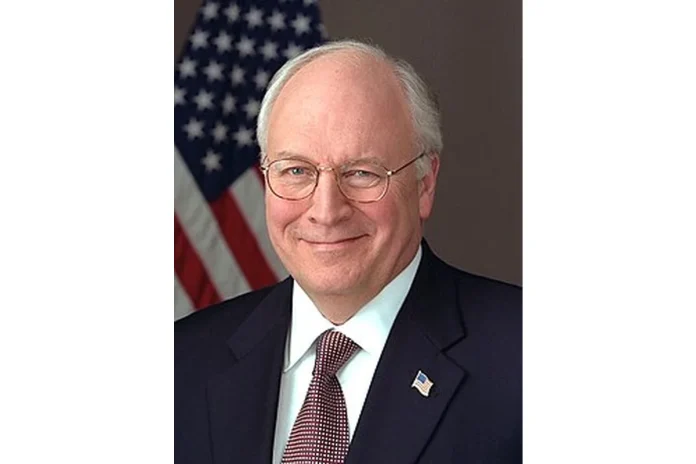
Dick Cheney Bio
Richard Bruce Cheney (January 30, 1941 – November 3, 2025) was an American politician and businessman who served as the 46th vice president of the United States from 2001 to 2009 under President George W. Bush. A member of the Republican Party, he is widely regarded as the most powerful vice president in United States history. Before reaching the vice presidency, Cheney held several senior government posts, including White House chief of staff, U.S. representative for Wyoming, and the 17th United States Secretary of Defense. He was considered by many to be a central architect of the Iraq War and remained an influential voice on national security and foreign policy for decades.
Early Life and Background
Richard Bruce Cheney was born on January 30, 1941, in Lincoln, Nebraska, to Richard Herbert Cheney, a soil conservation agent for the U.S. Department of Agriculture, and Marjorie Lorraine Dickey Cheney, a softball star in the 1930s. He was one of three children and grew up in a family of predominantly English descent, with Welsh, Irish, and French Huguenot roots. As a child, he attended Calvert Elementary School before his family relocated to Casper, Wyoming, where he would later attend Natrona County High School.
After high school, Cheney briefly attended Yale University but left before graduating. He later studied at Casper College and then transferred to the University of Wyoming, where he earned both a Bachelor of Arts and a Master of Arts in political science while working as a lineman. He subsequently started doctoral studies in political science at the University of Wisconsin–Madison but left the program to accept a congressional fellowship in Washington, D.C., in 1968.
During his college years, Cheney was twice convicted of driving while intoxicated, in 1962 and 1963. He later said those arrests forced him to reconsider his direction in life. In 1964, he married Lynne Vincent, his high-school sweetheart. When the Vietnam War draft took effect, Cheney applied for and received five draft deferments, which became a subject of public discussion when he was nominated as Secretary of Defense in 1989.
Path to US Politics
Cheney’s political career began in 1969 as an intern for Congressman William A. Steiger during the Nixon administration. He then joined the staff of Donald Rumsfeld, who was then Director of the Office of Economic Opportunity, beginning a working relationship that would shape his career for decades. Over the next several years, he held a series of increasingly senior staff positions in Washington, including White House Staff Assistant, Assistant Director of the Cost of Living Council, and Deputy Assistant to the President.
He rose to national prominence in 1975 when he was appointed White House Chief of Staff under President Gerald Ford, serving until 1977. In 1978, he was elected to the U.S. House of Representatives to represent Wyoming’s at-large congressional district. He was reelected five times, eventually serving as Chairman of the House Republican Conference and then House Minority Whip before leaving Congress in 1989 to become Secretary of Defense.
Dick Cheney Career
Early Career (1969–1989)
During his early years in Washington, Cheney built a reputation as a steady and effective staff operator in the Nixon and Ford administrations. As Deputy Assistant to President Ford, he was entrusted with managing sensitive issues, including discussions about how to respond to reports on the classified Operation Ivy Bells submarine surveillance program.
His election to the House in 1978 marked his transition from presidential aide to elected official. Over the next decade, he rose through the Republican leadership ranks, becoming Chairman of the Republican Policy Committee in 1981, Chairman of the House Republican Conference in 1987, and finally House Minority Whip in 1989. He also served as the Ranking Member of the Select Committee that investigated the Iran-Contra Affair.
House Republican Leadership and Defense Post (1989–1993)
In March 1989, President George H. W. Bush nominated Cheney to serve as the 17th United States Secretary of Defense following the Senate’s rejection of John Tower. Confirmed and serving for most of the Bush administration, Cheney oversaw a significant downsizing of the post-Cold War military and managed the Department of Defense’s transition into a new era.
As Secretary, he directed major military operations, including Operation Just Cause in Panama in 1989 and Operation Desert Storm in 1991. He worked to cut the defense budget, cancel or scale back several large weapons programs, and reduce total military strength by about 19 percent. He also unveiled a long-term Pentagon plan designed to maintain U.S. military dominance in the post-Cold War world.
Halliburton and Private Sector (1995–2000)
Out of government during the Clinton years, Cheney served as chairman of the board and chief executive officer of Halliburton, the Fortune 500 energy services company, from October 1995 to July 2000. He resigned as CEO on the same day he was announced as George W. Bush’s running mate in the 2000 presidential election. He received a substantial severance package reported at roughly $33.7 million, and his net worth was later estimated in the tens of millions, largely derived from his Halliburton compensation.
Vice Presidency and Bush Administration (2001–2009)
Cheney served two terms as Vice President under George W. Bush, winning election in 2000 against Al Gore and Joe Lieberman, and again in 2004 against John Kerry and John Edwards. He was reelected with Bush in 2004. Often operating out of public view, Cheney became one of the most influential vice presidents in American history, deeply involved in shaping the administration’s response to the September 11, 2001 attacks and the broader Global War on Terrorism.
He was a leading proponent of the decision to invade Iraq in 2003, publicly alleging that the Saddam Hussein regime possessed weapons of mass destruction and had an operational relationship with al-Qaeda, claims that were never substantiated. Cheney also supported NSA warrantless surveillance and the use of enhanced interrogation techniques, drawing sustained criticism. On June 29, 2002, he briefly served as acting president under the 25th Amendment while President Bush underwent a colonoscopy.
Notable Events and Milestones
Cheney’s tenure included several defining moments, including his central role in the post-9/11 response, his stewardship of the Iraq War, and a 2006 hunting accident in which he accidentally shot Harry Whittington, which hurt his public approval. He ended his vice presidency as a deeply unpopular figure, with a final approval rating near 13 percent, though his rating had peaked at 68 percent shortly after September 11, 2001.
Dick Cheney Career Highlights
Government and Political Achievements
Over the course of his career, Cheney held five major government positions: White House Chief of Staff, U.S. Representative, House Minority Whip, Secretary of Defense, and Vice President. He was elected to the House six times, served as Secretary of Defense for most of the George H. W. Bush administration, and was elected twice as Vice President on the Republican ticket.
Other Achievements and Awards
Cheney received the Presidential Medal of Freedom and the John Heinz Award for Greatest Public Service by an Elected or Appointed Official, both in 1991. He was also awarded an honorary Doctorate of Public Service from Brigham Young University in 2007. In 2011, he published his memoir, In My Time: A Personal and Political Memoir, written with his daughter Liz Cheney.
Dick Cheney Family
Family Background and Personal Life
Cheney married Lynne Vincent in 1964. Lynne Cheney later served as chair of the National Endowment for the Humanities from 1986 to 1996 and became a senior fellow at the American Enterprise Institute. The couple had two daughters, Elizabeth, known as Liz, and Mary, as well as seven grandchildren. Liz Cheney served as a U.S. Representative for Wyoming, while Mary Cheney worked in the private sector and on political campaigns. Cheney’s brother, Bob, was a civil servant at the Bureau of Land Management. Cheney was a member of the United Methodist Church and was the first Methodist vice president to serve under a Methodist president.
Personal Life and Health
Cheney had a long history of cardiovascular disease, suffering his first of five heart attacks in 1978 at age 37. He underwent multiple cardiac procedures over the following decades, including coronary artery bypass surgery in 1988 and a heart transplant in 2012. He smoked for many years before his heart problems began. In later years, Cheney publicly supported same-sex marriage, putting him at odds with much of his party, and endorsed Democratic nominee Kamala Harris in the 2024 presidential election. He died at his home in McLean, Virginia, on November 3, 2025, at the age of 84, from complications related to pneumonia and vascular disease.