
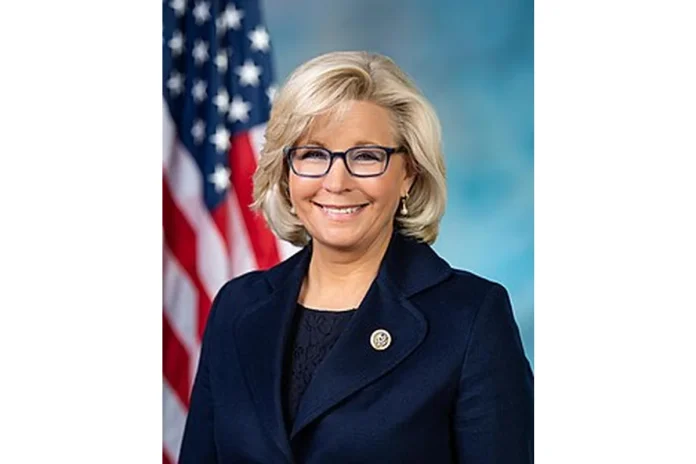
Liz Cheney Bio
Elizabeth Lynne Cheney (born July 28, 1966) is an American attorney, academic, and former politician. A member of the Republican Party, she served as the United States Representative for Wyoming’s at-large congressional district from 2017 to 2023 and as chair of the House Republican Conference from 2019 to 2021. Cheney is widely recognized for her vocal opposition to Donald Trump, especially after the January 6, 2021, attack on the United States Capitol, where she served as vice chair of the House Select Committee investigating the attack. She is the elder daughter of former Vice President Dick Cheney and former Second Lady Lynne Cheney.
After losing her 2022 primary reelection bid, Cheney joined the University of Virginia Center for Politics as a professor of practice. Over the course of her career, she has been honored with several prestigious recognitions, including the Profile in Courage Award, the Presidential Citizens Medal, and a nomination for the Nobel Peace Prize.
Early Life and Background
Elizabeth Lynne Cheney was born on July 28, 1966, in Madison, Wisconsin, where her parents were both studying at the University of Wisconsin-Madison. She is the elder of two daughters of Dick Cheney and Lynne Cheney, who later became the Vice President and Second Lady of the United States. Her younger sister, Mary Cheney, was also born in Madison. The family divided its time between Casper, Wyoming, and Washington, D.C., throughout the 1970s and 1980s, following her father’s election to Congress.
Cheney graduated from McLean High School in suburban Washington, D.C., in 1984, where she was a cheerleader. She went on to earn a Bachelor of Arts in political science from Colorado College in 1988, writing a senior thesis titled “The Evolution of Presidential War Powers.” In 1996, she received her Juris Doctor from the University of Chicago Law School, where she also took courses in Middle Eastern history at the Oriental Institute.
Path to US Politics
Before attending law school, Cheney worked for the United States State Department and the United States Agency for International Development between 1989 and 1993. After graduation, she practiced law at the firm of White & Case and served as an international law attorney and consultant at the International Finance Corporation, a member of the World Bank Group. She also held roles as special assistant to the deputy secretary of state for assistance to the former Soviet Union and a USAID officer in U.S. embassies in Budapest and Warsaw.
During the George W. Bush administration, Cheney held several positions at the State Department, including Deputy Assistant Secretary of State for Near Eastern Affairs. She promoted regime change in Iran while chairing the Iran Syria Policy and Operations Group with Elliott Abrams. In 2009, she co-founded Keep America Safe, a nonprofit organization focused on national security issues. These experiences established her as a leading neoconservative voice within the Republican Party and set the stage for her later congressional career.
Liz Cheney Career
Early Career (2013-2016)
On July 16, 2013, Cheney launched a campaign for the United States Senate in Wyoming, challenging incumbent Republican Senator Mike Enzi. Her campaign was marked by public discussions of her foreign policy positions and a well-publicized disagreement with her sister Mary over same-sex marriage. Facing challenges in connecting with Wyoming voters and Enzi’s strong popularity, Cheney withdrew from the race on January 6, 2014, citing family health issues.
After Wyoming Congresswoman Cynthia Lummis announced her retirement in the fall of 2015, Cheney launched a campaign for the House seat on February 1, 2016. She was widely regarded as the front-runner and won a crowded Republican primary with 38 percent of the vote before going on to win the general election. In November 2016, she was elected to the House of Representatives, holding the same seat her father had represented from 1979 to 1989.
House Republican Leadership (2017-2021)
Cheney was sworn into office on January 3, 2017. An analysis by FiveThirtyEight found that she supported President Donald Trump’s position in approximately 92.9 percent of House votes during her early tenure. On November 14, 2018, the Republican membership elected her chair of the House Republican Conference for the 116th Congress, making her the third-ranking Republican in the chamber behind Minority Leader Kevin McCarthy and Minority Whip Steve Scalise.
She was reelected to the House in 2018 with 127,951 votes, winning 21 of 23 counties. In 2020, she won the Republican primary with 73 percent of the vote and the general election with 69 percent. Throughout this period, Cheney maintained a strongly conservative voting record on issues including abortion, defense, and foreign policy, while becoming known for her hawkish positions on national security.
Post-Leadership Era (2021-2023)
Following the January 6, 2021, attack on the Capitol, Cheney broke ranks with most of her party by voting to impeach Trump for his role in inciting the violence. Her criticism of Trump and her impeachment vote drew significant backlash from within the Republican Party. On February 3, 2021, she survived a closed-door, secret-ballot vote to remove her from House leadership by a 145-61 margin. However, on May 12, 2021, she was formally removed by voice vote at a House Republican Conference meeting and replaced by Elise Stefanik.
In July 2021, Speaker Nancy Pelosi appointed Cheney to the House Select Committee on the January 6 Attack, and two months later she was named vice chair of the committee. In November 2021, the Wyoming Republican Party revoked her membership, and in February 2022 she was censured by the Republican National Committee. On August 16, 2022, she lost the Republican primary to Trump-endorsed candidate Harriet Hageman, receiving just 28.9 percent of the vote in what was the second-worst margin of defeat for a House incumbent in 60 years.
Post-Congressional Career (2023-Present)
After leaving Congress in January 2023, Cheney joined the University of Virginia Center for Politics as a professor of practice. In September 2024, she publicly endorsed Democratic candidate Kamala Harris for president, a notable break from her lifelong party affiliation. Her father, Dick Cheney, followed with his own endorsement of Harris, describing Trump as a threat to the republic.
Cheney has continued to be a prominent voice warning about threats to American democracy and the future of the Republican Party. In January 2025, she was awarded the Presidential Citizens Medal by President Joe Biden. She has also been nominated for the 2025 Nobel Peace Prize along with the other members of the January 6 Committee for their work defending freedom and democracy.
Notable Events and Milestones
One of the most defining moments of Cheney’s career came on January 12, 2021, when she announced she would vote to impeach Trump, becoming one of only ten House Republicans to do so. Her remarks during the impeachment debate, in which she stated that “there has never been a greater betrayal by a President of the United States of his office and his oath,” became widely quoted. Her subsequent work as vice chair of the January 6 Committee brought national attention to her efforts to investigate the Capitol attack and hold those responsible accountable.
Liz Cheney Awards and Recognition
Throughout her career, Cheney has received numerous honors recognizing her leadership, courage, and commitment to democratic principles. Her awards reflect both her conservative policy work and her later stand against the direction of the Republican Party.
Major Awards and Honors
In 2021, Cheney was selected for the inaugural Forbes 50 Over 50 list and was included in Time magazine’s Time 100 list of the most influential people in the world. On April 22, 2022, the John F. Kennedy Library Foundation named her a recipient of the Profile in Courage Award for “defending democracy,” with the foundation praising her as a “consistent and courageous voice.” She received an honorary Doctor of Laws from Dartmouth College on June 9, 2024.
Recent Recognition
On January 2, 2025, President Joe Biden awarded Cheney the Presidential Citizens Medal, describing her and fellow recipient Bennie Thompson as “elected officials who served in difficult times with honor, decency.” She was also nominated for the 2025 Nobel Peace Prize for “her defense of freedom and democracy,” alongside the other members of the January 6 Committee.
Liz Cheney Family
Family Background and Political Lineage
Cheney was born into one of the most prominent political families in the United States. Her father, Dick Cheney, served as the 46th Vice President of the United States from 2001 to 2009 under President George W. Bush and previously represented Wyoming in the U.S. House of Representatives from 1979 to 1989. Her mother, Lynne Cheney, is a writer, scholar, and former Second Lady who also served as chair of the National Endowment for the Humanities. Cheney’s younger sister, Mary Cheney, is a former political consultant and openly gay activist.
Personal Life
Cheney is a United Methodist. She married Philip Perry, a partner at the law firm Latham & Watkins, in Wyoming in 1993. The couple has five children together. In 2012, Cheney moved to Wyoming, eventually establishing it as her primary residence. Her family has been a central part of her political identity, with deep roots in Wyoming dating back to 1852.