
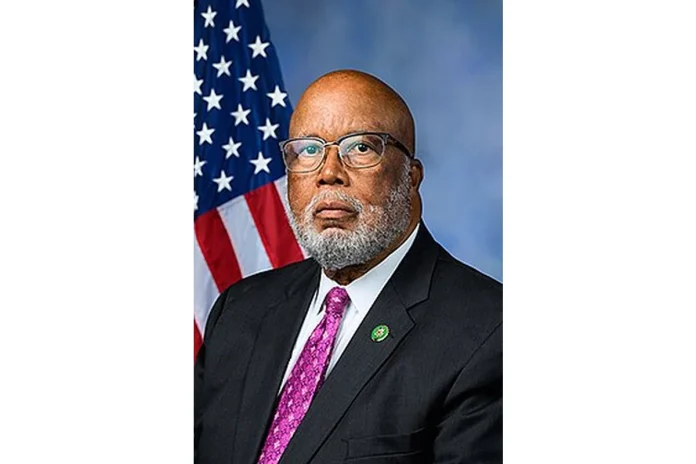
Bennie Thompson Bio
Bennie Gordon Thompson, born on January 28, 1948, is an American politician and educator who has served as the U.S. Representative for Mississippi’s 2nd congressional district since 1993. A Democrat, he is the first African American to chair the House Committee on Homeland Security and has built a long record of work on civil rights, homeland security, disaster recovery along the Gulf Coast, and minority health. He also chaired the House Select Committee investigating the January 6, 2021 attack on the U.S. Capitol and remains the longest-serving member of Mississippi’s congressional delegation.
Before entering national politics, Thompson spent more than two decades as a teacher, alderman, mayor of Bolton, and Hinds County supervisor, experiences that shaped his focus on local preparedness, first responders, and rural Mississippi communities.
Early Life and Background
Bennie Gordon Thompson was born in Bolton, Mississippi, the son of Will Thompson and Annie (Lauris) Thompson. He grew up in Hinds County and attended the area’s public schools, graduating from Hinds County Agricultural High School. The cotton-and-cattle country of central Mississippi, combined with a strong family and church life, gave him an early awareness of the inequalities that shaped the lives of Black families in the rural South.
After high school, Thompson enrolled at Tougaloo College, a historically Black college near Jackson, and earned a Bachelor of Arts in political science in 1968. He continued his studies at Jackson State University, where he completed a Master of Science in educational administration in 1972, preparing him for a career in both teaching and public service.
During his college years, Thompson became active in civil rights causes, including joining the original plaintiffs in the 1975 Ayers Case, which concerned adequate funding for historically Black universities in Mississippi. His lifelong membership in Kappa Alpha Psi fraternity (Gamma Rho chapter at Tougaloo College) and the Asbury United Methodist Church in Bolton reinforced those early civic commitments.
Path to US Politics
Thompson began his public career as a schoolteacher in Madison, Mississippi. In 1969 he was elected an alderman in Bolton, and by 1973 he had risen to mayor, a position he held until 1980. He then won a seat on the Hinds County Board of Supervisors, on which he served from 1980 to 1993, gaining more than two decades of experience in local government, budgeting, and emergency response. As a volunteer firefighter and elected local official, he developed the practical understanding of disaster preparedness that would later shape his work in Congress.
His move to federal politics came in 1993, after Representative Mike Espy resigned Mississippi’s 2nd congressional seat to become Secretary of Agriculture. Thompson entered the Democratic primary, finished second, then defeated Republican Hayes Dent in the April 13 runoff with 55 percent of the vote. He has held the seat ever since, winning reelection multiple times and facing only two serious challenges, from journalist Clinton LeSueur in 2002 and 2004.
Bennie Thompson Career
Early Career (1993–2006)
In his first years in Congress, Thompson concentrated on agriculture, rural development, and civil rights. He authored legislation in 2000 that created the National Center for Minority Health and Health Care Disparities, and he continued his work as a plaintiff in the long-running Ayers Case. His district, covering most of Jackson and stretching along the Mississippi Delta, was the only majority-Black district in the state, and he focused federal resources on rural hospitals, Black land-grant universities, and family farmers.
After Hurricanes Katrina and Rita devastated the Gulf Coast in 2005, Thompson became a leading congressional voice for accountability at the Federal Emergency Management Agency (FEMA) and oversight of the American Red Cross. He founded the bipartisan Gulf Coast Recovery and Rebuilding Caucus in the House and pressed for rebuilding contracts to favor small and Gulf Coast businesses. In 2006, along with Representative John Conyers, he sued President George W. Bush over constitutional concerns in the Deficit Reduction Act of 2005.
Breakthrough (2007–2018)
Thompson’s national profile rose sharply on January 5, 2007, when he introduced H.R. 1, the Implementing the 9/11 Commission Recommendations Act of 2007, the first bill of the 110th Congress. The bipartisan measure, which overhauled aviation, border, and infrastructure security and expanded resources for first responders, passed the House 299 to 128 and was signed into law by President Bush on August 3, 2007. With that success, Thompson became the first African-American chairman of a House committee to have a House-Senate conference on the opening bill of a Congress.
As chairman of the House Committee on Homeland Security from 2007 to 2011, Thompson directed resources to state and local officials and first responders, drawing on his own 24 years as a local elected official and volunteer firefighter. After Republicans reclaimed the House, he continued to shape the panel as ranking Democrat, and he was chosen in 2014, with Senator Ron Wyden, to introduce a bill to limit over-classification and reform the security clearance system.
Democratic Party Era (2019–Present)
Thompson returned to the chair of the Homeland Security Committee in 2019 and held it through 2023. In that role he was an early congressional voice on the coronavirus pandemic, introducing legislation in April 2020 to create a national commission modeled on the 9/11 Commission to study the federal response. The Lugar Center’s Congressional Oversight Hearing Index later awarded him an A grade for his committee leadership in the 116th Congress.
On July 1, 2021, Speaker Nancy Pelosi named him chair of the United States House Select Committee on the January 6 Attack. Thompson and Representative John Katko had already negotiated the original bipartisan commission bill that passed the House before being blocked by a Senate Republican filibuster. As chair, Thompson held the sole authority to issue subpoenas on the panel, which investigated the Capitol assault and held public hearings in 2022.
He also served as Permanent Chair of the 2020 Democratic National Convention and has been the only Democratic member of Mississippi’s congressional delegation since 2011, a position that has made him the dean of that delegation since 2018. In April 2024, he introduced legislation to strip Secret Service protection from convicted felons in the wake of former President Donald Trump’s New York conviction.
Notable Events and Milestones
Thompson’s signature achievements include chairing the Homeland Security Committee during the passage of the 9/11 Commission Recommendations Act of 2007, founding the bipartisan Gulf Coast Recovery and Rebuilding Caucus after Hurricane Katrina, and leading the House Select Committee on the January 6 Attack. He is also the author of the 2000 law that created the National Center for Minority Health and Health Care Disparities, a lasting contribution to federal health-equity policy.
Bennie Thompson Career Wins
Over more than three decades in Congress, Bennie Gordon Thompson has compiled a long list of legislative and civic victories. He has won 13 consecutive elections in Mississippi’s 2nd congressional district and helped steer major bipartisan laws on homeland security, disaster recovery, and minority health. He has also been recognized with high honors, including the Presidential Citizens Medal.
Congressional Election Highlights
Thompson first won his House seat in a 1993 special-election runoff, defeating Republican Hayes Dent with 55 percent of the vote. He has since been reelected 12 times, often without serious opposition. His two closest contests came against journalist Clinton LeSueur, who held him to 55 percent in 2002 and 58 percent in 2004. Since 2011, no other Democrat has represented Mississippi in Congress, making him the lone Democratic voice in the state’s delegation.
Other Wins & Achievements
Beyond elections, Thompson counts the 2000 statute establishing the National Center for Minority Health and Health Care Disparities and the 2007 Implementing the 9/11 Commission Recommendations Act among his most significant legislative accomplishments. In January 2025, President Joe Biden awarded him the Presidential Citizens Medal, and that same year he was nominated for the Nobel Peace Prize for his defense of freedom and democracy as chair of the January 6 Committee.
Bennie Thompson Family
Family Background and Political Lineage
Thompson is the son of Will Thompson and Annie (Lauris) Thompson, a Black family from Bolton, Mississippi, whose rural roots in the Hinds County agricultural community shaped his lifelong concern for small farmers, rural schools, and the Mississippi Delta. His standing as an original plaintiff in the 1975 Ayers Case, which fought for fair funding of historically Black institutions, links his family background to a broader civil-rights lineage in the state.
Personal Life
Bennie Thompson married London Johnson of Mound Bayou, Mississippi, in 1968. The couple has one daughter, BendaLonne, as well as a granddaughter, Jeanna, and a grandson, Thomas. Thompson is a longtime member of the Asbury United Methodist Church in Bolton and a member of Kappa Alpha Psi fraternity through the Gamma Rho chapter at Tougaloo College.