
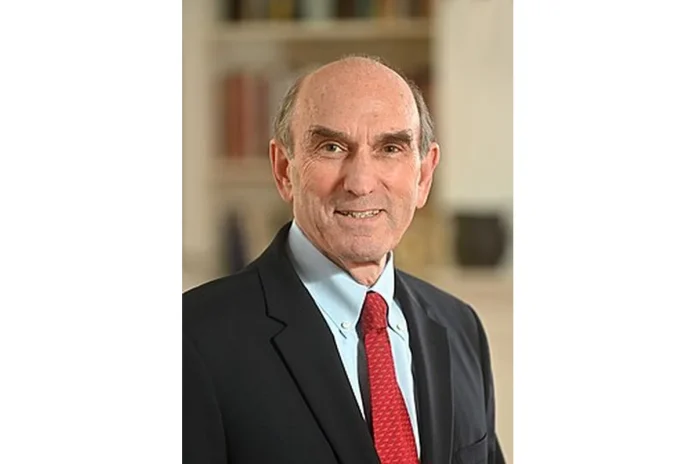
Elliott Abrams Bio
Elliott Abrams is an American politician, lawyer, and diplomat who has spent decades shaping United States foreign policy across multiple Republican administrations. Born on January 24, 1948, he is widely regarded as a leading neoconservative voice on issues ranging from Latin America to the Middle East. He has served under Presidents Ronald Reagan, George W. Bush, and Donald Trump in senior State Department and National Security Council roles. Beyond government service, Abrams has been a prominent fellow at the Council on Foreign Relations, writing and speaking on democracy promotion, human rights, and U.S. global leadership.
Over the course of his career, Abrams has been both celebrated and controversial. He played a central role in Reagan-era policy in Central America, faced legal consequences for his conduct during the Iran-Contra affair, and later returned to government as a key architect of democracy initiatives in the Middle East under President George W. Bush. He has remained an influential commentator on Iran, Venezuela, and Israel, while also engaging in policy advocacy through think tanks and bipartisan commissions.
Early Life and Background
Elliott Abrams was born into a Jewish family in New York in 1948. His father was an immigration lawyer, and Abrams grew up surrounded by legal and political conversation at home. He attended the Little Red School House in New York City, a private high school known for enrolling the children of many of the city’s notable left-wing activists and artists. His parents were Democrats, a background that would later shape his political journey in unexpected ways.
Abrams received his Bachelor of Arts from Harvard College in 1969, followed by a Master of Science in international relations from the London School of Economics in 1970. He then earned his Juris Doctor from Harvard Law School in 1973. During his summers in New York, he practiced law alongside his father, building an early foundation in the legal profession. His academic training in law and international relations would later become central to his career in diplomacy and government.
Path to US Politics
After law school, Abrams worked as an assistant counsel on the Senate Permanent Subcommittee on Investigations in 1975. He then joined Senator Henry “Scoop” Jackson’s brief campaign for the 1976 Democratic Party presidential nomination, gaining firsthand experience with national political campaigns. From 1977 through 1979, he served as special counsel and ultimately as chief of staff for the then-new senator Daniel Moynihan of New York, a role that sharpened his understanding of legislative strategy and foreign policy.
Dissatisfaction with President Jimmy Carter’s foreign policy led Abrams to campaign for Ronald Reagan in the 1980 presidential election. His early Democratic roots gave way to a shift toward the Republican Party, and he formally changed his affiliation in 1980. That same year, through Senator Moynihan, he was introduced to Rachel Decter, whom he married. His path from Democratic staffer to Reagan-era official marked the beginning of a long career in Republican foreign policy.
Elliott Abrams Career
Early Career (1973-1980)
Abrams began his legal career in New York, working at the firm Breed, Abbott & Morgan from 1973 to 1975. He then moved to Washington, D.C., where he served as assistant counsel on the Senate Permanent Subcommittee on Investigations. These early roles allowed him to develop expertise in government oversight and legislative procedure. He also briefly joined the 1976 presidential campaign of Senator Henry “Scoop” Jackson.
From 1977 to 1979, Abrams served as chief of staff for Senator Daniel Moynihan, a position that connected him to leading voices on national security and foreign affairs. This experience proved pivotal in his political evolution. By the end of the decade, he had become disenchanted with Democratic foreign policy under President Carter, setting the stage for his transition to the Republican Party.
Reagan Administration Breakthrough (1981-1989)
Abrams first came to national prominence when he served as Reagan’s Assistant Secretary of State for Human Rights and Humanitarian Affairs in the early 1980s. His nomination was unanimously approved by the Senate Foreign Relations Committee on November 17, 1981. He later became Assistant Secretary of State for Inter-American Affairs, giving him direct influence over U.S. policy in Latin America during the Cold War. In this role, he frequently defended the human rights record of allied governments in El Salvador and Guatemala.
During the Iran-Contra affair, Abrams repeatedly denied in congressional testimony that the U.S. government was involved in arming the Contras in Nicaragua. In 1991, he admitted that he knew more than he had acknowledged, cooperated with investigators, and pleaded guilty to two misdemeanor counts of withholding information from Congress. He was sentenced to a $50 fine, probation for two years, and 100 hours of community service. President George H. W. Bush pardoned him in December 1992, and in 1997, Abrams was publicly sanctioned by the District of Columbia Bar for giving false testimony.
Bush Administration Era (2001-2009)
President George W. Bush appointed Abrams as Special Assistant to the President and Senior Director for Democracy, Human Rights, and International Operations at the National Security Council on June 25, 2001. On December 2, 2002, he was appointed Special Assistant to the President and Senior Director for Near East and North African Affairs. In these roles, he became a key architect of the administration’s democracy promotion strategy in the Middle East and a supporter of the Iraq War.
On February 2, 2005, Bush elevated Abrams to Deputy National Security Adviser for Global Democracy Strategy, a position he held until the end of the administration on January 20, 2009. He accompanied Secretary of State Condoleezza Rice as a primary adviser on her visits to the Middle East in late July 2006 during the 2006 Israel-Lebanon conflict. His tenure was marked by both influence and controversy, particularly regarding his prior Iran-Contra conviction.
Trump Administration Era (2019-2021)
On January 25, 2019, Secretary of State Mike Pompeo appointed Abrams as the United States Special Representative for Venezuela, a role he assumed two days after American recognition of Venezuelan opposition leader Juan Guaidó as president. In this capacity, he became the public face of U.S. efforts to pressure the government of Nicolás Maduro. Some members of Congress, including Representative Ilhan Omar, questioned his suitability for the role given his Iran-Contra conviction.
Following the resignation of Brian Hook, Abrams was selected to succeed him as United States Special Representative for Iran. Both positions were merged into the U.S. Special Representative for Iran and Venezuela as of September 1, 2020. He served in these dual roles until the end of the Trump administration, focusing on maximum pressure campaigns against both governments. His tenure drew both praise and criticism from foreign policy observers.
Notable Events and Milestones
Among Abrams’s most significant moments was his guilty plea in 1991 for withholding information from Congress during the Iran-Contra affair, followed by his presidential pardon in 1992. His appointment in 2019 as Special Representative for Venezuela, and later Iran, marked a return to senior government service after years as a think tank fellow. In 2021, he founded the Vandenberg Coalition, a foreign policy group named after Senator Arthur Vandenberg, signaling his continued influence in national security debates.
Elliott Abrams Career Wins
Throughout his decades-long career, Abrams has achieved notable successes in shaping U.S. foreign policy across three Republican administrations. His influence spans human rights diplomacy, Middle East policy, and efforts to promote democracy abroad. While his career has included legal setbacks, his policy impact remains widely recognized in Washington and beyond.
Policy Leadership Highlights
Abrams’s most prominent career achievements include his service as Assistant Secretary of State for Human Rights and Humanitarian Affairs, Assistant Secretary of State for Inter-American Affairs, and Deputy National Security Adviser for Global Democracy Strategy. He played a central role in Reagan-era policy in Central America, helped craft Bush-era democracy initiatives, and led U.S. diplomatic efforts on Venezuela and Iran under President Trump.
Other Achievements
Abrams has held influential positions outside government, including as a senior fellow for Middle Eastern studies at the Council on Foreign Relations. He has served on the U.S. Holocaust Memorial Council and has been affiliated with organizations such as the Project for the New American Century and the Committee for Peace and Security in the Gulf. On July 3, 2023, President Joe Biden appointed him to the U.S. Advisory Commission on Public Diplomacy, a non-partisan body.
Elliott Abrams Family
Family Background and Political Lineage
Elliott Abrams was born to a Jewish family in New York in 1948. His father was an immigration lawyer whose career gave Abrams early exposure to legal and political work. His parents were Democrats, a background that influenced his early political views before he joined the Republican Party in 1980. His first cousin is attorney Floyd Abrams, a noted First Amendment lawyer.
Personal Life
Abrams married Rachel Decter in 1980. The couple remained married until her death in June 2013. Rachel Decter was the stepdaughter of Norman Podhoretz, the editor of Commentary magazine and a friend of Senator Daniel Moynihan. Elliott and Rachel had two sons and one daughter. Throughout his career, Abrams has largely kept his personal life out of the public spotlight, focusing public attention on his policy work.