
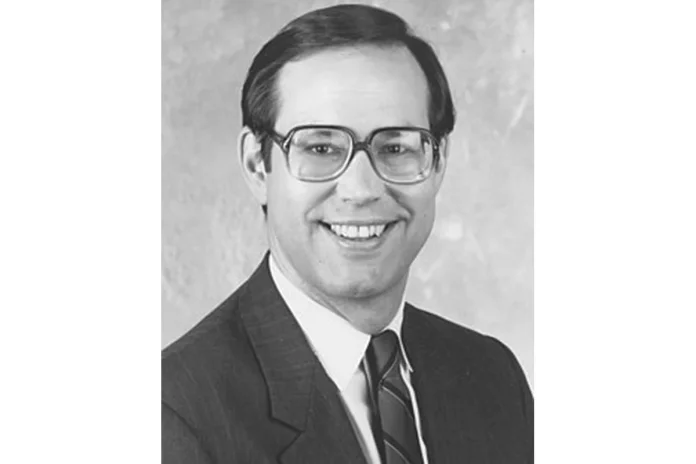
Bob Taft Bio
Robert Alphonso Taft III (born 8 January 1942) is an American politician and attorney who served as the 67th governor of Ohio from 1999 to 2007. A Republican and member of the prominent Taft political dynasty, he previously represented Ohio’s 65th district in the state House of Representatives, served as a Hamilton County commissioner, and was Ohio’s secretary of state under Governor George Voinovich. He is a son of Senator Robert Taft Jr., a grandson of Senate Majority Leader Robert A. Taft, and a great-grandson of President William Howard Taft.
After leaving the governorship, Taft joined the University of Dayton as a distinguished research associate and continued his public service through regional and education organizations. His two terms as governor advanced economic development, education, and energy initiatives, but his administration was also defined by the Coingate scandal, which led to his pleading no contest to misdemeanors in 2005.
Early Life and Background
Robert Alphonso Taft III was born on 8 January 1942 in Boston, Massachusetts, to U.S. Senator Robert Taft Jr. and Blanca Duncan Noel. He was raised in Cincinnati, Ohio, and attended the Cincinnati Country Day School through the ninth grade before graduating from The Taft School. His patrilineal great-great-grandfather, Alphonso Taft, served as Secretary of War, Attorney General, and an Ambassador, while his patrilineal great-grandfather, William Howard Taft, served as both President and Chief Justice of the United States.
His paternal grandfather, Robert Alphonso Taft Sr., was a U.S. senator and one of the most influential Republican leaders of the mid-twentieth century. Growing up in such a politically active family gave Taft an early and direct exposure to public service, governance, and the responsibilities that came with holding elected office. His early education at elite preparatory schools prepared him for higher studies in government and law.
Path to US Politics
Taft attended Yale University, where he was a member of the Yale Political Union, and graduated with a Bachelor of Arts degree in government in 1963. After college, he served as a Peace Corps volunteer from 1963 to 1965, teaching in Tanzania. He later attended the Woodrow Wilson School of Public and International Affairs at Princeton University, earning a Master of Arts degree in government in 1967.
Following his time at Princeton, Taft went on to earn his Juris Doctor from the University of Cincinnati College of Law in 1976, formally entering the legal profession. He then transitioned into politics, winning election to the Ohio House of Representatives in 1976 to represent the 65th district. His early career combined international service, legal training, and direct political experience that established the foundation for his later statewide roles.
Bob Taft Career
Early Career (1977–1990)
Taft served in the Ohio House of Representatives from 1977 to 1981, representing the 65th district. After leaving the state legislature, he became a Hamilton County commissioner, a position he held from 1981 to 1990. In 1986, he ran unsuccessfully for Lieutenant Governor of Ohio on the ticket with Jim Rhodes, gaining valuable statewide campaign experience despite the loss.
In 1990, Taft was elected Ohio secretary of state, defeating incumbent Democrat Sherrod Brown. He was reelected to the position in 1994, defeating Democratic candidate Dan Brady. These years in county and statewide elected office sharpened his administrative skills and broadened his political network across Ohio.
Breakthrough (1998–2002)
In December 1996, Taft announced his campaign for Governor of Ohio, becoming the first candidate to enter the race. He had been preparing since 1995, raising money and securing the endorsement of term-limited incumbent George Voinovich. Taft won the May 5, 1998 Republican primary and defeated Democrat Lee Fisher in the November 3 general election with 50 percent of the vote, taking office on January 11, 1999.
His first term produced high approval ratings, reaching 63 percent by November 1999 and 69 percent by November 2001. In the November 5, 2002 general election, Taft defeated Democrat Tim Hagan by nearly 20 points, winning 58 percent to 38 percent. He was sworn in for his second term on January 13, 2003, with his administration presiding over significant policy achievements.
Republican Era (1999–2007)
During his time as governor, Taft championed major initiatives including the Third Frontier program, which between 2003 and 2008 dispersed $681 million and generated a $6.6 billion economic impact with 41,300 jobs created. His Rebuilding Ohio Schools initiative directed $10 billion over 12 years into new school construction, the largest increase in education funding in state history. Ohio also earned the Governor’s Cup in 2003 and 2006 from Site Selection Magazine.
Taft signed legislation creating the Ohio Educational Choice Scholarship Pilot Program and the Ohio College Opportunity Grant, which extended grants to 11,000 new students. He also signed a $5 billion, 10-year Jobs and Progress Plan to improve Ohio’s highways, while promoting alternative fuels, the Great Lakes, and energy independence. His administration faced criticism for permitting state spending and taxes to rise, and he signed the largest tax increase in state history in 2003 to address a national recession.
Notable Events and Milestones
In August 2005, as a result of the Coingate scandal, Taft was indicted on four criminal misdemeanors for receiving undisclosed gifts and accepting illegal campaign contributions, making him the first Ohio governor charged with a crime while in office. He pleaded no contest and was fined $4,000, while the Ohio Supreme Court issued a public reprimand in December 2006 attached to his law license. Despite the conviction, Taft served out the remainder of his second term, and the Taft Coliseum at the Ohio Expo Center and State Fair was renamed in his honor on July 28, 2010.
Bob Taft Family
Family Background and Political Lineage
The Taft family has been involved in Republican politics for over a century. Bob Taft’s father, Robert Taft Jr., served as a U.S. senator, and his grandfather, Robert Alphonso Taft Sr., was a U.S. senator and Senate Majority Leader. His patrilineal great-grandfather, William Howard Taft, served as both President and Chief Justice of the United States, while his patrilineal great-grandmother, Helen Louise “Nellie” Taft, was First Lady. His patrilineal great-great-grandfather, Alphonso Taft, served as Secretary of War, Attorney General, and an Ambassador, and his first cousin William Howard Taft IV acted as Secretary of Defense for two months in 1989.
Other prominent relatives include Kingsley Arter Taft, a U.S. senator from Ohio and Chief Justice of the Ohio Supreme Court, as well as Charles Phelps Taft, a U.S. representative from Ohio and former owner of the Chicago Cubs. Taft serves as an advisory board member of the Society of Presidential Descendants.
Personal Life
Taft married Hope Rothert in 1967, and the couple has a daughter named Anna Taft. They reside in Cincinnati, Ohio. During the Taft administration, his wife Hope started the “On the Ohio Homefront” initiative, an online database of businesses and charities that provide discounts and services for veterans.