
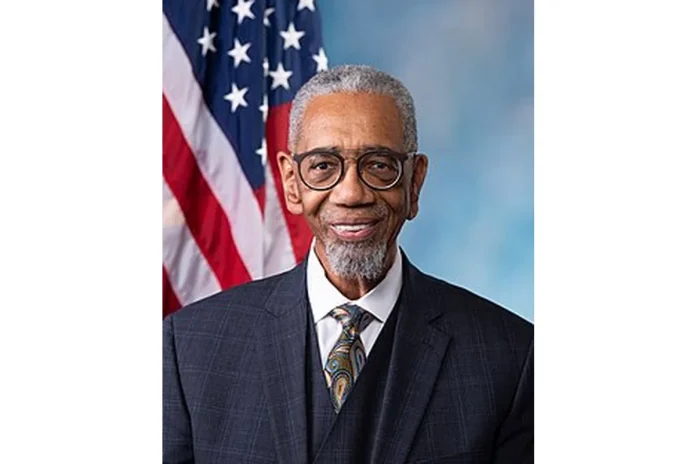
Bobby Lee Rush Bio
Bobby Lee Rush (born November 23, 1946) is an American politician, activist, and pastor who served as the U.S. Representative for Illinois’s 1st congressional district from 1993 until 2023. A civil rights activist during the 1960s, Rush co-founded the Illinois chapter of the Black Panther Party and later transitioned into electoral politics, serving on the Chicago City Council before winning a seat in Congress. A member of the Democratic Party since 1974, he is notable for defeating Barack Obama in the 2000 Democratic primary for the district.
During his long tenure in the House, Rush championed urban health, anti-lynching legislation, and economic programs for low-income residents. He announced his retirement in January 2022, closing a 30-year career in Congress. Beyond politics, Rush has served as pastor of the Beloved Community Christian Church in Chicago’s Englewood neighborhood.
Early Life and Background
Bobby Lee Rush was born on November 23, 1946, in Albany, Georgia. After his parents separated when he was seven years old, his mother took him and his siblings to Chicago, Illinois, joining the Great Migration of African Americans out of the South in the first part of the 20th century. Growing up on Chicago’s South Side shaped his early awareness of racial inequality and urban hardship.
In 1963, Rush dropped out of high school before graduating and joined the U.S. Army. While stationed in Chicago in 1966, he joined the Student Nonviolent Coordinating Committee, which had helped obtain national civil rights legislation passed in 1964 and 1965. Throughout the 1960s, Rush was involved in the civil rights movement and worked in civil disobedience campaigns in the southern United States, laying the groundwork for his lifelong activism.
Path to US Politics
In 1968, Rush went AWOL from the Army and co-founded the Illinois chapter of the Black Panther Party, where he served as defense minister. After the Chicago Police Department and the State’s Attorney Office assassinated Black Panther Fred Hampton in a police raid, Rush became acting chairman of the Illinois Black Panther Party. He coordinated a medical clinic that offered sickle-cell anemia testing on an unprecedented scale. Rush was imprisoned for six months in 1972 on a weapons charge after carrying a pistol into a police station. In 1974, he left the Black Panthers, who were already in decline, and later described his years in the party as part of his maturing.
Rush’s transition into electoral politics began in 1975 when he ran for a seat on the Chicago City Council and lost. He ran again in 1983 and won, alongside Harold Washington’s victory as Chicago’s first black mayor. Rush supported Washington’s coalition during the Council Wars that followed the 1983 election. After Washington’s sudden death in 1987, Rush’s allies in the black-power movement briefly formed their own party, but Rush worked with the Democrats and was rewarded with the deputy chairmanship of the state party.
Bobby Lee Rush Career
Early Career (1975–1992)
After his 1975 City Council loss, Rush remained active in community organizing and political mobilizing throughout the late 1970s. He returned to formal education, earning his Bachelor of General Studies with honors from Roosevelt University in 1973 and a Master’s degree in political science from the University of Illinois at Chicago in 1974. He also completed a degree in theological studies at McCormick Theological Seminary in 1998.
His 1983 election to the Chicago City Council marked the start of his formal political career. He became a vocal figure during the Council Wars era, supporting Mayor Harold Washington’s reform coalition. By the early 1990s, Rush had built a strong base in Chicago’s African-American community, positioning him for a congressional run.
Breakthrough (1992–2000)
After redistricting in 1992, Rush ran in Illinois’s newly redrawn 1st congressional district, which included much of Chicago’s South Side. He defeated incumbent U.S. Representative Charles Hayes and six other candidates in the Democratic primary election, then won the general election with 83% of the vote. The district was so heavily Democratic that the primary win was effectively decisive.
In 1999, Rush ran for mayor of Chicago but lost to incumbent Richard M. Daley. The following year, in the 2000 Democratic primary for his congressional district, Rush was challenged by Illinois State Senator Barack Obama. During the primary, Rush criticized Obama as an “educated fool” and argued Obama was insufficiently rooted in Chicago’s black neighborhoods. Despite winning 30% of the vote, Obama lost by more than 2 to 1. Rush won 61% of the vote and the general election with 88%, making him the only politician ever to defeat Obama in an election.
Democratic Party Era (1993–2023)
Rush served 15 consecutive terms in the U.S. House, retiring in January 2023. Throughout his tenure, he was a loyal Democrat, voting with his party 97.8% of the time during the 110th Congress. He was a member of the Congressional Black Caucus and the House Baltic Caucus, representing Chicago’s South Side with consistency.
On May 13, 2017, Rush received a Doctorate of Humanities, honoris causa, from the Illinois Institute of Technology for his outstanding contributions to Chicago. He championed health legislation, including the Nursing Relief for Disadvantaged Areas Act of 1999 and the Urban Asthma Reduction Act, and later sponsored Blair Holt’s Firearm Licensing and Record of Sale Act of 2009. His Emmett Till Antilynching Act, which he introduced twice, finally became federal law in 2022, ending roughly 100 years of stalled federal anti-lynching efforts.
Notable Events and Milestones
On March 28, 2012, Rush addressed the House while wearing a hoodie in honor of Trayvon Martin, speaking against racial profiling; he was called out of order for wearing headgear and escorted from the chamber. On July 15, 2004, he became one of the few sitting members of Congress to be arrested while protesting the genocide in Darfur outside the Sudanese Embassy. His 2000 primary victory over Barack Obama remains a defining moment in his political legacy.
Bobby Lee Rush Career Wins
Rush compiled a lengthy record of electoral victories during his decades in public service, beginning with his 1983 Chicago City Council win and continuing through 15 consecutive congressional reelection victories in Illinois’s 1st district.
Congressional Election Highlights
Rush was first elected to Congress in 1992 and won consecutive reelections through 2022, when he announced his retirement. His most notable win was the 2000 Democratic primary against Barack Obama, which he won with 61% of the vote. He consistently won general elections with overwhelming margins in his heavily Democratic district, including an 88% general election victory in 2000.
Other Wins & Achievements
Beyond electoral victories, Rush achieved major legislative milestones, including the passage of the Emmett Till Antilynching Act in 2022. He also received an honorary Doctorate of Humanities from the Illinois Institute of Technology in 2017 for his contributions to Chicago. In 2018, his son Flynn Rush ran unsuccessfully for a seat in the Illinois House of Representatives, losing in the Democratic primary.
Bobby Lee Rush Family
Family Background and Personal History
Rush was born in Albany, Georgia, and moved to Chicago as a child after his parents separated. His early years in Chicago’s South Side deeply influenced his lifelong commitment to civil rights and community activism. He is a member of the Iota Phi Theta fraternity and, according to a DNA analysis conducted under the TV program Know Your Heritage, is descended mainly from the Ashanti people of Ghana.
Personal Life
Rush has been married three times. His first marriage, when he was 19, was to Sandra Milan, with whom he had two children; they divorced in 1973. He was married to community organizer and political strategist Carolyn Thomas from 1980 until her death from congestive heart failure on March 13, 2017. On June 30, 2018, Rush married minister and author Paulette Holloway. He has several children, including sons Huey Rich and Flynn Rush.