

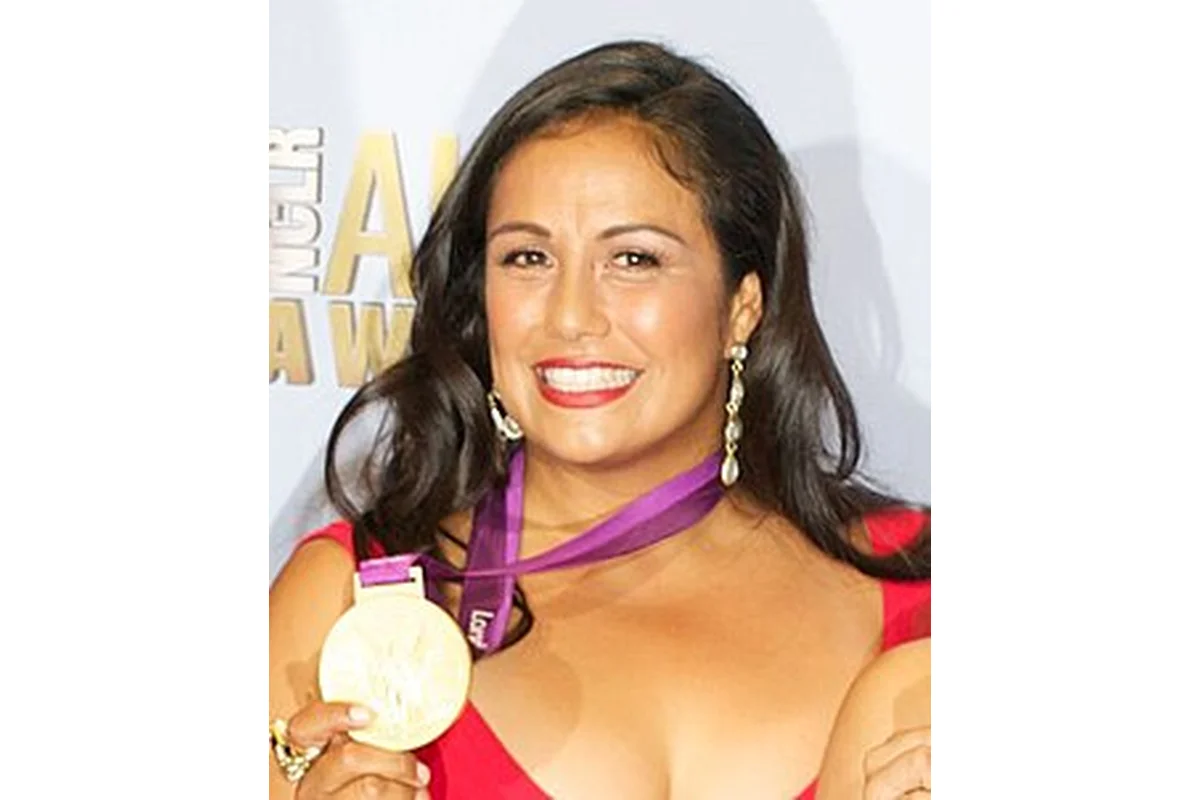
Brenda Villa Bio
Brenda Villa, born April 18, 1980, in Los Angeles, California, is an American former water polo player and coach. She is widely regarded as the most decorated athlete in the history of women’s water polo, earning recognition as the Female Water Polo Player of the Decade for 2000–2009 from FINA Aquatics World Magazine. A member of the United States national team from 1998 to 2012, Villa competed in four Olympic Games, winning a complete set of medals that included gold in London.
Standing 5 feet 4 inches tall, Villa was the shortest player on the U.S. national team, yet she became one of the most prolific scorers in Olympic water polo history, finishing her career with 31 goals. She was inducted into both the International Swimming Hall of Fame and the USA Water Polo Hall of Fame in 2018. After retiring from competition in 2012, she transitioned into coaching at the high school and collegiate levels.
Early Life and Background
Brenda Villa grew up in the Los Angeles area, where her family introduced her to the water at a young age. She began swimming competitively with a club team called Commerce Aquatics at the age of six, and by eight years old she had followed her older brother into the sport of water polo. That early exposure to the pool shaped her future, as the aquatic environment quickly became a central part of her daily life and athletic development.
Villa attended Bell Gardens High School, where she competed on the boys’ water polo team because the school did not field a girls’ program. Despite the unusual arrangement, she excelled against male competition and was named a four-time first-team All-League selection, a four-time first-team All-C.I.F. selection, and a four-time All-American. Her high school success was capped by an appearance on the girls’ Junior Olympic Team, a clear sign that she was destined for a place on the national stage.
Path to Water Polo
Villa’s path to elite water polo ran directly through her family, particularly her brother, whose own involvement in the sport first drew her into the pool. The combination of local club coaching, strong family support, and an athletic community in Southern California helped her refine her skills throughout childhood. By the time she finished high school, she had already established herself as one of the most promising young players in the country.
That promise carried her to Stanford University, where she arrived in 1998 as the most heralded recruit in the program’s history. She was redshirted during 1999 and 2000 to train for the Olympic Games, an unusual path for a college freshman that reflected the scale of her international potential. When she finally took the pool for Stanford in 2001, she scored 69 goals in her freshman year and was named the NCAA Women’s Water Polo Player of the Year.
Brenda Villa Career
Early Career (1998–2003)
Brenda Villa joined the U.S. national team in 1998, while still a teenager, and quickly became one of its most important attacking players. As a 20-year-old at the 2000 Sydney Olympics, she led the U.S. squad with nine goals, helping the team capture a silver medal. Two years later, at the 2003 FINA Water Polo World Championship, she scored a team-high 13 goals to guide the United States to a gold medal, establishing herself as a difference-maker on the global stage.
At the collegiate level, Villa led Stanford to the NCAA Women’s Water Polo Championship in 2002, scoring 60 goals in the title-winning season. She was awarded the 2002 Peter J. Cutino Award as the top female college water polo player in the United States. Over three playing seasons with the Cardinal, she tallied 172 goals, cementing her reputation as one of the most dominant amateur players of her generation.
Breakthrough (2004–2007)
At the 2003 Pan American Games, Villa scored 10 goals for Team USA, helping the squad qualify for the 2004 Summer Olympics. In June 2004, she scored the first goal in overtime and added another in a penalty shootout to lift the United States past Hungary for the gold medal at the Women’s Water Polo World League Super Finals. That same year, she was the U.S. team’s top scorer with seven goals at the Athens Olympics, where the Americans earned a bronze medal.
Villa continued to lead at every level. She captained the 2005 U.S. national team coached by two-time Olympian Heather Moody, winning a silver medal at the FINA World Championship in Montreal. In March 2007, she led the U.S. squad at the FINA World Water Polo Championships in Melbourne, Australia, scoring 11 goals across the tournament as Team USA claimed the world title. The period firmly established Villa as the offensive engine of American women’s water polo.
U.S. National Team Era (2008–2012)
At the 2008 Beijing Summer Olympics, Villa and the U.S. team reached the championship game, falling 8–9 to the Netherlands and taking home the silver medal. The narrow defeat only sharpened her focus, and she returned to the senior national team for the 2009 FINA World Championships. By 2010, she had added head coaching duties at Castilleja High School for girls’ water polo in Palo Alto, California, to her playing schedule.
Her Olympic story reached its peak in London. At the 2012 Summer Olympics, Villa and the U.S. squad defeated Spain 8–5 in the gold medal game, capturing the first Olympic title in American women’s water polo history. The gold medal completed a four-Olympic collection of silver, bronze, silver, and gold, and it marked the end of her competitive playing career on the highest possible note.
Notable Events and Milestones
One of the defining moments of Villa’s career came at the 2004 Women’s Water Polo World League Super Finals, where her overtime and penalty-shootout goals defeated Hungary for the title. Another came on August 9, 2012, when she helped the United States beat Spain 8–5 in London to claim the first Olympic gold in U.S. women’s water polo. Her 31 Olympic goals place her among the all-time leading scorers in the sport’s history.
Brenda Villa Career Wins
Brenda Villa’s career is decorated with medals, championships, and individual honors at every level of water polo. She earned four Olympic medals across Sydney 2000, Athens 2004, Beijing 2008, and London 2012, including Olympic gold in 2012. She added a FINA World Championship gold in 2003, a World Championship silver in 2005, a FINA World Championship gold in 2007, and a Pan American Games appearance that helped the U.S. team qualify for Athens.
Olympic and International Highlights
Villa is one of only four female players ever to compete in water polo at four Olympic Games, and one of only two female athletes to win four Olympic medals in the sport. Her Olympic medal set includes silver in 2000, bronze in 2004, silver in 2008, and gold in 2012. Across those four Games, she scored 31 goals, making her one of the all-time leading scorers in Olympic water polo history.
Other Wins and Achievements
At the collegiate level, Villa led Stanford to the NCAA Women’s Water Polo Championship in 2002 and was named NCAA Women’s Water Polo Player of the Year in 2001. She won the 2002 Peter J. Cutino Award as the top female college water polo player in the United States, and FINA later named her Female Water Polo Player of the Decade for 2000–2009. In 2018, she was inducted into both the International Swimming Hall of Fame and the USA Water Polo Hall of Fame.
Brenda Villa Family
Family Background and Athletic Lineage
Brenda Villa grew up in a Southern California household where aquatics played a central role in family life. Her older brother introduced her to water polo when she was eight years old, and that sibling connection became the foundation of her athletic career. The family’s support for competitive swimming and water polo helped her develop the discipline and competitive habits that carried her from Commerce Aquatics to the Olympic podium.
Personal Life
Villa has largely kept her personal life out of the public eye, focusing public attention on her athletic and coaching work. After retiring from international competition in 2012, she settled into a coaching career that took her from a private all-girl high school to collegiate assistant coaching at Cerritos College in Norwalk, California, and later to the head coaching role at Castilleja High School in Palo Alto. Her post-playing commitments reflect the same dedication to the sport that defined her competitive years.