
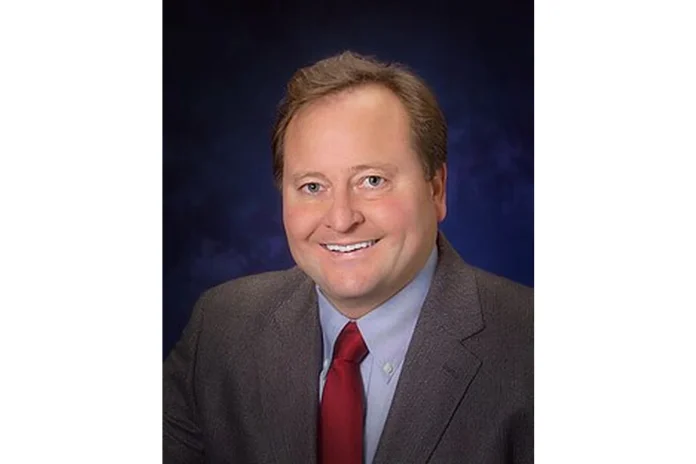
Brian Schweitzer Bio
Brian David Schweitzer, born on September 4, 1955, in Havre, Montana, is an American farmer and politician best known for serving as the 23rd governor of Montana from 2005 to 2013. A member of the Democratic Party, Schweitzer combined economic populism with a strong push for energy development, supporting both fossil fuels and renewable resources. During his two terms in office, he chaired the Western Governors Association and the Democratic Governors Association, and he served as president of the Council of State Governments.
Schweitzer built a reputation for a folksy public persona, a steady stream of vetoes, and an emphasis on education, veterans’ programs, and Montana’s natural-resource economy. After leaving the governorship, he joined the board of the Stillwater Mining Company and was elected non-executive chairman in May 2013.
Early Life and Background
Brian David Schweitzer was the fourth of six children born to Kathleen Helen McKernan and Adam Schweitzer in the small northern Montana town of Havre. His paternal grandparents were ethnic Germans from Kuchurhan in the Odesa Oblast, then part of the Russian Empire, while his maternal grandparents were Irish. Through that German line, Schweitzer is a first cousin, once removed, of the bandleader and television entertainer Lawrence Welk, since Schweitzer’s paternal grandmother was Welk’s aunt.
Schweitzer attended Holy Cross Abbey in Canon City, Colorado, graduating from the high school in 1973. He went on to earn a Bachelor of Science degree in international agronomy from Colorado State University in 1978, followed by a Master of Science in soil science from Montana State University in Bozeman in 1980. After completing his studies, he worked as an irrigation developer on projects across Africa, Asia, Europe, and South America, spending several years in Libya and Saudi Arabia and learning to speak Arabic.
He returned to Montana in 1986 and settled in Whitefish, where he took up farming. In 1993, the Clinton administration appointed him to the United States Department of Agriculture’s Farm Service Agency committee for Montana, a position he held for seven years.
Path to US Politics
Schweitzer’s entry into electoral politics came in 2000, when he challenged Republican U.S. Senator Conrad Burns of Montana. Running as a Democrat in a year when presidential candidate Al Gore carried only about a third of the Montana vote, Schweitzer leaned into the issue of prescription-drug costs and organized bus trips for senior citizens to buy cheaper medicine in Canada and Mexico. He lost narrowly to Burns, 51 percent to 47 percent, despite being outspent roughly two to one.
Four years later, when Republican Governor Judy Martz announced she would not seek re-election, Schweitzer entered the 2004 gubernatorial race with Republican state senator John Bohlinger as his running mate. He defeated Montana Secretary of State Bob Brown in the general election, 50 percent to 46 percent, beginning the path that would carry him to the governorship.
Brian Schweitzer Career
Early Career (2000–2004)
Brian David Schweitzer’s early political career was defined by his 2000 Senate run and his subsequent rise within Montana’s Democratic Party. Although he lost that Senate race to incumbent Conrad Burns, his underdog performance against a well-funded opponent gave him statewide name recognition. His focus on prescription-drug affordability and his outsider image helped him stand out in a Republican-leaning state.
During this period Schweitzer drew on his background as a farmer and irrigation consultant to frame himself as an independent thinker. He positioned himself as critical of trade agreements such as NAFTA and skeptical of large retailers, themes that would later define his gubernatorial platform. The groundwork laid in 2000 made his successful 2004 gubernatorial campaign possible.
Breakthrough (2005–2008)
Sworn in as governor in January 2005, Schweitzer quickly became one of the most visible state leaders in the country. He signed the Indian Education for All funding bill that year, giving Montana schools their first real budget to teach tribal history, and later championed voluntary full-time kindergarten in 2007. In 2008 he was elected chair of the Democratic Governors Association and was mentioned by some pundits as a possible vice-presidential running mate for Barack Obama.
That same year, Schweitzer and Lieutenant Governor John Bohlinger won re-election in a landslide over Republican State Senator Roy Brown and running mate Steve Daines, with Schweitzer taking 65.4 percent of the vote. He also used the 2007 suicide of Iraq war veteran Chris Dana as the catalyst for launching the Yellow Ribbon Program, a joint effort between the Montana National Guard and the U.S. Department of Veterans Affairs to help returning service members transition to civilian life.
In May 2006, Schweitzer granted posthumous pardons to 78 people who had been convicted of sedition in 1918 and 1919 under Montana’s World War I-era Sedition Act. The pardons, the first of their kind in Montana history, covered cases ranging from criticism of food rationing to refusals to buy Liberty Bonds.
Democratic Party Era (2009–2013)
During his second term, Schweitzer pursued a blend of progressive values, populist rhetoric, and Western self-reliance that commentators described as a mix of liberal and libertarian. He exercised the veto pen 95 times across his tenure, including 74 bills in the 2011 legislative session, none of which were overridden. In April 2011 he drew national attention by using a branding iron to publicly veto several bills passed by the Republican-controlled legislature, calling them frivolous and unconstitutional.
His second-term policy agenda pushed early-childhood education, support for the state’s two-year community colleges, dual-enrollment programs for high school students, and easier credit transfer between two-year and four-year schools. From 2009 to 2012, Montana posted the nation’s highest growth rate in the share of its population holding a college degree. Schweitzer also expanded Montana’s energy portfolio, supporting coal, oil, and wind power; he helped arrange financing for the Rim Rock Wind Farm, which opened in September 2012 as the state’s largest wind farm.
Schweitzer was a vocal opponent of gun-control measures and signed the 2009 Montana Firearms Freedom Act, a state-level challenge to federal gun regulation that was later struck down in court. He proposed a Canadian-style single-payer health-care system for Montana and was critical of the Affordable Care Act for not going far enough. Throughout his time in office he maintained approval ratings above 60 percent, leaving office as one of the most popular governors in the country.
Notable Events and Milestones
Schweitzer’s signature moments include his branding-iron vetoes in 2011, his 2006 posthumous pardons of WWI-era sedition convicts, and his launch of the Yellow Ribbon Program for veterans. He chaired both the Western Governors Association and the Democratic Governors Association and served as president of the Council of State Governments.
Brian Schweitzer Career Wins
Brian David Schweitzer won two Montana gubernatorial elections during his political career, both with comfortable margins. His first victory in 2004 unseated a Republican incumbent’s chosen successor, and his 2008 re-election was one of the strongest showings by any Montana governor in modern history.
Governor of Montana Highlights
Schweitzer first won the governorship in 2004 by defeating Montana Secretary of State Bob Brown 50 percent to 46 percent, with Republican state senator John Bohlinger as his running mate. Four years later he and Bohlinger were re-elected by a landslide, with Schweitzer collecting 65.4 percent of the vote against Republican State Senator Roy Brown and Libertarian Stan Jones. The 2008 victory stood as the high point of his political career.
Other Wins & Achievements
Beyond his electoral success, Schweitzer chaired both the Western Governors Association and the Democratic Governors Association and served as president of the Council of State Governments. After leaving office in 2013, he was elected non-executive chairman of the Stillwater Mining Company board, applying his energy and mining policy experience in the private sector.
| Position | Wins | Year |
|---|---|---|
| Governor of Montana | 1 | 2004 |
| Governor of Montana (re-election) | 1 | 2008 |
Brian Schweitzer Family
Family Background and Political Lineage
Brian David Schweitzer was raised in a large household in Havre, Montana, the fourth of six children of Kathleen Helen McKernan and Adam Schweitzer. His paternal line traced back to ethnic Germans from Kuchurhan in what is now Ukraine, while his mother’s family was of Irish heritage. That German ancestry connected Schweitzer to bandleader Lawrence Welk as a first cousin, once removed.
Personal Life
Schweitzer married Nancy Hupp in 1981, and the couple has three children: Ben, Khai, and Katrina. After his international work as an irrigation developer, Schweitzer settled with his family in Whitefish, Montana, where he farmed before entering public life. He continues to make his home in Whitefish.