

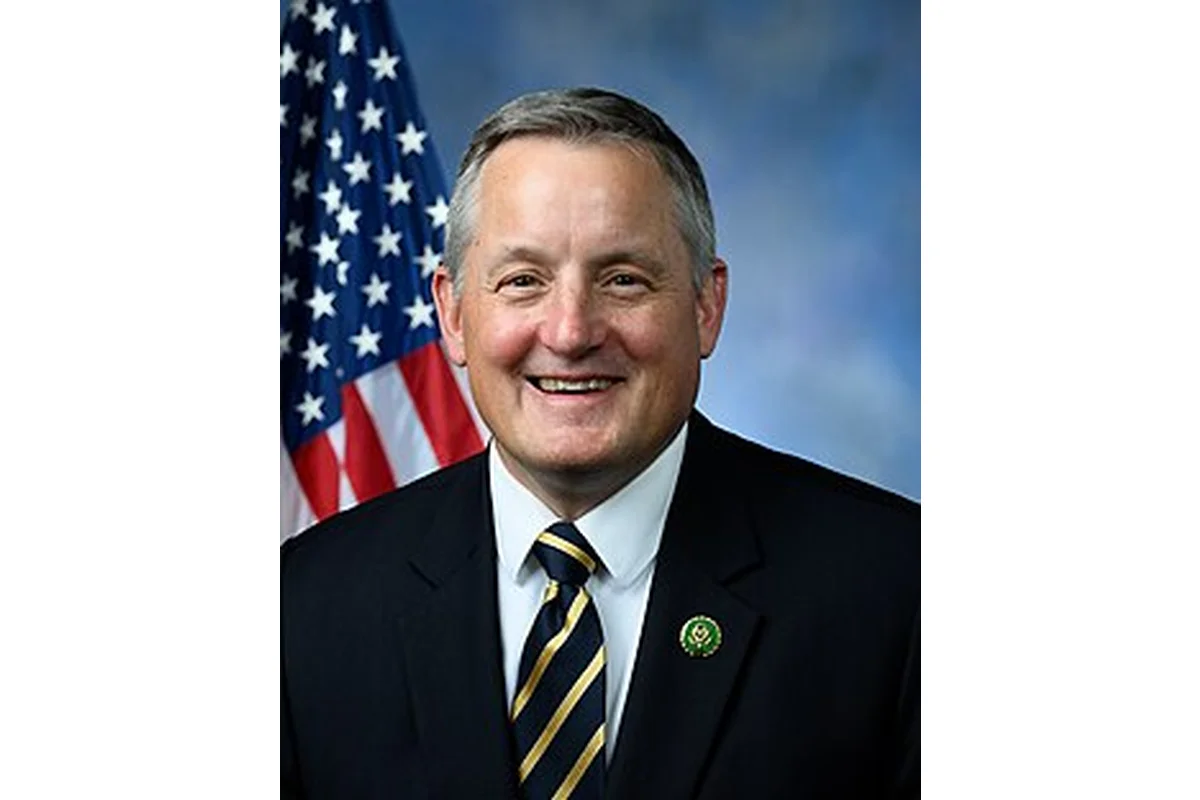
Bruce Eugene Westerman Bio
Bruce Eugene Westerman (born November 18, 1967) is an American forester, engineer, and politician serving as the U.S. representative for Arkansas’s 4th congressional district. A member of the Republican Party, he brings a technical background in engineering and forestry to his work in Congress and is the only certified forester ever to have served in the U.S. House of Representatives. Westerman previously served in the Arkansas House of Representatives, where he rose to become the first Republican majority leader in that chamber since Reconstruction.
Before his election to Congress in 2014, Westerman built a professional career that combined private-sector engineering with public service on local school boards and in state-level politics. He succeeded fellow Republican Tom Cotton, who left the seat to win a U.S. Senate race that same year.
Early Life and Background
Bruce Eugene Westerman was born on November 18, 1967, and raised in Hot Springs, Arkansas, where he continues to reside. He grew up in a community that would later serve as the geographic and political anchor of his career, grounding him in the concerns of rural and small-city Arkansas throughout his life in public service.
Westerman graduated as valedictorian of Fountain Lake High School in Hot Springs, demonstrating early academic discipline that would carry into his college years. He went on to attend the University of Arkansas in Fayetteville, where he played college football for the Arkansas Razorbacks football team, balancing athletics with a demanding engineering curriculum. He graduated in 1990 with a Bachelor of Science in engineering, laying the technical foundation for his later work as a professional engineer.
Following his undergraduate studies, Westerman pursued a Master of Science in forestry from Yale University, expanding his expertise beyond engineering into natural resource management. This combination of disciplines would later shape his legislative priorities, particularly his focus on forest policy and land management.
Path to US Politics
Before entering elected office, Westerman worked as an engineer and forester, including employment with the Mid-South Engineering Company. His professional standing in the field was recognized when he was elected president of the Arkansas chapter of the American Society of Agricultural and Biological Engineers, and he later served as chair of the Arkansas Academy of Biological and Agricultural Engineers. These roles gave him a public profile rooted in technical expertise rather than partisan politics.
Westerman also served on the Fountain Lake School District school board, an early step into public service that reflected his commitment to local community institutions. His professional accomplishments, combined with this local civic engagement, positioned him for a transition into electoral politics at the state level.
In 2010, Westerman ran for the Arkansas House of Representatives and won, beginning a rapid rise within the state legislature. He served as House Minority Leader in 2012 and then as House Majority Leader in 2013, becoming the first Republican to hold the majority leader post in Arkansas since Reconstruction. That historic promotion marked him as a rising figure in state Republican politics and set the stage for his bid for federal office.
Bruce Westerman Career
Early Career (2010-2013)
Westerman’s early political career was defined by his swift ascent in the Arkansas House of Representatives. After winning his initial race in 2010, he earned the trust of his colleagues quickly, becoming House Minority Leader in 2012 at a time when Republicans were still the minority party in the chamber.
The following year, in 2013, he became House Majority Leader, the first Republican to hold that position in Arkansas since the Reconstruction era. This milestone demonstrated both his personal political skill and the broader shift in Arkansas politics toward the Republican Party, signaling that Westerman was a figure to watch on a larger stage.
Breakthrough (2014-2016)
Westerman’s breakthrough to federal office came in 2014, when he ran for the U.S. House seat representing Arkansas’s 4th congressional district. He won the Republican primary on May 20, 2014, defeating Tommy Moll by a margin of 54 percent to 46 percent. In the general election that November, he defeated Democratic nominee James Lee Witt, a former associate of U.S. President Bill Clinton, by a similar 54 percent to 43 percent margin, succeeding Tom Cotton, who had vacated the seat to run for the U.S. Senate.
Entering Congress, Westerman quickly established himself as a reliable conservative voice. In 2015, he cosponsored a resolution to amend the U.S. Constitution to ban same-sex marriage, a position consistent with his party’s base at the time. He also drew on his professional background as a forester, a credential that has set him apart from nearly every other member of Congress.
Republican Era (2017-Present)
On June 20, 2017, Westerman introduced the Resilient Federal Forests Act of 2017, legislation designed to address overgrown federally managed woods through active forest management. The bill passed the House of Representatives but was introduced in the Senate on November 2, 2017, where it failed to advance. That same year, he voted for the Tax Cuts and Jobs Act of 2017, aligning himself with the major legislative priorities of the Republican majority.
In April 2021, Westerman introduced the Trillion Trees Act, a sweeping proposal aimed at planting a trillion trees to address environmental concerns, though the bill drew criticism from scientists and environmental groups. He has received a 4% lifetime score from the League of Conservation Voters, reflecting significant differences with mainstream environmental organizations. In January 2025, he introduced the Fix Our Forests Act alongside Representative Scott Peters of California, a bipartisan effort to improve forest management and reduce wildfire risk.
On abortion policy, Westerman has stated that “Life is a right. Abortion is not,” and he supported the June 2022 overturning of Roe v. Wade. On gun policy, he has earned consistent “A” grades from the National Rifle Association Political Victory Fund (NRA-PVF) and voted against the Enhanced Background Checks Act in 2021.
Westerman drew national attention in December 2020 when he was one of 126 Republican members of the House of Representatives to sign an amicus brief supporting Texas v. Pennsylvania, a lawsuit contesting the 2020 presidential election results. The Supreme Court declined to hear the case on the basis that Texas lacked standing under Article III of the Constitution to challenge another state’s election. Despite this, Westerman voted to certify both Arizona’s and Pennsylvania’s results in the 2021 Electoral College vote count.
Notable Events and Milestones
One of the most dramatic moments of Westerman’s career came during the 2021 Capitol riot, when, left behind in House minority leader Kevin McCarthy’s office after an evacuation, he took a Civil War sword from a shattered display for protection and hid from rioters in a restroom. In October 2023, during the Speaker of the United States House of Representatives election, he received a single vote for speaker from Representative Pete Stauber of Minnesota, reflecting the respect he commands among his colleagues even outside his party’s leadership ranks.
Bruce Westerman Family
Family Background and Personal Life
Bruce Eugene Westerman is married to Sharon French, his longtime partner. The couple has built their life in Hot Springs, Arkansas, the same community where Westerman was raised, maintaining deep roots in the district he represents in Congress.
His decision to remain in Hot Springs, rather than relocate to the Washington area, reflects a deliberate choice to stay connected to the people and places that shaped his early life and career. That grounding has been a consistent theme throughout his journey from local school board member to U.S. congressman.