
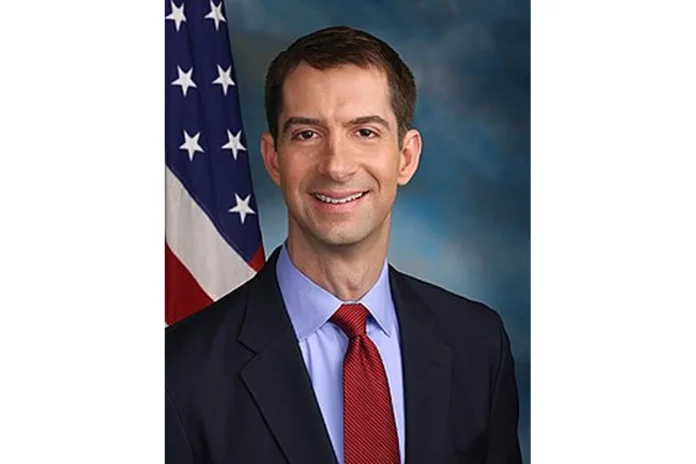
Tom Cotton Bio
Thomas Bryant Cotton (born May 13, 1977) is an American politician, lawyer, and former Army officer who has served since 2015 as the junior United States senator from Arkansas. A member of the Republican Party, he chairs the Senate Republican Conference and the Senate Intelligence Committee. Cotton previously represented Arkansas’s 4th congressional district in the U.S. House of Representatives from 2013 to 2015. He is widely regarded as a leading voice in the conservative movement and has built a reputation for hawkish foreign-policy positions, particularly toward China, Iran, and the broader Middle East.
A graduate of Harvard College and Harvard Law School, Cotton served as an Army officer and completed Ranger School before deploying to Iraq and Afghanistan. After leaving active duty, he worked as a management consultant at McKinsey & Company and as a lawyer at Gibson, Dunn & Crutcher and Cooper & Kirk. He defeated two-term Democratic incumbent Mark Pryor to win his Senate seat in 2014 and has since become a national figure in Republican politics.
Early Life and Background
Thomas Bryant Cotton was born on May 13, 1977, in Dardanelle, Arkansas. He is the son of Thomas Leonard “Len” Cotton and Avis (née Bryant) Cotton. Cotton grew up in his small hometown along the Arkansas River, where his family had deep roots. The values and culture of rural Arkansas shaped his early worldview and his eventual political outlook.
Cotton attended Dardanelle High School, where he distinguished himself as a strong student. He went on to attend Harvard College, where he earned an A.B. magna cum laude in 1998. During his time at Harvard, Cotton wrote opinion pieces for The Harvard Crimson that offered early hints of his conservative political instincts. After a brief period at Claremont Graduate University, he enrolled at Harvard Law School and earned his J.D. in 2002.
Path to U.S. Politics
After law school, Cotton clerked for Judge Jerry Edwin Smith of the U.S. Court of Appeals for the Fifth Circuit. He then entered private legal practice in Washington, D.C., working as an associate at Gibson, Dunn & Crutcher and Cooper & Kirk. The legal grounding from these firms, combined with his academic pedigree, prepared him for the policy debates that would define his later career.
Cotton’s path shifted dramatically in 2005 when he enlisted in the U.S. Army. He completed Officer Candidate School and Ranger School, earning the Ranger tab and the Parachutist Badge. He deployed to Baghdad with the 101st Airborne Division in 2006 as a platoon leader and later served in eastern Afghanistan in 2008 and 2009. After his honorable discharge in September 2009, he briefly joined the management consulting firm McKinsey & Company before entering the political arena in 2012.
Tom Cotton Career
Early Career (2012–2013)
Cotton entered electoral politics in 2012 by running for the U.S. House seat in Arkansas’s 4th congressional district. He won the Republican primary with 57.6% of the vote and then defeated state senator Gene Jeffress in the general election, 59.5% to 36.7%. He was only the second Republican to represent the district since Reconstruction. Support from the Club for Growth, Senator John McCain, and the Tea Party movement helped propel his first win.
Sworn into the House on January 3, 2013, by Speaker John Boehner, Cotton quickly established himself as a vocal opponent of the Obama administration’s policies. He voted against the 2013 federal pay adjustment, opposed the Farm Bill over concerns about Supplemental Nutrition Assistance Program spending, and built a record focused on fiscal restraint and conservative reform.
U.S. House of Representatives Tenure (2013–2015)
As a freshman congressman, Cotton became known for his aggressive floor style and willingness to challenge members of his own party. He clashed publicly with Speaker Boehner during the debate over the bipartisan Gang of Eight immigration bill, urging House Republicans not to bring the measure to a vote. The House ultimately declined to consider the legislation, a result Cotton celebrated as a win for restrictionist immigration policy.
On foreign affairs, Cotton drew national attention for his sharp criticism of the Obama administration’s negotiations with Iran. He accused the president of presenting a false choice between diplomacy and military action and was critical of the Joint Comprehensive Plan of Action. He also joined Senator Mike Pompeo in claiming the existence of secret side agreements between Iran and the International Atomic Energy Agency, drawing both praise from conservatives and pushback from administration officials.
U.S. Senate Tenure (2015–Present)
On August 6, 2013, Cotton announced his campaign against Democratic Senator Mark Pryor. Backed by the Club for Growth, Senator Marco Rubio, and former presidential nominee Mitt Romney, he won the November 2014 race decisively, taking 56.5% of the vote to Pryor’s 39.4%. The Associated Press called the race for Cotton as soon as polls closed. He was sworn into the Senate on January 6, 2015, becoming Arkansas’s junior senator.
In the Senate, Cotton has built a reputation as one of the most active foreign-policy voices in Congress. He has pushed back against the Iran nuclear deal, sponsored sanctions legislation targeting Russia, Iran, and North Korea, and co-sponsored the Defending America’s 5G Future Act to keep Huawei under U.S. restrictions. He has also clashed with the Trump administration at times, opposing the planned withdrawal of American troops from Syria in late 2018 and voting against the FIRST STEP Act on criminal justice reform.
In November 2024, Cotton was selected as chair of the Senate Republican Conference and chair of the Senate Intelligence Committee, cementing his standing among the Senate’s GOP leadership. Earlier that year, he had been considered a potential candidate for United States Secretary of Defense in the second cabinet of Donald Trump.
Notable Events and Milestones
Among Cotton’s signature moments was a June 2020 New York Times opinion piece titled “Send in the Troops,” which argued for deploying federal forces to respond to civil unrest following the murder of George Floyd. The article drew sharp internal criticism from Times staff and led to the resignation of editorial page editor James Bennet. Cotton also introduced the Saving American History Act of 2020, which sought to bar federal funding for teaching The 1619 Project, and voted against creating an independent commission to investigate the January 6, 2021, Capitol attack.
Tom Cotton Career Wins
Cotton has won four major elections: the 2012 Republican primary and general election for Arkansas’s 4th congressional district, the 2014 general election for the U.S. Senate, and his 2020 reelection to the Senate. Each win came by decisive margins, and his 2020 victory against Libertarian Ricky Dale Harrington Jr. set a record for the strongest Libertarian performance in a U.S. Senate election by both vote share and total votes.
U.S. Senate Election Highlights
Cotton’s most consequential victory came in 2014, when he unseated two-term incumbent Mark Pryor in a race that national political observers considered an early Republican pickup. He built a coalition of Tea Party activists, business-friendly conservatives, and traditional GOP donors, which allowed him to dominate fundraising and television advertising in the state. He followed that win with a comfortable 2020 reelection, outperforming President Donald Trump in Arkansas by 4.1 percentage points.
Other Wins & Achievements
Cotton earned recognition as a leading conservative voice early in his career, winning the endorsement of the National Rifle Association and earning an A rating from the organization. His military record, including service as a platoon leader with the 101st Airborne Division in Iraq and with a Provincial Reconstruction Team in Afghanistan, helped him build credibility on national-security issues.
Tom Cotton Family
Family Background
Cotton was raised in Dardanelle, Arkansas, by his father, Thomas Leonard “Len” Cotton, and his mother, Avis (née Bryant) Cotton. His upbringing in rural Arkansas gave him an early appreciation for the concerns of small-town America, which he has frequently highlighted in his political career.
Personal Life
In 2014, Cotton married Anna Peckham, an attorney. The couple has two children. Cotton has cited authors such as Walter Russell Mead, Robert D. Kaplan, Henry Kissinger, Daniel Silva, C. J. Box, and Jason Matthews among his favorites. In 2019, he published a book about the role of the Old Guard at Arlington National Cemetery, drawing partly on his own service with the 3rd U.S. Infantry Regiment.