

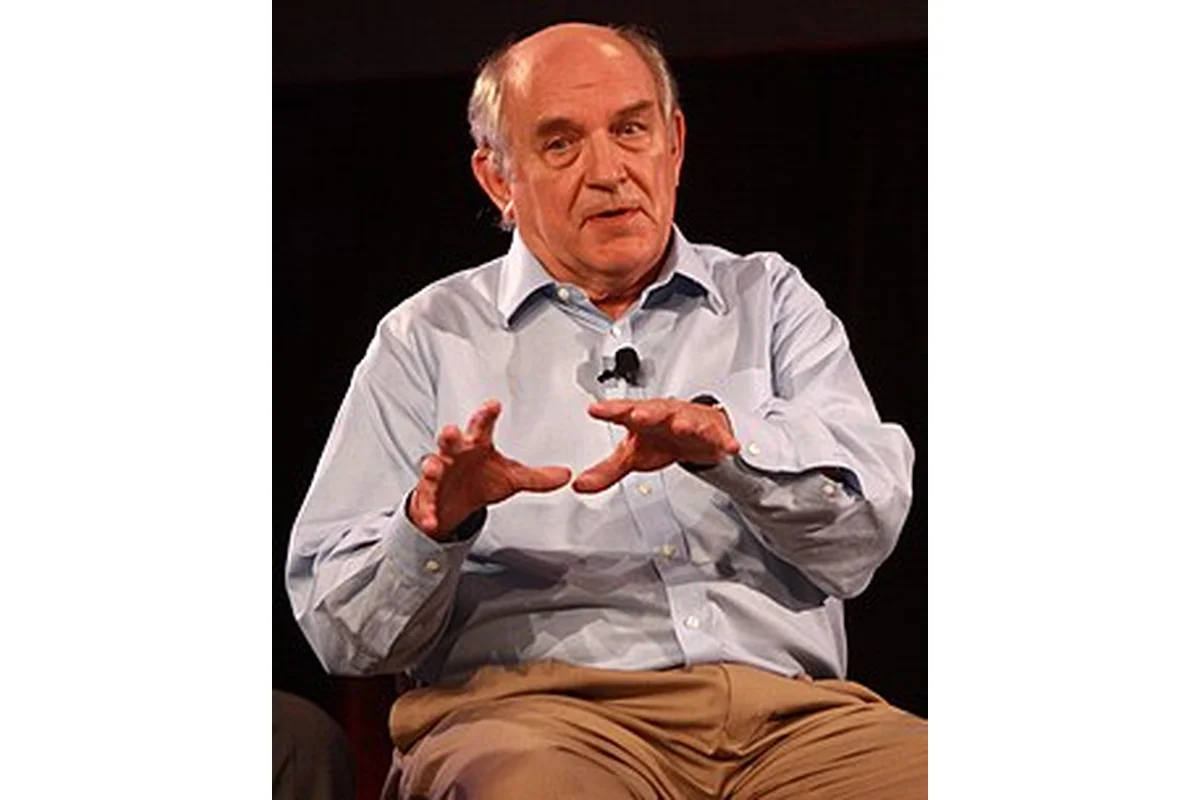
Charles Murray Bio
Charles Alan Murray (born January 8, 1943) is an American political scientist, author, and social commentator whose research has shaped modern debates on welfare, intelligence, and social class. He is the W.H. Brady Scholar at the American Enterprise Institute, a conservative think tank in Washington, D.C., a position he has held since 1990. Murray is the author of several influential and widely debated books, including Losing Ground (1984), The Bell Curve (1994, co-written with Richard Herrnstein), and Coming Apart (2012). His work has drawn both strong support and sharp criticism in academic and public life.
Early Life and Background
Charles Alan Murray was born on January 8, 1943, in Newton, Iowa, and grew up in a Republican family of Scotch-Irish ancestry. He is the son of Frances B. (née Patrick) and Alan B. Murray, an executive for the Maytag Company. Murray has described his upbringing as a “Norman Rockwell kind of family” that stressed moral responsibility, although his youth was also marked by a rebellious streak. As a teenager, he played pool at a hangout for juvenile delinquents, developed his debating skills, and on one occasion helped burn a cross he and his friends had erected near a police station.
Murray credits the SAT with helping him leave small-town Iowa and gain admission to Harvard University, where he earned a Bachelor of Arts degree in history in 1965. He later completed a PhD in political science at the Massachusetts Institute of Technology (MIT) in 1974. His doctoral thesis, which argued against bureaucratic intervention in the lives of Thai villagers, drew on his earlier field experience in Southeast Asia.
Path to Political Science
After graduating from Harvard in 1965, Murray joined the Peace Corps and was sent to Thailand, where he spent six years. While in training in Hawaii, he met Suchart Dej-Udom, a Thai Buddhist language instructor, and the two married in 1966. During his time in Thailand, Murray worked on a covert counter-insurgency program for the United States military in cooperation with the CIA, conducted through the American Institutes for Research (AIR). He has said that much of what he later wrote in his books was shaped by what he observed in Thai villages, where he noticed a wide gap between the priorities of officials in Bangkok and the actual needs of villagers.
After returning to the United States in 1974, Murray joined the American Institutes for Research, eventually becoming its chief political scientist by 1981. During this period, he supervised evaluations in urban education, welfare services, daycare, adolescent pregnancy, services for the elderly, and criminal justice. In 1981, he moved to the Manhattan Institute, a conservative think tank, where he wrote Losing Ground, the book that brought him wide public attention and helped influence the welfare reform debate of the mid-1990s.
Charles Murray Career
Early Career (1974–1990)
From 1974 to 1981, Murray built his reputation as a researcher at the American Institutes for Research, focusing on social policy questions including welfare, education, and criminal justice. He became chief political scientist at AIR before moving in 1981 to the Manhattan Institute, a leading conservative think tank in New York.
At the Manhattan Institute, Murray wrote Losing Ground: American Social Policy, 1950–1980 (1984), which argued that American welfare programs had produced unintended harmful consequences for the very people they were designed to help. The book became a bestseller and helped reshape conservative thinking on welfare, eventually influencing the welfare reform debates of the 1990s.
Breakthrough (1990–Present)
In 1990, Murray joined the American Enterprise Institute (AEI), where he continues to serve as the W.H. Brady Scholar. His most famous collaboration came in 1994, when he co-authored The Bell Curve: Intelligence and Class Structure in American Life with Harvard psychologist Richard J. Herrnstein. The book argued that intelligence had become a stronger predictor than parental socioeconomic status of outcomes such as income, job performance, crime, and out-of-wedlock pregnancy. It also argued that average IQ differences between racial and ethnic groups were at least partly genetic in origin, a claim that has since been widely disputed by mainstream researchers. The book sparked an extensive public debate and several published rebuttals.
Murray continued to publish widely on social policy and class. In Coming Apart: The State of White America, 1960–2010 (2012), he argued that economic and cultural decline in white America had created two highly segregated classes separated by education. He later wrote Real Education: Four Simple Truths for Bringing America’s Schools Back to Reality, challenging what he called “educational romanticism” and arguing that too many young Americans were being pushed toward college when other paths might suit them better. Murray has also written opinion pieces for The New Republic, Commentary, The Wall Street Journal, The New York Times, National Review, and The Washington Post, and has testified before United States House and Senate committees.
Libertarian Era (1990–Present)
Murray identifies politically as a libertarian, though he is also frequently described as a conservative thinker. He has argued for simpler tax codes, less government regulation, and a reduction in welfare benefits. In 2016, he wrote that replacing welfare with a universal basic income might be the best way to adapt to a rapidly changing United States labor market, estimating that such a program could be roughly two hundred billion dollars cheaper than the existing system. On social issues, Murray has urged conservatives to focus less on criminalization and more on moral suasion, particularly regarding abortion and same-sex marriage.
He has received notable recognition for his work, including the Irving Kristol Award from the American Enterprise Institute in 2009 and the Kistler Prize in 2011. He has also received an honorary doctorate from Universidad Francisco Marroquín in Guatemala. Murray’s later career has been marked by continued public speaking and controversy, including a 2017 incident at Middlebury College in Vermont, where a scheduled lecture was disrupted by protesters and a political science professor accompanying him was injured.
Notable Events and Milestones
Among the defining moments of Murray’s career were the publication of Losing Ground in 1984, which influenced national welfare reform, and the 1994 release of The Bell Curve, which remains one of the most debated and criticized works in modern American social science. His 2012 book Coming Apart was a New York Times bestseller, and his 2017 lecture at Middlebury College became a national story when protests led to the hospitalization of a faculty member. Murray has also been a frequent witness before congressional committees and a consultant to senior Republican policymakers in the United States and abroad.
Charles Murray Career Wins
Charles Alan Murray has received two major awards recognizing his contributions to social science and public policy over the course of his career. While he is not known for electoral or competitive wins, his intellectual honors reflect the reach of his scholarship.
Major Awards Highlights
In March 2009, Murray received the Irving Kristol Award, the highest honor given by the American Enterprise Institute. In 2011, he was awarded the Kistler Prize, a recognition given for original contributions to the understanding of the effects of science and technology on the human future.
Other Wins & Achievements
Murray has also been granted an honorary doctorate by Universidad Francisco Marroquín in Guatemala. He has received funding from the Bradley Foundation to support his scholarship, including the writing of The Bell Curve, and has been a frequent contributor to leading American publications and policy journals.
Charles Murray Family
Family Background and Personal Lineage
Charles Alan Murray was born into a family of Scotch-Irish ancestry in Newton, Iowa. His father, Alan B. Murray, was an executive for the Maytag Company, and his mother was Frances B. Murray (née Patrick). Murray grew up in what he has described as a Norman Rockwell-style household that stressed moral responsibility.
Personal Life
In 1966, Murray married Suchart Dej-Udom, a Thai Buddhist language instructor he had met while training for the Peace Corps in Hawaii. The couple had two children before divorcing in 1980 after fourteen years of marriage. In 1983, Murray married Catherine Bly Cox, an English literature instructor at Rutgers University, with whom he co-authored Apollo: Race to the Moon in 1989. Together, they have two children, bringing Murray’s total to four. Murray and his wife live in Frederick County, Maryland, near Washington, D.C., where they attend a Quaker meeting. Murray has described himself as an agnostic, though he has also called himself a “wannabe Christian.”