

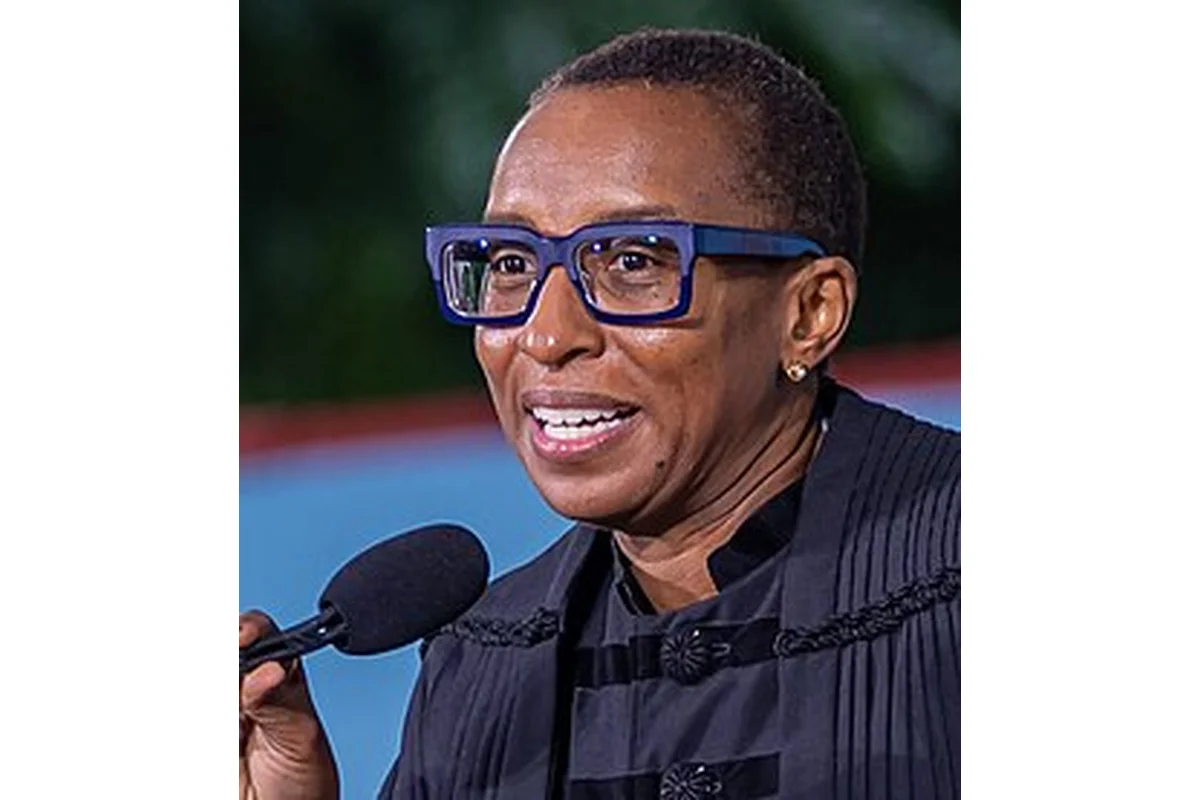
Claudine Gay Bio
Claudine Gay (born August 4, 1970) is an American political scientist and academic administrator whose scholarship focuses on American political behavior, including voter turnout, housing policy, and the politics of race and identity. She is the Wilbur A. Cowett Professor of Government and of African and African-American Studies at Harvard University, a title she has held since 2015. Gay is widely known for serving as the 30th president of Harvard University from July 1, 2023, until her resignation in January 2024, a tenure that placed her at the center of national debates about campus antisemitism, academic integrity, and the role of race-conscious leadership in higher education.
Before becoming president, Gay built a respected career in research and university administration, including service as dean of social sciences (2015–2018) and dean of the Harvard Faculty of Arts and Sciences (2018–2023). She became the first Black person to lead Harvard in its nearly four-hundred-year history. Although she left the presidency under intense public pressure, Gay continues to hold her professorship and remains a member of the Harvard faculty.
Early Life and Background
Claudine Gay was born on August 4, 1970, in the Bronx, New York City, and grew up alongside an older brother, Sony Gay, Jr. Her parents, Sony Gay, Sr., and Claudette Gay (née Bateau), were international students from Haiti who met in New York City in 1967. Her mother studied nursing and her father studied civil engineering before moving the family to Saudi Arabia, where Sony Gay, Sr., worked for the United States Army Corps of Engineers. The family later returned to the United States and lived in Georgia and Colorado, an itinerant childhood that exposed Gay to a range of cultures and education systems. Her extended family owns and runs Haiti’s largest concrete plant, located in Port-au-Prince, and her first cousin is the feminist writer Roxane Gay.
Gay attended Phillips Exeter Academy, a competitive boarding school in Exeter, New Hampshire, graduating in 1988. She initially enrolled at Princeton University before transferring to Stanford University, where she majored in economics and earned a Bachelor of Arts degree in 1992. During her senior year she received Stanford’s Anna Laura Myers Prize for her outstanding thesis in economics. She went on to earn a Ph.D. in government from Harvard University in 1998, an academic path that reflected both her early intellectual training and the influence of her parents’ emphasis on education.
Path to Political Science
Gay’s academic interests were shaped by her undergraduate study of economics at Stanford, where she began to consider how policy decisions and political institutions shape people’s lives. Her graduate training at Harvard deepened this focus, and her doctoral dissertation addressed American political behavior, voter participation, and the political consequences of racial identity. In 1998, the university’s Department of Government recognized her work with the Toppan Prize for the best dissertation in political science, an early signal of her standing in the field.
After completing her doctorate, Gay returned to Stanford in 2000 as an assistant professor in the Department of Political Science, eventually earning tenure as an associate professor. During the 2003–2004 academic year she was a fellow at Stanford’s Center for Advanced Study in the Behavioral Sciences, a position typically awarded to scholars whose research shows exceptional promise. These early faculty years allowed her to develop a research agenda centered on voter turnout, housing policy, and the politics of race, themes that would define her later published work and shape her priorities as an academic leader.
Claudine Gay Career
Early Career (2000–2006)
Gay’s first faculty appointment was at her undergraduate alma mater, Stanford University, where she joined the Department of Political Science as an assistant professor in 2000. She progressed through the academic ranks to become a tenured associate professor, teaching undergraduate and graduate courses in American politics and research methods. Her work during this period produced peer-reviewed publications examining how institutional rules affect voter participation, particularly among racial and ethnic minorities.
In 2003–2004, Gay was selected as a fellow at Stanford’s Center for Advanced Study in the Behavioral Sciences, a research fellowship reserved for scholars producing innovative social science research. The fellowship gave her time to expand her work on political behavior and laid the groundwork for her move to Harvard. She was recruited by Harvard’s Department of Government in 2006 and was appointed a professor of African and African-American Studies the following year, marking the start of her long tenure in Cambridge, Massachusetts.
Breakthrough (2006–2018)
At Harvard, Gay quickly established herself as both a leading scholar and a trusted institutional voice. She was named the Wilbur A. Cowett Professor of Government in 2007, one of the university’s most prestigious endowed chairs, and in 2015 she was appointed dean of social sciences in the Faculty of Arts and Sciences. As dean she began to shape policy on faculty hiring, interdisciplinary programs, and diversity initiatives across Harvard’s largest academic division.
Her promotion to dean of the Harvard Faculty of Arts and Sciences in 2018 represented the most significant administrative role in Harvard’s arts and sciences. In this position she set four primary goals: increasing faculty diversity, supporting interdisciplinary study, encouraging interdepartmental collaboration, and deepening faculty engagement with the broader university community. She also oversaw the development of major academic initiatives, including the 2021 launch of a billion-dollar Science and Engineering Complex in Allston and a new Ph.D. program in quantum engineering. During her deanship she launched anti-racism initiatives, increased racial diversity in hiring, and helped the FAS navigate the financial disruptions of the COVID-19 pandemic, ultimately reporting a $51 million surplus for fiscal year 2021 after projecting a $112 million deficit.
Harvard Presidency Era (2023)
In June 2022, Harvard president Lawrence Bacow announced that he would step down a year later. A search committee led by Penny Pritzker reviewed roughly 600 candidates before selecting Claudine Gay, and on December 15, 2022, the Harvard Corporation named her the university’s 30th president. She took office on July 1, 2023, becoming the first Black president in Harvard’s history. Her appointment was celebrated as a milestone for racial representation in American higher education.
Her presidency became defined by an intense public controversy following the October 7, 2023 Hamas-led attack on Israel. In a December 2023 congressional hearing, Gay, along with the presidents of MIT and the University of Pennsylvania, was questioned about institutional responses to antisemitism on campus. Her testimony, particularly her response to a question about whether calls for the genocide of Jewish people would violate Harvard’s code of conduct, drew widespread criticism, an apology, and calls for her resignation from 70 members of Congress. Days later, plagiarism allegations concerning her dissertation and several published articles surfaced and were widely contested. The Harvard Corporation reviewed the allegations and found instances of inadequate citation but no research misconduct. On January 2, 2024, Gay announced her resignation, writing that the experience had been distressing and frightening, and that her congressional invitation had been a “well-laid trap.” Provost Alan Garber was named interim president, and Gay returned to the Harvard faculty.
Notable Events and Milestones
Gay’s career has been marked by several historic firsts, including becoming the first Black president of Harvard University, the oldest institution of higher education in the United States. Her tenure produced consequential policy moves on faculty diversity, anti-racism initiatives, and the launch of major research facilities in Allston. Her resignation in January 2024 followed one of the most closely watched leadership crises in modern American higher education and reshaped national conversations about antisemitism, academic integrity, and the boundaries of free expression on college campuses.
Claudine Gay Career Awards
Claudine Gay’s academic career has been recognized with several major university prizes that reflect her standing in political science. Her awards are tied to her research training and her early scholarly contributions, and they remain the most reliably documented honors in her public record.
Academic Prizes
In 1992, Gay received Stanford’s Anna Laura Myers Prize for her outstanding undergraduate thesis in economics, an award given to the top graduating economics major. In 1998, she was awarded Harvard’s Toppan Prize for the best dissertation in political science, one of the most prestigious recognitions a political science doctoral candidate can receive at the university.
Other Recognitions
Beyond her dissertation and thesis prizes, Gay has held the Wilbur A. Cowett Professorship at Harvard since 2007, an endowed chair that recognizes sustained scholarly excellence. She has also served in leadership roles for major professional organizations, including as vice president of the Midwest Political Science Association from 2014 to 2017, and as a trustee of Phillips Exeter Academy from 2017 to 2023.
Claudine Gay Family
Family Background and Academic Lineage
Claudine Gay comes from a Haitian American family with deep roots in Haiti and in the United States. Her parents, Sony Gay, Sr., and Claudette Gay (née Bateau), were international students from Haiti who met in New York City in 1967. Her family owns and operates Haiti’s largest concrete plant in Port-au-Prince, a business that has long employed relatives on both sides of the family. Her brother, Sony Gay, Jr., grew up alongside her, and her first cousin, Roxane Gay, is a well-known feminist writer and professor.
Personal Life
Gay is married to Christopher Afendulis, an information systems analyst at Stanford’s Department of Health Research and Policy. The couple has a son. Public information about her personal life is limited, and Gay has generally kept her family life out of the public eye, even as her professional role drew national attention.