
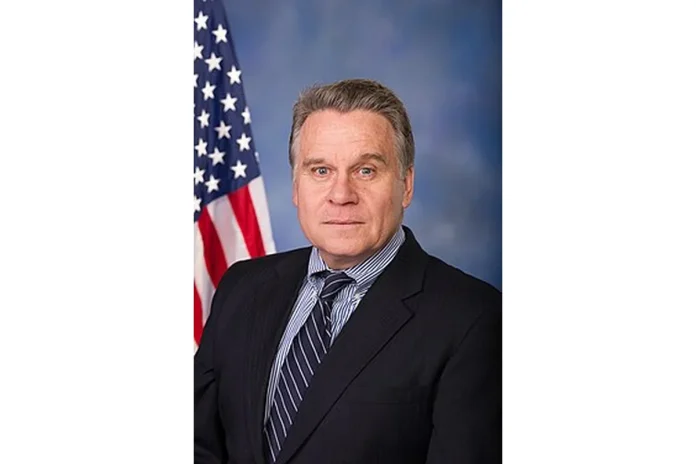
Chris Smith Bio
Christopher Henry Smith, born on March 4, 1953, in Rahway, New Jersey, is an American politician who has served as the U.S. representative for New Jersey’s 4th congressional district since 1981. A member of the Republican Party, he switched from the Democratic Party in 1978 and is tied with Hal Rogers as the longest currently serving member of the House of Representatives. Smith is the longest-serving member of Congress in New Jersey’s history and has served as the dean of the state’s congressional delegation since 2003.
Throughout his career, Smith has been recognized for his focus on human rights and anti-trafficking legislation, most notably authoring the Victims of Trafficking and Violence Protection Act of 2000. He has also chaired the House Veterans’ Affairs Committee and held leadership roles on international human-rights bodies, gaining a reputation for bipartisan work on specific policy areas.
Early Life and Background
Christopher Henry Smith was born in Rahway, New Jersey, on March 4, 1953. He grew up in a family environment that shaped his later interests in business and public service. Smith attended St. Mary’s High School in Perth Amboy, where he was active in athletics, competing as a runner and wrestler. These formative years helped build the discipline and competitive spirit that would later define his political career.
After high school, Smith pursued higher education at Trenton State College, now known as The College of New Jersey, where he earned a Bachelor of Arts degree in business administration. Following his graduation, he joined his family’s sporting goods business, gaining practical experience in commerce and small-business operations. This blend of athletic background and business education laid the groundwork for his eventual transition into public service and political activism.
Path to US Politics
Smith’s entry into politics began during the 1976 election cycle, when he managed the Democratic primary challenge of Steven Foley, an attorney and anti-abortion activist, against incumbent U.S. Senator Harrison A. Williams. Although Foley received only about 15 percent of the vote, the experience gave Smith valuable insight into campaign organization and political strategy. That same year, Smith ran as a delegate to the 1976 Democratic National Convention, pledging his support to Ellen McCormack, the chair of the New York State Right to Life Party, for president.
In 1978, Smith switched from the Democratic Party to the Republican Party and took on the role of executive director of the New Jersey Right to Life Committee, a part-time position. That same year, at the age of 25 and while working at his family’s sporting goods store, he ran for Congress as a Republican but lost to longtime Democratic incumbent Frank Thompson by a wide margin. This initial defeat did not deter him, and he prepared for a rematch two years later.
Chris Smith Career
Early Career (1980–1982)
Smith’s political career gained momentum in 1980 when he ran against Thompson again. Initially given little chance of winning, his prospects improved dramatically when Thompson was indicted as part of the FBI’s Abscam probe. Buoyed by Ronald Reagan’s strong performance in the district, Smith defeated Thompson 57 percent to 41 percent, claiming New Jersey’s 4th congressional district seat.
His re-election in 1982 proved far more challenging. The district was redrawn to include more Democratic voters, and his opponent was former New Jersey Senate President Joseph P. Merlino. Despite a negative ad comparing Smith to Jimmy Stewart’s character in Mr. Smith Goes to Washington, Stewart himself endorsed Smith, and Merlino pulled the ad. Smith won narrowly with 52.7 percent of the vote, and a federal court later found the 1982 redistricting to be impermissible gerrymandering, restoring a more competitive district map.
Breakthrough (2000–2005)
Smith’s national reputation grew significantly in 2000 when he authored the Victims of Trafficking and Violence Protection Act of 2000, landmark legislation aimed at combating human trafficking and violence. The law created the Office to Monitor and Combat Trafficking in Persons at the U.S. State Department and has been reauthorized and expanded several times since its enactment. This achievement cemented his standing as a leading voice on human rights in Congress.
In January 2001, Smith became chairman of the House Veterans’ Affairs Committee. He pushed for veterans’ funding increases that Republican leadership opposed, voting against the Republican budget resolution in favor of the Democratic version, which included more spending on veterans programs. In 2004, he refused to endorse the Republican budget unless it contained additional veterans’ funding, publicly stating that the Bush Administration’s request was $1.2 billion short. During his tenure, he wrote 22 bills addressing veterans’ issues, but his independence led the House Republican Caucus to remove him from the chairmanship in January 2005.
Republican Era (2005–Present)
Following his removal from the Veterans’ Affairs Committee, Smith continued his work on human rights, authoring the International Megan’s Law to Prevent Demand for Child Sex Trafficking in 2014, which sought to notify foreign governments when registered American sex offenders traveled abroad. He also championed autism legislation, including the Autism CARES Act, which provided $1.3 billion in funding for research, services, and supports.
Smith has maintained a reputation for bipartisanship, being ranked the 17th most bipartisan member of the House during the 114th Congress. He broke with his party on several major votes, including voting to establish the January 6 commission in 2021 and supporting the Infrastructure Investment and Jobs Act later that year. He was nominated by President Barack Obama in 2015 and by President Donald Trump in 2017 to serve on the United States delegation to the United Nations General Assembly.
Notable Events and Milestones
One of the most defining moments of Smith’s career was the passage of the Victims of Trafficking and Violence Protection Act of 2000, which established a comprehensive framework for combating human trafficking both domestically and internationally. He has also been a leading congressional voice on human rights in China, holding hearings on the Xinjiang internment camps and the plight of blind activist Chen Guangcheng. In July 2020, Smith was sanctioned by the Chinese government for his criticism of human rights abuses, an action that underscored his prominent role in international human-rights advocacy.
Chris Smith Career Wins
Christopher Henry Smith has won every congressional election since his initial 1980 victory, making him one of the most consistently successful politicians in New Jersey history. His career wins span more than four decades, with his highest vote share reaching 67.3 percent in his most recent re-election. Smith’s electoral success has been anchored by his ability to appeal to a broad range of voters in his central New Jersey district.
Congressional Election Highlights
Smith has won 23 consecutive congressional elections beginning in 1980. His closest contest came in 1982, when he defeated Joseph P. Merlino with 52.7 percent of the vote. In 2018, he won with 55 percent of the vote, the only Republican to win a congressional race in New Jersey that year. His most recent victory in 2024 saw him defeat Democrat Matthew Jenkins with 67.3 percent of the vote, reaffirming his enduring popularity in the district.
Other Wins and Achievements
Beyond electoral victories, Smith has achieved significant legislative successes, including the passage of the Victims of Trafficking and Violence Protection Act of 2000 and multiple reauthorizations of autism research funding through the Autism CARES Act. He has also received praise from veterans’ organizations such as the Veterans of Foreign Wars and Paralyzed Veterans of America for his tireless advocacy on behalf of veterans’ issues.
Chris Smith Family
Family Background and Personal Lineage
Smith was raised in a family with business interests, working at the family’s sporting goods store before entering politics. He has maintained close ties to his New Jersey roots throughout his career, even as his political responsibilities have taken him to Washington. Smith has kept much of his family life out of the public eye, focusing public attention on his legislative work rather than personal matters.
Personal Life
Christopher Henry Smith married Marie Hahn in 1977, and the couple has built a life together that spans his entire political career. As of 2008, Smith resides in Herndon, Virginia, outside Washington, D.C., and has also rented an apartment in Hamilton, New Jersey, to maintain a presence in the district he represents. His personal life remains largely private, with Smith preferring to direct public attention to his policy work and constituency service.