
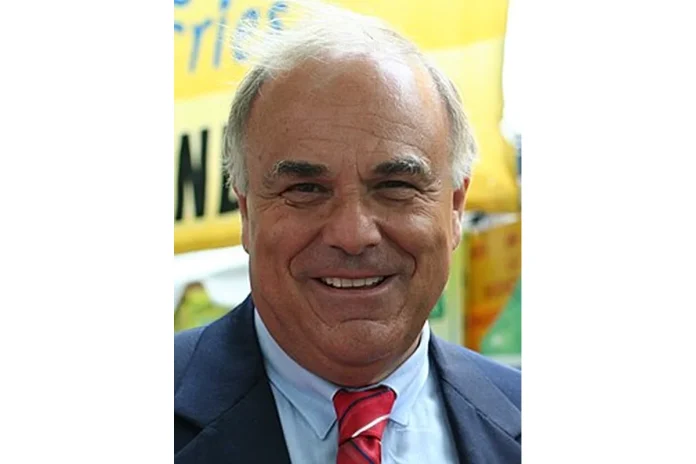
Ed Rendell Bio
Edward Gene Rendell (born January 5, 1944) is an American politician, author, and former prosecutor who served as the 45th Governor of Pennsylvania from 2003 to 2011. A leading figure in the Democratic Party for more than three decades, Rendell built a reputation as a tough-on-crime prosecutor before becoming one of the most prominent big-city mayors in the United States. He later expanded his influence at the state and national level, chairing the Democratic National Committee during the 2000 presidential election. After leaving the governor’s office, he returned to private law practice and became a familiar political commentator on cable news.
Known by the nickname “America’s Mayor,” Rendell is widely remembered for guiding Philadelphia through a dramatic fiscal turnaround in the 1990s. He is also recognized for his work as a political analyst for NBC News and MSNBC, and as a long-standing Philadelphia Eagles fan. A graduate of the University of Pennsylvania and Villanova University School of Law, he has remained active in public affairs, energy policy debates, and academic life at the Fels Institute of Government at the University of Pennsylvania.
Early Life and Background
Edward Gene Rendell was born on January 5, 1944, in New York City to Jesse T. Rendell and Emma (née Sloat) Rendell. He grew up in a Jewish family, and all four of his grandparents were immigrants from Russia. After spending his early years in New York, Rendell moved to Pennsylvania for his higher education, beginning a long personal and political association with the Philadelphia region.
He attended the Riverdale Country School in New York before enrolling at the University of Pennsylvania, where he joined the Pi Lambda Phi fraternity in 1962 and earned a Bachelor of Arts degree in 1965. Rendell then attended Villanova University School of Law, completing his Juris Doctor in 1968. Following law school, he served as a 2nd Lieutenant in the United States Army Reserve from 1968 to 1974, balancing the start of his legal career with military obligations.
Path to US Politics
Rendell’s path into public life began in the legal profession, where he developed a reputation for directness and a forceful courtroom presence. His early work as an assistant district attorney in Philadelphia laid the groundwork for his first major electoral victory in 1977, when he defeated incumbent Democratic District Attorney Emmett Fitzpatrick in the primary. At the time, Rendell became the youngest district attorney in Philadelphia history.
Serving two terms as District Attorney of Philadelphia from 1978 to 1986, Rendell built a strong record on law enforcement issues. His tenure included high-profile cases, such as the controversial prosecution of Mumia Abu-Jamal, and occurred against the backdrop of the 1985 MOVE bombing. In 1986, he sought the Democratic nomination for Governor of Pennsylvania but lost the primary to Bob Casey Sr. The defeat did not slow his rise; four years later, he set his sights on Philadelphia’s mayoral office.
Ed Rendell Career
Early Career (1977-1991)
Rendell’s electoral career began in 1977, when he won the Democratic primary for District Attorney of Philadelphia and went on to claim the office. As district attorney, he was known for his aggressive style, fiery temper, and willingness to confront political opponents, including once yelling in the governor’s face over a prisoner release. He received 28 delegate votes for Vice President at the 1980 Democratic National Convention, even though he was not an active candidate.
After serving two terms as district attorney, Rendell ran for the Democratic nomination for Governor of Pennsylvania in 1986 but lost the primary to Bob Casey Sr. He returned to private legal practice before entering the 1987 race for Mayor of Philadelphia, where he lost to incumbent Wilson Goode. Those defeats sharpened his political instincts and prepared him for a more successful run four years later.
Mayor of Philadelphia Breakthrough (1992-2000)
In 1991, Rendell won the mayoral election by a more than 2-to-1 margin after his original Republican opponent, former Mayor Frank Rizzo, died during the campaign. He was sworn in as Mayor of Philadelphia in 1992 and inherited a $250 million deficit and the lowest credit rating of any major American city. Rendell balanced the budget, oversaw five consecutive years of surpluses, and reduced business and wage taxes for four straight years.
His first term as mayor was chronicled in Buzz Bissinger’s best-selling book A Prayer for the City, which gave readers an inside look at his leadership style. The New York Times later called his tenure “the most stunning turnaround in recent urban history.” In 1995, he won re-election with 80 percent of the vote against Republican Joe Rocks, and in 1996 he signed Executive Order 2-96, which extended health benefits to same-sex couples of Philadelphia city employees.
During this period, Rendell’s national profile grew. In 1999, he was elected chairman of the Democratic National Committee, a role he held through the 2000 presidential election. Vice President Al Gore gave him the nickname “America’s Mayor” in recognition of his visibility and success. Rendell left the mayoral office in 2000, having transformed Philadelphia’s finances and reputation.
Governor of Pennsylvania Era (2003-2011)
Rendell won the 2002 Democratic primary for Governor of Pennsylvania despite lacking support from the state party establishment, which had backed Bob Casey Jr. He won the primary with victories in just 10 of 67 counties and then defeated Republican State Attorney General Mike Fisher in the general election, taking 53 percent of the vote. He was sworn in as the 45th Governor of Pennsylvania in January 2003.
In his first term, Rendell pushed “The Plan for a New Pennsylvania,” using new slot machine revenue to reduce taxes and increase education funding. He created the Office of Management and Productivity, which generated roughly $180 million in annual savings through procurement reforms. He also worked with the legislature to legalize and tax slot machine parlors as a way to fund property tax relief. In 2006, Rendell won re-election in a landslide, defeating former Pittsburgh Steelers player Lynn Swann 60 percent to 40 percent.
His second term was marked by major budget battles, including a brief 2007 state government shutdown that furloughed about 25,000 workers before being resolved in eight days. Rendell signed 78 execution warrants during his time in office, though none were carried out due to legal stays. He left office in January 2011 because of term limits and was succeeded by Republican Tom Corbett.
Notable Events and Milestones
Among Rendell’s signature accomplishments were balancing Philadelphia’s budget after inheriting a $250 million deficit, leading the Democratic National Committee through the 2000 election, and winning a 60-percent landslide re-election as governor in 2006. His appearance in the 1993 film Philadelphia, in which he played himself while still serving as mayor, gave him an unusual crossover moment in popular culture. He also drew attention in 2010 when his comments about a postponed Eagles game inspired stadium staff to label his seat “reserved for non-wussies.”
Ed Rendell Career Wins
Ed Rendell’s electoral record spans more than three decades and includes victories at the city, state, and national party levels. He won two terms as District Attorney of Philadelphia, two terms as Mayor of Philadelphia, and two terms as Governor of Pennsylvania. He was also elected to chair the Democratic National Committee, giving him a leading role in one of the most contested presidential elections in modern history.
Mayor of Philadelphia Highlights
Rendell first won the mayoral race in 1991, defeating Joseph M. Egan Jr. by more than a 2-to-1 margin after Frank Rizzo’s death. He followed that victory with a commanding 1995 re-election win over Joe Rocks, capturing 80 percent of the vote. His mayoral tenure is widely considered one of the most successful urban fiscal turnarounds of the late 20th century.
Other Wins & Achievements
Beyond his citywide victories, Rendell served as chairman of the Democratic National Committee from 1999 to 2001, and as chairman of the National Governors Association during his time in the statehouse. He was also an influential surrogate for Hillary Clinton’s 2008 presidential primary campaign in Pennsylvania and later endorsed Barack Obama after Clinton ended her bid. In 2018, Rendell publicly disclosed that he had been living with Parkinson’s disease.
Ed Rendell Family
Family Background and Public Service
Ed Rendell was raised in a Jewish family in New York City by his father, Jesse T. Rendell, and his mother, Emma (née Sloat) Rendell, both children of Russian immigrants. The family’s commitment to public service would echo through Rendell’s own career in law and politics, and he has credited his upbringing with shaping his belief in civic responsibility and community involvement.
Personal Life
Rendell married Marjorie Rendell on July 10, 1971, and the couple had one son, Jesse. Marjorie Rendell, a lawyer, was appointed by President Bill Clinton to serve as a federal judge on the United States Court of Appeals for the Third Circuit. Ed and Marjorie Rendell announced their separation shortly after he left the governor’s office in 2011 and filed for divorce in September 2016. In 2018, Rendell publicly acknowledged that he had been diagnosed with Parkinson’s disease more than three years earlier.