
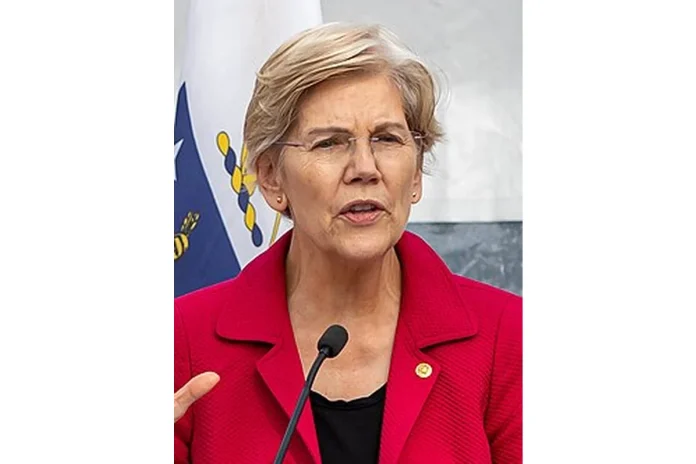
Elizabeth Warren Bio
Elizabeth Ann Warren (born June 22, 1949) is an American politician, author, and former law professor who has served as the senior United States senator from Massachusetts since 2013. A member of the Democratic Party and widely regarded as a progressive, Warren is known for her work on consumer protection, bankruptcy, and middle-class economic issues. She helped design and launch the Consumer Financial Protection Bureau and chaired the Congressional Oversight Panel for the Troubled Asset Relief Program (TARP).
Warren ran for the 2020 Democratic presidential nomination, ultimately finishing third, and has authored numerous books and scholarly works. In the Senate she has focused on financial regulation, antitrust, student loan reform, and economic inequality, while cultivating a national profile as a leading progressive voice in American politics.
Early Life and Background
Elizabeth Ann Warren was born Elizabeth Ann Herring in Oklahoma City, Oklahoma, on June 22, 1949. She is the fourth child of Pauline Louise Reed, a homemaker, and Donald Jones Herring, a former U.S. Army flight instructor who later worked as a salesman at Montgomery Ward. Warren has described her early family life as teetering on the ragged edge of the middle class, kind of hanging on at the edges by their fingernails.
The family lived in Norman, Oklahoma, until Warren was 11, then moved back to Oklahoma City. When she was 12, her father suffered a heart attack that led to large medical bills and a pay cut, eventually forcing him to take a maintenance job. To help the family finances, her mother went to work in the catalog-order department at Sears, and at 13, Warren began waiting tables at her aunt’s restaurant. These experiences shaped her lifelong focus on the financial pressures facing American families.
Warren became a star member of the debate team at Northwest Classen High School in Oklahoma City and won the state high school debating championship. She earned a debate scholarship to George Washington University at age 16, but left after two years in 1968 to marry her high school sweetheart, James Robert Warren. She later enrolled at the University of Houston, graduating in 1970 with a Bachelor of Science degree in speech pathology and audiology. She earned her Juris Doctor from Rutgers Law School and was admitted to the bar, launching a career in law and academia.
Path to US Politics
Warren spent more than three decades as a law professor, teaching at the University of Houston, the University of Texas at Austin, the University of Michigan, the University of Pennsylvania, and Harvard Law School. Her research into bankruptcy and middle-class personal finance brought her national recognition. Alongside colleagues, she published influential work arguing that rising bankruptcy rates were driven less by profligate spending than by middle-class families struggling to afford homes in good school districts and rising healthcare costs.
Warren’s entry into public policy began in 1995, when she advised the National Bankruptcy Review Commission and spent years opposing legislation that she believed would restrict consumer access to bankruptcy relief. Her national profile grew sharply after the 2008 financial crisis. In 2008, Senate Majority Leader Harry Reid appointed her to chair the five-member Congressional Oversight Panel for TARP. She later helped establish the Consumer Financial Protection Bureau, which was created in 2011, and briefly served as its first special advisor under President Barack Obama.
On September 14, 2011, Warren declared her intention to run for the U.S. Senate in Massachusetts. She won the Democratic nomination in 2012 with a record 95.77 percent of delegate votes at the state convention, ran unopposed in the primary, and went on to defeat incumbent Republican Senator Scott Brown in the general election, becoming the first woman elected to the U.S. Senate from Massachusetts.
Elizabeth Warren Career
Early Career (1970s–1990s)
After college, Warren taught children with disabilities in a public school for a year before enrolling in law school. During law school, she worked as a summer associate at the firm Cadwalader, Wickersham & Taft, and after receiving her Juris Doctor and passing the bar, she offered legal services from home, drafting wills and handling real estate closings. In the late 1970s, 1980s, and 1990s, she taught law at several American universities while researching issues related to bankruptcy and middle-class personal finance.
She began her academic career as a lecturer at Rutgers University Newark School of Law from 1977 to 1978, then joined the University of Houston Law Center, where she became an associate dean in 1980 and received tenure in 1981. She later taught at the University of Texas School of Law, the University of Michigan, and the University of Pennsylvania, where she obtained an endowed chair in 1990. By the mid-1990s, she was a nationally recognized expert in commercial and bankruptcy law.
Senate Breakthrough (2012–2018)
On November 6, 2012, Warren defeated Senator Scott Brown with 53.7 percent of the vote, becoming the first woman ever elected to the U.S. Senate from Massachusetts. Vice President Joe Biden swore her in on January 3, 2013, and she was assigned a seat on the Senate Banking Committee, which oversees implementation of the Dodd–Frank Act. At her first Banking Committee hearing in February 2013, she pressed banking regulators on why Wall Street banks were rarely taken to trial, and her questioning amassed more than one million views online within days.
Warren built a reputation for aggressive oversight of the financial industry, including confrontations with Wells Fargo leadership, calls for criminal investigations into bank misconduct, and the introduction of legislation to lower student loan interest rates. During the debate over Senator Jeff Sessions’ nomination for U.S. attorney general in February 2017, Warren was silenced under Senate Rule 19 after reading a letter from Coretta Scott King. Senate Majority Leader Mitch McConnell’s remark that she had been warned and had persisted nevertheless became a national rallying cry and was later honored in a 2018 Women’s History Month theme.
Warren was reelected in 2018, defeating Republican nominee Geoff Diehl by a wide margin, 60 percent to 36 percent, and continued her work on banking, consumer protection, and economic policy.
Third Senate Term Era (2019–Present)
On February 9, 2019, Warren announced her candidacy for the 2020 Democratic presidential nomination, running on a platform of structural economic reform. She rose in the polls through 2019, briefly leading several national surveys in the fall, and raised $24.6 million in the third quarter of 2019, fueled by small online donations and a refusal to accept high-dollar PAC contributions. She finished third in the primaries and suspended her campaign on March 5, 2020, after Super Tuesday.
Warren won a third Senate term in 2024, defeating Republican attorney John Deaton 59.6 percent to 40.4 percent. In the Senate she has continued to advocate for student loan reform, antitrust enforcement, stronger oversight of large banks, and progressive priorities such as Medicare for All and a higher minimum wage. In March 2026, Warren publicly criticized the U.S. and Israeli war against Iran as dangerous and illegal.
Notable Events and Milestones
Warren’s signature moment in the Senate came in 2017, when she was formally silenced during the debate over Senator Jeff Sessions’ nomination, prompting the phrase Nevertheless, She Persisted to become a national slogan. She also played a leading role in the creation of the Consumer Financial Protection Bureau and chaired the Congressional Oversight Panel for TARP during the 2008 financial crisis, producing widely cited monthly oversight reports. Her 2020 presidential primary campaign, fueled by record-setting small-donor online fundraising, marked a defining chapter in her national profile.
Elizabeth Warren Career Wins
Elizabeth Warren’s political career is anchored by three consecutive U.S. Senate victories in Massachusetts, including her historic 2012 win that made her the first woman elected to the Senate from the state. She has also won a series of national recognitions, including being named one of Time magazine’s 100 Most Influential People in the World in 2009, 2010, 2015, and 2017.
Senate Highlights
Warren’s 2012 Senate victory came after she raised $39 million, more than any other Senate candidate that year, and demonstrated that a candidate could take on Wall Street interests without Wall Street money. She was reelected in 2018 with 60 percent of the vote and again in 2024 with 59.6 percent, cementing her status as a dominant figure in Massachusetts politics.
Her 2012 win made national headlines as the first time a woman was elected to the U.S. Senate from Massachusetts, and her 2018 and 2024 reelection victories further solidified her standing as a leading progressive voice in the chamber.
Other Wins & Achievements
In 2009, The Boston Globe named Warren the Bostonian of the Year, and the Women’s Bar Association of Massachusetts honored her with the Lelia J. Robinson Award. That same year, she became the first professor in Harvard’s history to win the law school’s Sacks–Freund Teaching Award for a second time. In 2011, she was inducted into the Oklahoma Hall of Fame and delivered the commencement address at Rutgers Law School, her alma mater. The National Law Journal has repeatedly named her one of the Fifty Most Influential Women Attorneys in America and one of the most influential attorneys of the decade.
Elizabeth Warren Family
Family Background and Political Lineage
Warren was raised in a Methodist family in Oklahoma, the daughter of Donald Jones Herring, a former U.S. Army flight instructor turned salesman, and Pauline Louise Reed, a homemaker who later took a job at Sears to help the family finances. She has three older brothers. Warren’s family struggled financially after her father’s heart attack when she was 12, an experience she has often cited in shaping her views on the financial pressures facing American working families.
Personal Life
Warren married her high school sweetheart, James Robert Jim Warren, in 1968, and the couple divorced in 1978. She has two children: a daughter, Amelia Tyagi, with whom she co-authored The Two-Income Trap, and a son named Alexander. In 1980, Warren married law professor Bruce H. Mann, and the couple has been together since. As of 2019, Forbes Magazine estimated her net worth at $12 million, and as of early 2025, estimates placed it at least $8 million.