

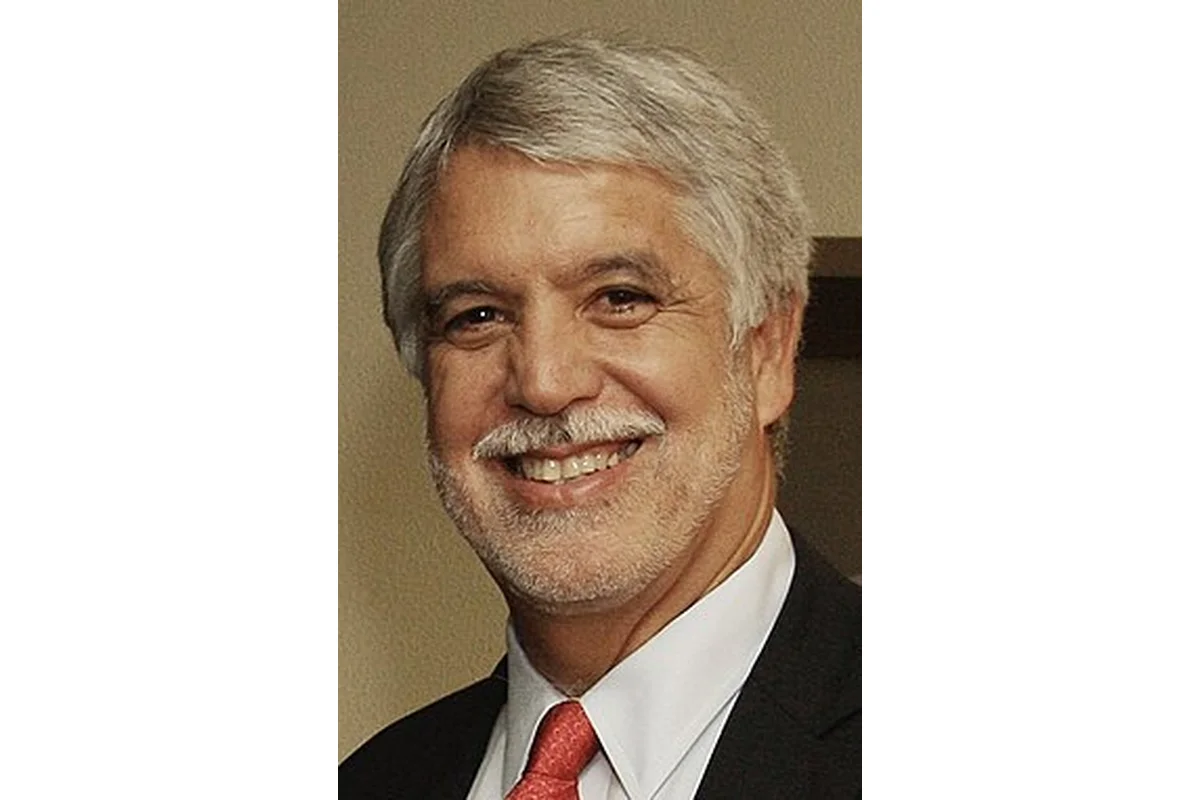
Enrique Peñalosa Bio
Enrique Peñalosa Londoño (born 30 September 1954) is a Colombian politician and urban policy advocate best known for his work as mayor of Bogotá. A trained economist, he served two non-consecutive terms leading the Colombian capital, first from 1998 to 2001 and again from 2016 to 2019. Beyond his time in office, Peñalosa has built a career as a consultant and journalist on urban and transportation policy, advising cities around the world on sustainable mobility and public space.
His mayoral tenure reshaped daily life in Bogotá through major investments in public space, libraries, and transportation. Peñalosa championed the TransMilenio bus rapid transit system, an extensive bicycle network, and the expansion of parks and libraries, efforts that drew international attention and helped frame him as one of Latin America’s most discussed urban leaders.
Early Life and Background
Enrique Peñalosa was born on 30 September 1954 in Washington, D.C., where his father was working in diplomatic circles. He is the son of Enrique Peñalosa Camargo, a former Colombian Minister of Agriculture and permanent ambassador to the United Nations, and Cecilia Londoño. Growing up in a family with deep ties to public service, Peñalosa was exposed early to conversations about government, diplomacy, and national policy.
During his childhood in Colombia, Peñalosa studied at Gimnasio Campestre and the Colegio Refous. When he was 15 years old, his family relocated to the United States so that his father could take up the post of Colombian ambassador to the United Nations. This international move introduced him to new academic environments and helped shape his later interest in urban planning and public policy.
Peñalosa attended Duke University on a partial football scholarship, where he earned a Bachelor of Arts in Economics and History. He later pursued graduate studies in France, completing a master’s in government affairs at the University of Paris II and an additional graduate title in public management at the Institut international d’administration publique.
Path to Public Service
Peñalosa began his political life in the youth circles supporting liberal presidential candidate Luis Carlos Galán in Bogotá, while working at the Empresa de Acueducto de Bogotá, the city’s state-owned water supply company. He went on to back Julio César Sánchez, a local political figure from Cundinamarca, who in turn supported Peñalosa’s election to the departmental assembly.
In 1986, President Virgilio Barco, a friend of his father, named Peñalosa an economic advisor. Two years later, in 1990, he ran for Congress without the backing of any major political machine and won a seat with 22,000 votes. Although the Colombian Congress was closed the following year ahead of a new constitution, Peñalosa used his single year in office to introduce several initiatives and pass a reform law, a notable accomplishment for a freshman legislator.
Peñalosa first sought the Bogotá mayoralty in 1991, campaigning on foot, by bicycle, and on public transit rather than relying on established party support. He lost that race to Jaime Castro Castro. In 1994, he ran again and was defeated by a wide margin by Antanas Mockus. He tried once more in 1997 and won a close race against Carlos Moreno de Caro, beginning his first term as mayor in 1998.
Enrique Peñalosa Career
Early Career (1986–1997)
During the late 1980s and 1990s, Peñalosa built a reputation as an independent reformer willing to challenge political establishments. His time as an economic advisor in the Barco administration gave him direct experience with national policy, while his single year in Congress demonstrated that he could pass legislation even as a newcomer.
His three mayoral campaigns before 1997 reflected a distinctive grassroots style. He connected directly with voters across the city, an approach that contrasted with the traditional party-backed candidacies of his rivals. Although he lost twice, these efforts established him as a serious contender for the Bogotá mayoralty.
First Mayoral Term Breakthrough (1998–2001)
When Peñalosa took office as mayor of Bogotá in 1998, he inherited a city in sound fiscal condition thanks to budget reforms from his predecessor Antanas Mockus. He quickly moved to launch five major projects: a bank of public lands, a district-wide system of parks, a network of public libraries, the TransMilenio bus rapid transit system, and an extensive program of road construction and maintenance.
Early in his first term, Peñalosa faced very low approval ratings and survived a recall election process midway through his administration. As infrastructure projects came online, however, his popularity climbed sharply, and by the end of his term he recorded some of the highest approval ratings of any Bogotá mayor.
Among his most visible first-term actions were the relocation of informal street vendors, the renovation of major avenues such as 15th Avenue and Autopista Norte, the introduction of the Pico y Placa rush-hour vehicle restrictions, the construction of the city’s first Cicloruta bike routes, and the launch of TransMilenio, whose construction continued into Mockus’s later term. His work on sustainable transport and public space earned him several international sustainability and urban planning awards and recognition as a distinguished guest in urban policy studies at New York University.
Second Mayoral Term Era (2016–2019)
Enrique Peñalosa returned to the Bogotá mayoralty after winning the October 25, 2015 election with 906,052 votes, representing about 33.1 percent of the electorate. He ran as a center-right candidate after twelve years of leftist mayors had governed the city, defeating former labor minister Rafael Pardo Rueda.
His second-term agenda included the construction of Bogotá’s first rapid transit line, additional TransMilenio corridors along avenues such as 7th, 68th, and Boyacá, the building of 30 public schools and 6 public hospitals, the installation of 1,500 surveillance cameras, major new roadways like Avenida Longitudinal de Occidente, and the privatization of the city’s stake in Empresa de Teléfonos de Bogotá. He also proposed expanding the metropolitan area northward into the Thomas Van Der Hammen natural reserve, a plan that drew opposition from environmental and civic groups.
He served until 2019, when Claudia López Hernández of the Green Alliance Party was elected to succeed him. Miguel Uribe Turbay, who had served as Peñalosa’s Secretary-General, ran as the Democratic Center candidate and finished fourth. Peñalosa is also associated with the Radical Change Party and has had ties to the Colombian Liberal Party and the Green Party throughout his career.
Notable Events and Milestones
One of the most significant moments of Peñalosa’s career was the launch of TransMilenio during his first term, a bus rapid transit system that became a model studied by cities worldwide. He also implemented Bogotá’s Cicloruta network, the Pico y Placa driving restrictions, and an ambitious library system that brought free public reading rooms to underserved neighborhoods. Internationally, his work helped position Bogotá as a reference point for sustainable urban policy, and a 2009 documentary titled Bogotá Change highlighted the joint impact of his and Antanas Mockus’s administrations.
Enrique Peñalosa Career Achievements
Across more than two decades in public life, Enrique Peñalosa has accumulated a record of mayoral victories and policy milestones that have shaped Bogotá’s urban identity. His success at the ballot box, combined with his influence on global urban policy discussions, has made him one of Colombia’s most recognized political figures.
Mayoral Highlights
Peñalosa won the Bogotá mayoralty three times at the ballot box across his career. His first victory came in 1997 against Carlos Moreno de Caro, beginning the 1998–2001 term. He lost a 2007 bid to Samuel Moreno by about 15 percentage points and a 2011 race to Gustavo Petro, who won 32 percent of the vote to Peñalosa’s 25 percent. His most recent win came in 2015, when he captured 33.1 percent of the electorate and returned to office for the 2016–2019 term.
Other Achievements and Recognition
Beyond his mayoral record, Peñalosa served as president of the board of the Institute for Transportation and Development Policy, a New York-based non-profit, from 2009 until his 2015 election. He has written articles for El Tiempo, Nueva Frontera, Economía Colombiana, Carta Financiera, and Revista Diners, and has consulted on urban and transportation policy for cities around the world. His international honors have included several sustainability and urban planning awards in recognition of his work on public space, cycling, and mass transit.
Enrique Peñalosa Family
Family Background and Public Service Lineage
Enrique Peñalosa was born into a family with a strong tradition of public service in Colombia. His father, Enrique Peñalosa Camargo, served as Minister of Agriculture and as Colombia’s permanent ambassador to the United Nations, experiences that gave his son early exposure to diplomacy and government. His mother, Cecilia Londoño, also played a central role in his upbringing. His brother, Gil Peñalosa, carried the family’s commitment to public service into municipal government, serving as Commissioner of Parks under Mayor Antanas Mockus.
Personal Life
Enrique Peñalosa is a Colombian national and has been based in Bogotá, Colombia, the city whose transformation he has shaped over more than two decades in public life. His career has blended politics, journalism, and consulting, allowing him to extend his influence on urban policy well beyond Colombia’s borders.