

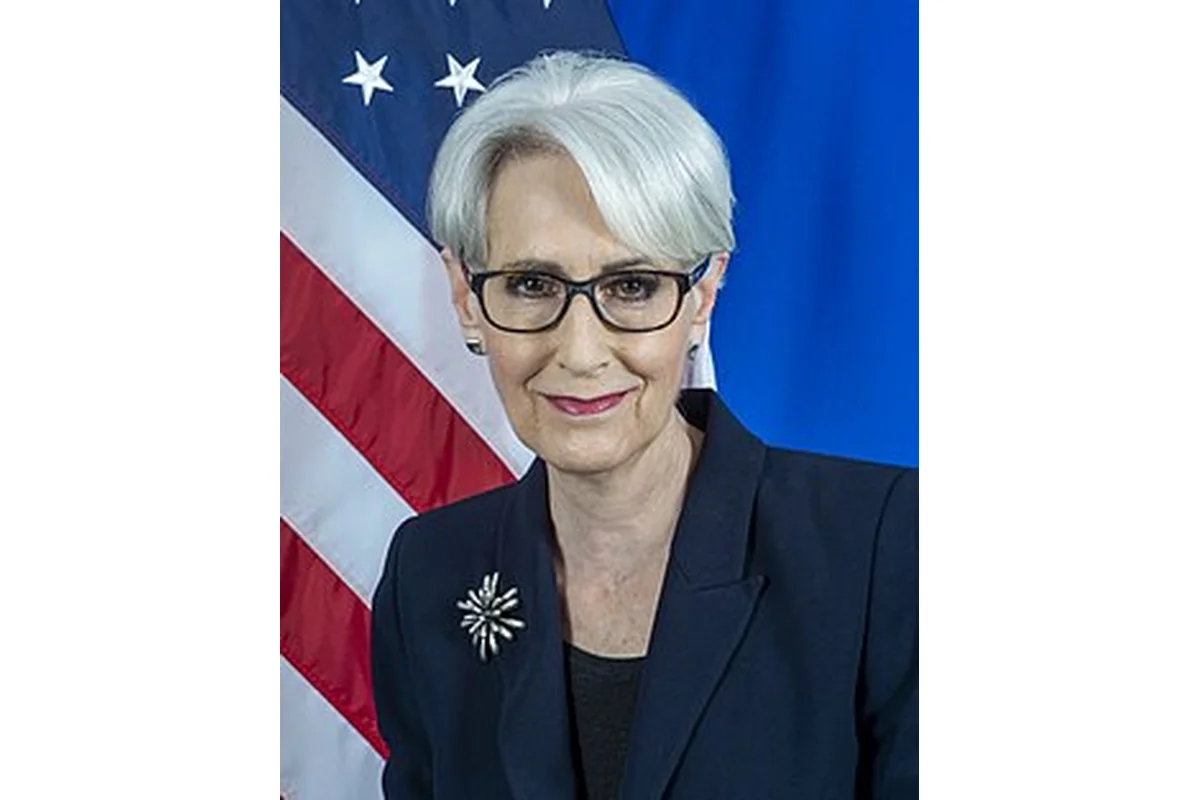
Wendy Sherman Bio
Wendy Ruth Sherman (born June 7, 1949) is an American diplomat and public servant who served as the United States Deputy Secretary of State from April 2021 to July 2023. A career negotiator and former social worker, she became the first woman to hold that position, working under Secretary of State Antony Blinken in the Biden administration. Earlier in her career, Sherman served as Under Secretary of State for Political Affairs from 2011 to 2015 and as Counselor of the Department of State during the Clinton administration from 1997 to 2001.
Beyond government service, Sherman has worked in academia and the private sector, including as a professor and director at the Harvard Kennedy School and as a senior counselor at the Albright Stonebridge Group. She is widely recognized for leading the United States negotiating team during the talks that produced the 2015 Iran nuclear agreement, the Joint Comprehensive Plan of Action.
Early Life and Background
Wendy Ruth Sherman was born in Baltimore, Maryland, on June 7, 1949. Her father, Malcolm Sherman, was a U.S. Marine Corps veteran who had grown up in Philadelphia. When Wendy was in elementary school, the family moved to Pikesville, Maryland, a suburb of Baltimore, where she attended Pikesville High School and completed her secondary education.
Sherman went on to attend Smith College from 1967 to 1969 before transferring and graduating from Boston University in 1971 with studies in sociology and urban studies. In 1976, she earned a master’s degree in social work from the University of Maryland, Baltimore, training that shaped the interpersonal and negotiation skills she would later apply to international diplomacy.
Path to US Politics
Sherman began her professional life as a social worker, focusing on women who had been abused and on people living in poverty. She later said that those community organizing and clinical experiences were the foundation of her negotiation style, often noting that the same skills that work with members of Congress also work with foreign leaders. During this period she was active in the neighborhood movement in Baltimore, working alongside activists such as Geno Baroni and Arthur Naparstek on issues affecting low-income housing.
Her move into political and policy work came through a series of leadership roles in the late 1980s and 1990s. Sherman directed EMILY’s List, an organization that supports pro-choice Democratic women candidates, and she served as director of Maryland’s office of child welfare. In 1996, she became the founding president and chief executive of the Fannie Mae Foundation, helping to set its early direction on housing and homeownership.
Wendy Sherman Career
Early Career (1993–2001)
Sherman’s national government service began in the Clinton White House, where she served as a special advisor to President Bill Clinton and Secretary of State Madeleine Albright. In 1997, she was appointed Counselor of the United States Department of State, a senior policy role she held until 2001, and she also served as the administration’s North Korea policy coordinator.
In that role, she was central to the diplomatic effort surrounding the 1994 Agreed Framework, under which North Korea agreed to freeze and dismantle key parts of its nuclear program, including the reactor at Yongbyon. Sherman continued to defend that agreement in later years, arguing that during the Clinton years no additional plutonium was added to North Korea’s stockpile. Her work on North Korea drew both praise and criticism, with figures such as James Baker and John Bolton publicly criticizing her team’s negotiating approach as appeasement.
Harvard and Private Sector Years (2001–2011)
After leaving the State Department, Sherman built a prominent career in the private sector, think tanks, and academia. She joined the Harvard Kennedy School, where she served as a professor of the practice of public leadership and director of the Center for Public Leadership, and she was also a senior fellow at the Belfer Center for Science and International Affairs. In 2009, she became a vice chair of the Albright Stonebridge Group, an international strategic consulting firm.
During this period, she advised Hillary Clinton’s 2008 presidential campaign and co-led the State Department agency review for the Obama presidential transition alongside Thomas Donilon. She also served on the Atlantic Council’s board of directors and, in 2015, was named to The Forward 50 list of influential American Jews.
Under Secretary of State for Political Affairs (2011–2015)
On September 21, 2011, Secretary of State Hillary Clinton appointed Sherman as Under Secretary of State for Political Affairs, making her the fourth-ranking official at the Department of State. In this position, she led the United States team through six rounds of negotiations between Iran and the P5+1 group of world powers over Tehran’s nuclear program, a process that culminated in the Joint Comprehensive Plan of Action on July 14, 2015.
Sherman also took on other high-profile responsibilities, including a State Department task force created in the wake of the 2012 Benghazi attack to improve protections for foreign service personnel. Her public comments on Iran’s negotiating style drew international attention, and she was involved in back-channel diplomacy related to the Syria peace talks. She left the Under Secretary post in 2015 at the end of the Obama administration.
Deputy Secretary of State (2021–2023)
On January 16, 2021, President-elect Joe Biden nominated Sherman to serve as Deputy Secretary of State under Antony Blinken. The Senate Foreign Relations Committee reported her nomination favorably on March 11, 2021, and the full Senate confirmed her on April 13, 2021, by a vote of 56 to 42. She was sworn in on April 14, 2021, becoming the first woman to hold the position.
During her tenure, Sherman helped lead the State Department’s response to a wide range of foreign policy challenges. The Washington Post reported in December 2021 that she had pushed to soften language in the Uyghur Forced Labor Prevention Act. In May 2023, Reuters reported that she did not support stricter export controls on Huawei and supported reviving Antony Blinken’s canceled visit to China after the 2023 Chinese balloon incident. Sherman retired from the Department of State on July 28, 2023.
Notable Events and Milestones
Sherman’s career is defined by several signature achievements, most notably her role as lead U.S. negotiator of the 2015 Iran nuclear agreement, one of the most consequential diplomatic deals of the twenty-first century. She also helped shape U.S. policy toward North Korea through the 1994 Agreed Framework, and her confirmation in 2021 made her the first woman ever to serve as Deputy Secretary of State, a milestone in the history of the U.S. foreign service.
Wendy Sherman Career Wins
Sherman’s most prominent achievement was leading the United States negotiating team that reached the 2015 Iran nuclear agreement, formally known as the Joint Comprehensive Plan of Action. She also played a central role in shaping the Clinton administration’s 1994 Agreed Framework with North Korea, and her Senate confirmation in 2021 established a historic first for women in American diplomacy.
Iran Nuclear Deal Highlights
As Under Secretary of State for Political Affairs, Sherman was the lead U.S. negotiator in talks between Iran and the P5+1 powers from 2011 to 2015. The negotiations produced the Joint Comprehensive Plan of Action, signed in Vienna on July 14, 2015, which placed limits on Iran’s nuclear program in exchange for sanctions relief. The agreement has been described as one of the signature diplomatic achievements of the Obama era.
Other Achievements
Beyond Iran, Sherman helped lay the groundwork for the 1994 Agreed Framework with North Korea and contributed to broader U.S. policy on the Korean Peninsula during the late 1990s. In the private sector, she helped launch the Fannie Mae Foundation in 1996, growing it into a major national voice on affordable housing and homeownership, and she later guided the Center for Public Leadership at the Harvard Kennedy School.
Wendy Sherman Family
Family Background and Public Service Lineage
Sherman was raised in Baltimore, Maryland, in a family shaped by military service. Her father, Malcolm Sherman, was a U.S. Marine Corps veteran originally from Philadelphia, and the family later settled in Pikesville, Maryland, where Wendy attended public schools.
Personal Life
Wendy Sherman is married to Bruce Stokes, a former journalist and director for Global Economic Attitudes at the Pew Research Center. The couple first met in 1978 during a discussion about low-income housing and have been together since. They have a daughter.