
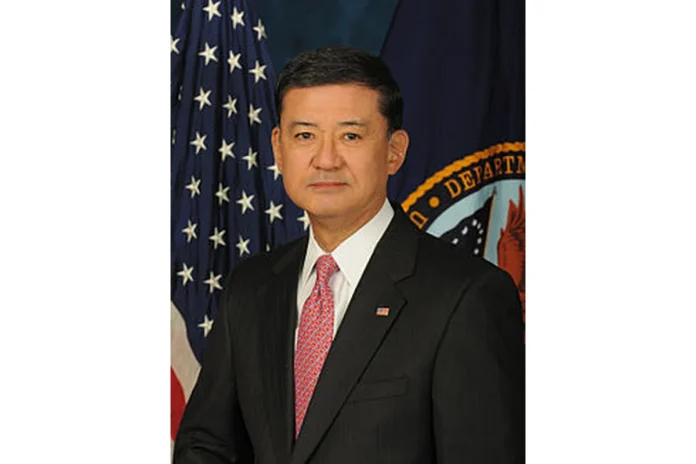
Eric Shinseki Bio
Eric Ken Shinseki, born on 28 November 1942 in Lihue, Hawaii, is a retired United States Army four-star general and public official whose career has spanned combat service, senior military leadership, and a high-profile cabinet appointment. He served as the 34th Chief of Staff of the Army from 1999 to 2003 and as the 7th United States Secretary of Veterans Affairs from 2009 to 2014. Shinseki is recognized as the first Asian-American to achieve the rank of four-star general and the first Asian-American to serve as Secretary of Veterans Affairs. A Vietnam War veteran, he earned multiple decorations for valor and for wounds received in combat.
After leaving active military service in 2003, Shinseki joined several corporate boards and advisory councils. In 2009, he was nominated by then-President-elect Barack Obama to lead the Department of Veterans Affairs, a position he held until his resignation in May 2014.
Early Life and Background
Eric Ken Shinseki was born and raised on the island of Kaua’i in what was then the Territory of Hawaii. His grandparents had emigrated from Hiroshima to Hawaii in 1901, and Shinseki grew up in a sugarcane plantation community with deep Japanese-American roots. As a boy, he learned that three of his uncles had served in the 442nd Infantry Regiment, a unit of Japanese Americans that became one of the most decorated fighting units in United States history.
He graduated from Kaua’i High and Intermediate School in 1960, where he was active in the Boy Scouts and served as class president. Motivated in part by his uncles’ example, Shinseki chose a military path and went on to attend the United States Military Academy at West Point, graduating in 1965 with a Bachelor of Science degree and a commission as a second lieutenant.
He later earned a Master of Arts degree in English Literature from Duke University in 1974. Shinseki’s formal military education also included the Armor Officer Advanced Course, the United States Army Command and General Staff College, and the National War College of the National Defense University.
Path to Public Service
Shinseki’s path to national leadership began with his deployment to Vietnam, where he served two combat tours with the 9th and 25th Infantry Divisions. He served as an artillery forward observer and as commander of Troop A, 3rd Squadron, 5th Cavalry Regiment. During one of these tours, he stepped on a land mine, which blew the front off one of his feet. He spent almost a year recovering before returning to active duty in 1971.
His valor in combat earned him three Bronze Star Medals and two Purple Hearts, decorations that would define his early reputation as a soldier. Following his recovery, Shinseki served in a wide range of command and staff positions in the continental United States, Hawaii, and Europe, including assignments at Schofield Barracks, Fort Shafter, and Fort Bliss, as well as with the 3rd Infantry Division and VII Corps in Germany.
These successive postings, combined with his war record and his academic credentials, established Shinseki as a well-rounded officer prepared for senior leadership. In March 1994, he took command of the 1st Cavalry Division at Fort Hood, Texas, setting the stage for his eventual rise to the Army’s highest uniformed post.
Eric Shinseki Career
Early Career (1965–1998)
After his commissioning in 1965, Eric Ken Shinseki began a steady climb through the Army’s ranks. He served in staff and command roles across the United States and Europe, with more than ten years of service on the continent. In Europe, he commanded the 3rd Squadron, 7th Cavalry of the 3rd Infantry Division in Schweinfurt and later the 2nd Brigade of the same division in Kitzingen. He also served as Assistant Chief of Staff for Operations, Plans and Training at both the 3rd Infantry Division in Würzburg and at VII Corps in Stuttgart.
In July 1996, Shinseki was promoted to lieutenant general and became Deputy Chief of Staff for Operations and Plans for the United States Army. The following year, in June 1997, he was appointed to the rank of general and took on the roles of Commanding General of the Seventh United States Army, Commander of Allied Land Forces Central Europe, and Commander of the NATO Stabilization Force in Bosnia and Herzegovina. On 24 November 1998, he became the Army’s 28th Vice Chief of Staff.
Army Chief of Staff Era (1999–2003)
On 22 June 1999, Eric Ken Shinseki became the 34th Chief of Staff of the Army, the last Vietnam War veteran to hold that position. During his four-year tenure, he launched an innovative but controversial plan to make the Army more strategically deployable and mobile in urban terrain, creating the Stryker Interim-Force Brigade Combat Teams. He also conceived a long-term strategic plan known as the “Objective Force,” which included the Future Combat Systems program he designed.
Shinseki also implemented the policy of allowing all army personnel to wear the black beret, a decision that had previously been reserved for the United States Army Rangers and led the Rangers to adopt the tan beret. He publicly clashed with Secretary of Defense Donald Rumsfeld during planning for the Iraq War, telling the United States Senate Committee on Armed Services on 25 February 2003 that “something in the order of several hundred thousand soldiers” would likely be needed for the postwar occupation. This estimate was sharply rejected by Rumsfeld and Deputy Secretary Paul Wolfowitz.
Shinseki retired on 11 June 2003 after 38 years of military service, leaving behind a Farewell Memo outlining his vision for the future of the military.
Secretary of Veterans Affairs Era (2009–2014)
On 7 December 2008, then-President-elect Barack Obama announced his intention to nominate Eric Ken Shinseki as Secretary of Veterans Affairs. The United States Senate unanimously confirmed him on 20 January 2009, and he was sworn in the next day. As the 7th Secretary of Veterans Affairs, Shinseki oversaw the department’s efforts to serve millions of American veterans.
His tenure ended amid a major controversy. In May 2014, the Veterans Health Administration became embroiled in a scandal involving substandard timely care and falsified records at a number of veterans hospitals. On 30 May 2014, President Obama announced that he had accepted Shinseki’s resignation. In his remarks, Shinseki called the breach of integrity “irresponsible,” “indefensible,” and “unacceptable,” and said he could not defend what had happened but would take responsibility for it. His departure ended a period during which the United States Cabinet had included an Asian American since 2000.
Notable Events and Milestones
Eric Ken Shinseki’s career is defined by several signature moments, including becoming the first Asian-American four-star general and the first Asian-American Secretary of Veterans Affairs. His post-invasion warning about the troop levels needed in Iraq was publicly validated in 2006 by CENTCOM Commander General John Abizaid, who testified before Congress that more troops had been required. Shinseki also visited wounded Pentagon employees at Walter Reed Army Medical Center in the aftermath of the September 11 attack on the Pentagon.
Eric Shinseki Awards and Recognition
Eric Ken Shinseki’s long military and public service career has been recognized with some of the United States Armed Forces’ highest honors. His decorations for valor and wounds in Vietnam include the Bronze Star Medal and the Purple Heart, awards that reflect his combat experience with the 9th and 25th Infantry Divisions.
Service Awards and Decorations
Shinseki received the Defense Distinguished Service Medal, the Army Distinguished Service Medal, the Navy Distinguished Service Medal, the Air Force Distinguished Service Medal, and the Coast Guard Distinguished Service Medal, an unusual cross-service recognition for a single officer. He was also awarded the Legion of Merit in recognition of his many senior command and staff assignments.
Following his retirement, Shinseki has been active in civic and advisory roles, including serving on the boards of corporations and serving on advisory boards at Harvard University’s John F. Kennedy School of Government and to the U.S. Comptroller General. He is a member of the Council on Foreign Relations, the Atlantic Council of the United States, and the Association of the United States Army.
Eric Shinseki Family
Family Background and Heritage
Eric Ken Shinseki was born into an American family of Japanese ancestry whose grandparents had emigrated from Hiroshima to Hawaii in 1901. He grew up in a sugarcane plantation community on Kaua’i alongside extended family whose military service shaped his own sense of duty. Three of his uncles served in the 442nd Infantry Regiment, a Japanese-American unit widely recognized as one of the most decorated in United States history.
Personal Life
Shinseki is married to his high school sweetheart, Patricia, and the couple has two children, a daughter named Lori and a son named Ken. The family also includes seven grandchildren. Patricia Shinseki has been a partner and supporter throughout his military and government career.