
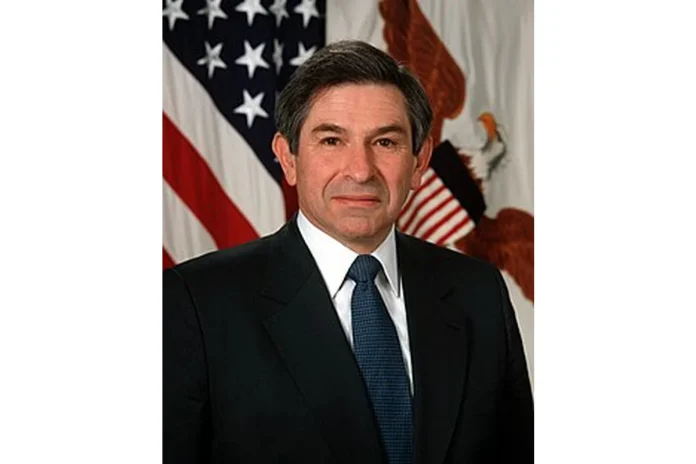
Paul Wolfowitz Bio
Paul Dundes Wolfowitz (born 22 December 1943) is an American political scientist, diplomat, and public servant whose career has spanned academia, federal agencies, and international institutions. He is widely identified as a leading neoconservative and is best known for serving as the 10th President of the World Bank and as United States Deputy Secretary of Defense under President George W. Bush. Wolfowitz is recognized as an early advocate and a key architect of the 2003 invasion of Iraq.
Over several decades, he has held senior posts across the U.S. government, including U.S. Ambassador to Indonesia, Under Secretary of Defense for Policy, and Dean of the Paul H. Nitze School of Advanced International Studies at Johns Hopkins University. He has also written and spoken publicly on foreign policy, democracy promotion, and international development.
Early Life and Background
Paul Dundes Wolfowitz was born on 22 December 1943 in Brownsville, Brooklyn, New York, into a Polish Jewish immigrant family. He was the second child of Jacob Wolfowitz, a professor of statistical theory at Cornell University originally from Warsaw, and Lillian Dundes. His father fled Poland after World War I, while the rest of his father’s family perished in the Holocaust. The family relocated to Ithaca, New York, where Paul spent much of his childhood near the Cornell campus.
Growing up in an academic household influenced his early intellectual development, and as an undergraduate he became active in civic causes. In August 1963, Wolfowitz and his mother took part in the civil-rights march on Washington organized by A. Philip Randolph, an experience that helped shape his interest in public affairs. He attended Cornell University, lived in the Telluride House during 1962 and 1963, and was a member of the Quill and Dagger society.
Wolfowitz graduated from Cornell in 1965 with a Bachelor of Arts in mathematics. Against his father’s wishes, he chose to pursue graduate study in political science, motivated in part by a desire to help prevent nuclear war. He went on to earn a Master of Arts and, in 1972, a Doctor of Philosophy in political science from the University of Chicago, where he studied under Albert Wohlstetter, a strategic thinker who became his most influential mentor.
Path to US Politics
Wolfowitz’s path into national security policy began in academia and on Capitol Hill. In the early 1970s, he served as an aide to Democratic Senator Henry M. “Scoop” Jackson of Washington, working alongside Richard Perle on Cold War strategy, arms control, and defense issues. He also taught political science at Yale University from 1970 to 1972, where one of his students was I. Lewis “Scooter” Libby, a future colleague in the George W. Bush administration.
He joined the Arms Control and Disarmament Agency in 1972, where he helped draft testimony, wrote research papers, and traveled with agency head Fred Ikle to strategic arms limitation talks in Europe. In the mid-1970s, Wolfowitz was selected for Team B, a competitive analysis panel convened by Director of Central Intelligence George H. W. Bush that challenged official intelligence estimates of Soviet military strength. The Team B experience cemented his reputation as a hard-line defense intellectual.
His party affiliation shifted from Democratic to Republican around 1981, reflecting the broader movement of like-minded foreign policy conservatives. Through the 1980s and 1990s, he combined government service, ambassadorial postings, and academic leadership, steadily building a network of contacts in defense, diplomacy, and international finance that would carry him into the highest levels of the George W. Bush administration.
Paul Wolfowitz Career
Early Career (1970s–1980s)
During the 1970s, Wolfowitz established himself in defense and intelligence circles through his work at the Arms Control and Disarmament Agency and his service on Team B. In 1978, he was investigated by the FBI for allegedly passing a classified document to an Israeli official through an American Israel Public Affairs Committee intermediary, but the probe was eventually dropped and he was never charged.
From 1986 to 1989, Wolfowitz served as the United States Ambassador to the Republic of Indonesia during the military-backed government of President Suharto. Although his posting was considered an unusual match, his tenure was widely described as a success. He immersed himself in local life, learned the language, and quietly pressed for political and economic reform, while drawing some criticism for not doing more on human rights.
Defense Policy Leadership (1989–1993)
From 1989 to 1993, Wolfowitz served as Under Secretary of Defense for Policy under Secretary of Defense Dick Cheney in the administration of President George H. W. Bush. During the 1991 Persian Gulf War, his team coordinated military strategy and helped raise about $50 billion in allied financial contributions for the operation. He was present at the February 27, 1991 meeting where President Bush decided to demobilize coalition forces.
After the Gulf War, Wolfowitz and his then-assistant Scooter Libby drafted the “Defense Planning Guidance of 1992,” a document that outlined a post-Cold War strategy of maintaining U.S. military supremacy and acting unilaterally when necessary. The plan was leaked to The New York Times, drawing sharp criticism and was revised under pressure from Chairman of the Joint Chiefs of Staff Colin Powell and President Bush. Many of its preemption and unilateralist themes, however, reappeared years later in the Bush Doctrine of the George W. Bush era.
Academic and Political Advisory Years (1994–2000)
From 1994 to 2001, Wolfowitz served as Professor of International Relations and Dean of the Paul H. Nitze School of Advanced International Studies at Johns Hopkins University. He helped add more than $75 million to the university’s endowment, developed an international finance concentration, and consolidated Asian studies programs. During the 1996 presidential campaign, he advised Republican nominee Bob Dole on foreign policy.
Wolfowitz became associated with the Project for the New American Century, signing its June 1997 Statement of Principles and its January 1998 open letter to President Bill Clinton calling for the removal of Saddam Hussein. He served as a foreign policy advisor to George W. Bush during the 2000 campaign as a member of The Vulcans, the group led by Condoleezza Rice. In February 1998 congressional testimony, he argued for regime change in Iraq, saying the United States had “the sense of purpose” to liberate the Iraqi people.
Deputy Secretary of Defense Era (2001–2005)
From 2001 to 2005, Wolfowitz served as United States Deputy Secretary of Defense under Secretary of Defense Donald Rumsfeld in the administration of President George W. Bush. The September 11, 2001 attacks transformed the administration’s agenda, and Wolfowitz became one of the leading internal voices for expanding the campaign against terrorism to include Iraq. On the day of the attacks, he argued that the Iraqi regime was “brittle” and could be toppled relatively easily.
Wolfowitz championed the 2003 invasion of Iraq and projected a relatively quick and inexpensive postwar transition. On March 27, 2003, he testified to the House Appropriations Committee that Iraqi oil revenues could bring between $50 billion and $100 billion over two to three years and that Iraq could largely finance its own reconstruction. He publicly dismissed estimates by Army Chief of Staff General Eric K. Shinseki that several hundred thousand troops would be needed for postwar stability, predicting that fewer than 100,000 would suffice. On October 26, 2003, while staying at the Al-Rashid Hotel in Baghdad, he narrowly escaped a rocket attack that killed one U.S. soldier and wounded seventeen other personnel.
World Bank Presidency (2005–2007)
In March 2005, President George W. Bush nominated Wolfowitz to be the 10th President of the World Bank, and he took office on June 1, 2005. His nomination drew sharp criticism from development economists, including Nobel laureate Joseph Stiglitz and Jeffrey Sachs, who questioned his suitability to lead an institution focused on poverty reduction. His early appointments and anti-corruption strategy also sparked controversy among member countries.
His tenure became defined by a personnel scandal involving his romantic relationship with World Bank staffer Shaha Riza. The bank’s ethics committee barred him from involvement in her career, and her reassignment to the State Department with a substantial pay raise triggered accusations of a conflict of interest. Facing intense pressure from member governments and bank staff, Wolfowitz resigned in 2007, becoming the only World Bank president to have resigned over a scandal.
Post-Government Activities (2008–Present)
After leaving the World Bank, Wolfowitz became a visiting scholar at the American Enterprise Institute for Public Policy Research, where he blogged and appeared at public events. He has written opinion columns for publications including The Independent, The Sunday Times, and Newsweek. He served on the steering committee of the Bilderberg group and, in February 2013, signed an amicus brief supporting legal recognition of same-sex marriage in a U.S. Supreme Court case.
In February 2015, he advised the presidential campaign of Jeb Bush. In 2017, he wrote an op-ed in The New York Times commenting on a dissent cable signed by 1,000 Foreign Service officers criticizing a presidential executive action on immigration. In February 2023, President Tsai Ing-wen of the Republic of China awarded him the Order of Brilliant Star with Grand Cordon.
Notable Events and Milestones
Wolfowitz’s career is marked by several signature events, including his role on Team B in the 1970s, his ambassadorship to Indonesia in the late 1980s, and his authorship of the controversial 1992 Defense Planning Guidance. His tenure as Deputy Secretary of Defense placed him at the center of post-9/11 strategy and the decision to invade Iraq in 2003, and his later World Bank presidency ended with a rare and high-profile resignation over an ethics controversy.
Paul Wolfowitz Family
Family Background
Wolfowitz was born into a Polish Jewish family shaped by war and migration. His father, Jacob Wolfowitz, was a Warsaw-born mathematician and professor of statistical theory at Cornell University who had fled Poland after World War I, while most of the rest of his father’s family perished in the Holocaust. His mother, Lillian Dundes, raised the family in the academic environment of Ithaca, New York. The household’s emphasis on learning and public service helped shape Wolfowitz’s path into political science and government.
Personal Life
Wolfowitz married anthropologist Clare Selgin in 1968, and the couple had three children while living in Chevy Chase, Maryland. They separated in 1999, with some accounts indicating a legal separation in 2001 and a divorce in 2002. In late 1999, he began a relationship with Shaha Riza, a British-Tunisian World Bank communications officer, which later became central to the ethics controversy that ended his presidency of the institution. Wolfowitz has been described as fluent in five languages in addition to English.