
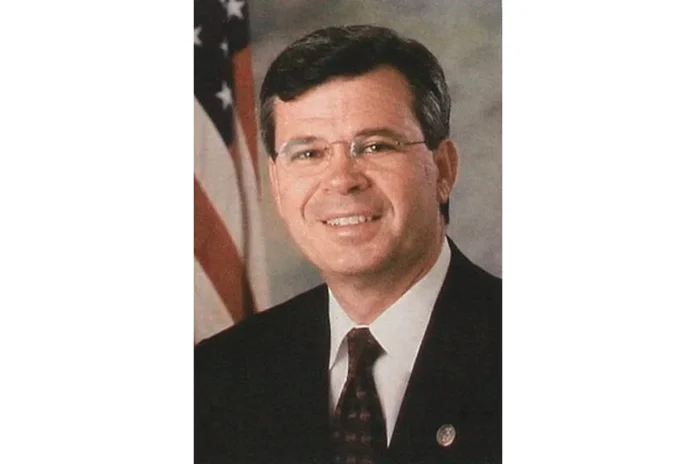
Ernie Fletcher Bio
Ernest Lee Fletcher (born November 12, 1952) is an American politician, physician, and Baptist lay minister who served as the 60th governor of Kentucky from 2003 to 2007. A member of the Republican Party, he previously represented Kentucky’s 6th congressional district for three consecutive terms in the United States House of Representatives before resigning to assume the governorship. Trained as a family-practice physician, Fletcher emphasized executive-branch reorganization, economic development, and health and wellness initiatives while governor.
His administration became known for a merit-system hiring investigation that ultimately produced indictments against members of his staff and against Fletcher himself. After leaving office, he founded and served as chief executive officer of the healthcare consulting firm Alton Healthcare. Fletcher was also the first Republican elected governor of Kentucky since Louie Nunn left office in 1971, and only the second physician ever elected to the office, following Luke P. Blackburn in 1879.
Early Life and Background
Ernest Lee Fletcher was born on November 12, 1952, in Mount Sterling, Kentucky. He was the third of four children of Harold Fletcher Sr. and Marie Fletcher. The family owned a farm and operated a general store near the small community of Means, and Harold Fletcher also worked for Columbia Gas. When Ernie was three weeks old, Harold was transferred to Huntington, West Virginia. Two years later, the Fletchers returned to Robertson County, Kentucky, before settling in Lexington during his early school years.
Fletcher attended Lafayette High School in Lexington, where he joined the National Beta Club and was an all-state saxophone player during his senior year. He was elected prom king and graduated in 1970, enrolling that fall at the University of Kentucky. He pledged Delta Tau Delta and, after his freshman year, married his high school sweetheart, Glenna Foster. The couple later had two children, Rachael and Ben, and four grandchildren.
From an early age, Fletcher dreamed of becoming an astronaut, and he joined the Air Force Reserve Officer Training Corps while at the University of Kentucky. In 1974, he earned a Bachelor of Science degree in mechanical engineering, graduating with top honors. He went on to serve as a captain in the United States Air Force, earning the Air Force Commendation Medal and the Air Force Outstanding Unit Award before leaving the service in 1980 as budget cuts reduced his squadron’s flying time.
Path to US Politics
After leaving the Air Force, Fletcher enrolled at the University of Kentucky College of Medicine, hoping a medical degree combined with a military background might earn him a civilian spot on a space mission. He graduated in 1984 with a Doctor of Medicine degree, but deteriorating eyesight forced him to abandon those plans. That same year he opened a family medical practice in Lexington, and in 1983 the Lexington Primitive Baptist church had already ordained him as a lay minister. In 1987, along with former classmate Dr. James D. B. George, he co-founded South Lexington Family Physicians. He later served for two years as chief executive officer of the Saint Joseph Medical Foundation.
Fletcher’s entry into politics grew out of his church ministry and his connections to a group of social conservatives who gained control of the Fayette County Republican Party in 1990. In 1994 he was elected to the Kentucky House of Representatives, defeating incumbent Democrat Leslie Trapp and representing Kentucky’s 78th District. He served on the Kentucky Commission on Poverty and the Task Force on Higher Education, and was chosen by Governor Paul E. Patton to assist with reforming the state’s health-care system.
Ernie Fletcher Career
Early Career (1994-1998)
After redistricting in 1996, Fletcher decided to run for Kentucky’s 6th District seat in the U.S. House of Representatives rather than challenge a fellow Republican in his consolidated state district. He won a three-way Republican primary by just four votes over his closest opponent, then lost the general election to incumbent Democrat Scotty Baesler by slightly more than 25,000 votes. Two years later, when Baesler resigned to pursue a U.S. Senate seat, Fletcher won the Republican primary by a wide margin and defeated Democrat Ernesto Scorsone 104,046 to 90,033.
Within months of arriving in Washington, Fletcher was selected as the leadership liaison for the 17-member Republican freshman class. He was appointed to the Committee on Education and Workforce, where Representative John Boehner named him vice-chair of the employer-employee relations subcommittee. He also served on the House Committees on the Budget and Agriculture, and later joined the Committee on Energy and Commerce, where he chaired the Policy Subcommittee on Health.
Breakthrough (1999-2002)
Fletcher gained national attention during the debate over the Patients’ Bill of Rights. He opposed a Democratic proposal that would have allowed patients to sue their health maintenance organizations in court, instead favoring a more limited Republican measure that expanded the ability to appeal HMO decisions. His position drew criticism from many doctors in the Republican caucus, although he and Tennessee Senator Bill Frist were notable supporters of a narrower approach. The disagreement cost him the backing of the Kentucky Medical Association, which supported Baesler’s unsuccessful 2000 challenge to Fletcher.
In 2000, Fletcher crafted a compromise bill that allowed patients to sue HMOs in federal court, capped pain and suffering awards at $500,000, and eliminated punitive damages. Despite heavy lobbying by President George W. Bush, the House ultimately preferred a less restrictive alternative offered by Representative Charlie Norwood of Georgia. In 2002, Fletcher faced no major-party opposition in his re-election bid and was returned to Congress with more than 70 percent of the vote.
Republican Era (2003-2007)
Encouraged by Senator Mitch McConnell, Fletcher launched a gubernatorial campaign in late 2002 and won the Republican primary with 53 percent of the vote. After his original running mate was ruled ineligible on residency grounds, Fletcher chose United States Attorney Steve Pence as his new lieutenant governor. Capitalizing on a sex-for-favors scandal involving Democratic Governor Paul Patton and a predicted $710 million budget shortfall, Fletcher defeated Democratic Attorney General Ben Chandler by a vote of 596,284 to 487,159, becoming the first Republican elected governor of Kentucky since 1971.
As governor, Fletcher made economic development a priority, and Kentucky ranked fourth among all U.S. states in jobs created during his term. He reorganized the executive branch, reducing the number of cabinet positions from fourteen to nine, replaced the Kentucky Horse Racing Commission with the Kentucky Horse Racing Authority, and launched the Get Healthy Kentucky initiative to promote healthier lifestyles. His administration also passed a 2005 tax reform package, which required a special legislative session to correct unintended tax increases on businesses.
Notable Events and Milestones
Fletcher’s tenure was overshadowed by a merit-system hiring investigation launched in May 2005 by Attorney General Greg Stumbo. A grand jury returned indictments against nine administration officials, and eventually against Fletcher himself on three misdemeanor counts. Fletcher issued a blanket pardon for anyone implicated in the investigation but exempted himself, then invoked his Fifth Amendment right against self-incrimination when called to testify. In August 2006, Fletcher and Stumbo reached a settlement in which Fletcher acknowledged evidence of wrongdoing by his administration but admitted no personal wrongdoing, ending the prosecution.
Ernie Fletcher Career Wins
Ernie Fletcher’s political career featured a series of notable electoral victories, beginning with his 1994 upset win in the Kentucky House of Representatives and culminating in his historic 2003 gubernatorial election. His strongest win came when he captured the governorship with 55 percent of the vote, the largest margin ever recorded by a Republican in a Kentucky gubernatorial contest.
Kentucky Elections Highlights
Fletcher won his first election in 1994 by defeating Democratic incumbent Leslie Trapp for the Kentucky House’s 78th District seat. He followed that with a victory in the 1998 Republican primary for Kentucky’s 6th Congressional District and a general-election win over Democrat Ernesto Scorsone. He was re-elected to Congress in 2000 with 53 percent of the vote and again in 2002 without major-party opposition, before winning the 2003 gubernatorial election against Ben Chandler by roughly ten percentage points.
Other Wins and Achievements
Beyond electoral victories, Fletcher secured passage of a major 2005 tax reform package, reorganized the Kentucky executive branch, and oversaw a period in which Kentucky ranked fourth nationally in jobs created. He also successfully defended his Republican nomination in 2007 against former Representative Anne Northup, earning more than 50 percent of the primary vote despite ongoing fallout from the merit-system investigation.
Ernie Fletcher Family
Family Background and Political Lineage
Fletcher was raised in a working family headed by Harold Fletcher Sr. and Marie Fletcher, who owned a farm and operated a general store near Means, Kentucky. Harold also worked for Columbia Gas, and the family moved several times during Ernie’s early years before settling in Lexington. Fletcher has described his upbringing in rural Kentucky and his parents’ steady employment as formative influences on his later career in public service.
Personal Life
Fletcher married his high school sweetheart, Glenna Foster, after his freshman year at the University of Kentucky, and the couple remained married throughout his political career. They have two adult children, Rachael and Ben, and four grandchildren. A devout Baptist, Fletcher was first ordained as a lay minister by the Lexington Primitive Baptist Church in 1983 and later joined Porter Memorial Baptist Church, a Southern Baptist congregation, in 1994.