

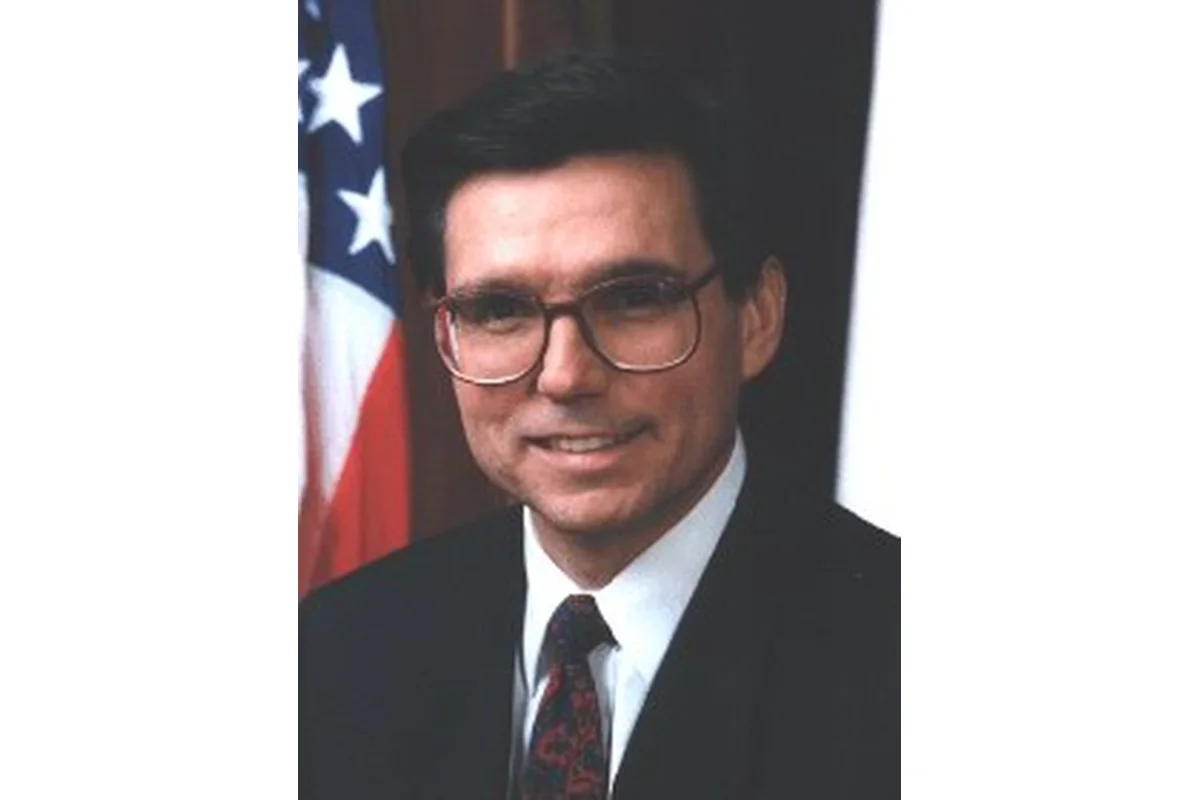
Federico Peña Bio
Federico Fabian Peña (born March 15, 1947) is an American politician and attorney who built a decades-long career in public service and the private sector. A member of the Democratic Party, he served as the 12th United States Secretary of Transportation from 1993 to 1997 and as the 8th United States Secretary of Energy from 1997 to 1998 under President Bill Clinton. Before his time in Washington, D.C., he served as the 41st mayor of Denver from 1983 to 1991, becoming the city’s first Hispanic mayor. Earlier in his career, he served in the Colorado House of Representatives beginning in 1979. After leaving federal office, Peña returned to Denver and took on senior advisory and board roles in business and philanthropy.
Early Life and Background
Federico Fabian Peña was born on March 15, 1947, in Laredo, Texas, a border city with deep cultural and economic ties to Mexico. Growing up in South Texas shaped his understanding of the Hispanic experience in the United States and influenced his later political priorities. He went on to attend the University of Texas at Austin, where he earned a Bachelor of Arts degree in 1969. He continued his studies at the University of Texas School of Law and received his Juris Doctor in 1972, preparing him for a career as a practicing attorney.
After finishing law school, Peña moved to Colorado and entered private legal practice. His decision to relocate set the stage for his long association with Denver and the surrounding region. In Colorado, he became involved in civic and Democratic Party affairs, building the local relationships that would launch his political career.
Path to US Politics
Federico Fabian Peña’s entry into electoral politics came in 1979, when he was elected to the Colorado House of Representatives as a Democrat. His colleagues soon recognized his leadership abilities, and he rose to become Minority Leader in the state legislature. Those years gave him direct experience with state-level policy and helped him build a record on transportation, urban development, and minority representation.
By the early 1980s, Peña had set his sights on Denver’s highest office. In 1983, he defeated 74-year-old incumbent William H. McNichols Jr. to become the 41st mayor of Denver and the city’s first Hispanic mayor. The victory marked a watershed moment for Hispanic political representation in Colorado and signaled the arrival of a new generation of leaders in Denver.
Federico Peña Career
Early Career (1979–1983)
Federico Fabian Peña’s early political career began with his 1979 election to the Colorado House of Representatives. Working as a practicing attorney by day, he took on legislative duties and eventually rose to Minority Leader, a position that allowed him to shape Democratic messaging and priorities in the statehouse. His dual background in law and politics helped him transition smoothly from the legislature to a citywide race.
When he launched his campaign for mayor of Denver, Peña positioned himself as a reformer who could modernize city government and expand economic opportunity. His victory over the long-serving incumbent in 1983 was seen as a generational shift and a milestone for Hispanic voters in the region.
Mayor of Denver (1983–1991)
Federico Fabian Peña served two terms as mayor of Denver, winning re-election in 1987 and holding office until 1991. He is widely remembered for championing the development of Denver International Airport, a massive infrastructure project that reshaped the region’s air travel and economic landscape. The freeway connecting the airport to Interstate 70 was later named Peña Boulevard in his honor.
Under the slogan “Imagine a Great City,” Peña pushed a sweeping urban agenda that included a new convention center, modernization of the Cherry Creek Shopping Center, neighborhood retail initiatives, expanded library and performing arts facilities, and the recruitment of the Colorado Rockies major league baseball team. His tenure coincided with a period of rapid revitalization for Denver.
Clinton Administration (1993–1998)
After advising Arkansas Governor Bill Clinton on transportation issues during the 1992 presidential transition, Federico Fabian Peña was chosen to lead the United States Department of Transportation. He served as the 12th United States Secretary of Transportation from 1993 to 1997, overseeing federal policy across highways, aviation, rail, and maritime interests.
Although he had originally planned to serve only a single term, Peña was asked to stay on and became the 8th United States Secretary of Energy from 1997 to 1998. During his 18-month tenure at the Department of Energy, he led an organization of roughly 16,000 direct employees with an annual budget of about $18 billion. He developed the Clinton administration’s Comprehensive National Energy Strategy and oversaw the $3.654 billion sale of the Elk Hills Oil Field, then the largest privatization in U.S. Government history. He also helped craft the administration’s strategy for oil and gas development in the Caspian Sea region and supported U.S. energy companies operating abroad.
Later Career and Board Service
Upon leaving the Clinton administration in 1998, Federico Fabian Peña returned to Denver and joined the private equity firm Vestar Capital Partners as a senior advisor. He later took on a series of corporate and civic roles, including election to the Board of Directors of Wells Fargo on October 26, 2011. In June 2015, he was appointed to the University of Denver Board of Trustees.
Peña has remained active in national politics and energy policy. He served as a National Co-Chair of the COMPETE Coalition, an organization of energy stakeholders focused on power generation, large retail consumers, and energy efficiency and smart grid issues. In September 2007, he endorsed Senator Barack Obama for the 2008 presidential election and served as Obama’s National Campaign Co-chair, a move that drew attention because Peña did not endorse Senator Hillary Clinton. On November 5, 2008, he was named to the advisory board of the Obama-Biden Transition Project.
Federico Peña Family
Personal Life
Federico Fabian Peña was married to Ellen Hart Peña, and their divorce became final on September 10, 2001. On September 2, 2006, he married Cindy Velasquez, a former broadcast executive who worked at KMGH-TV (Channel 7) and KUSA-TV (Channel 9) in Denver. Velasquez has a daughter, Pilar, from a previous relationship.
Federico Fabian Peña is the father of three children: daughters Nelia Peña and Cristina Peña, and a son, Ryan Peña. He resides in Denver, Colorado.