

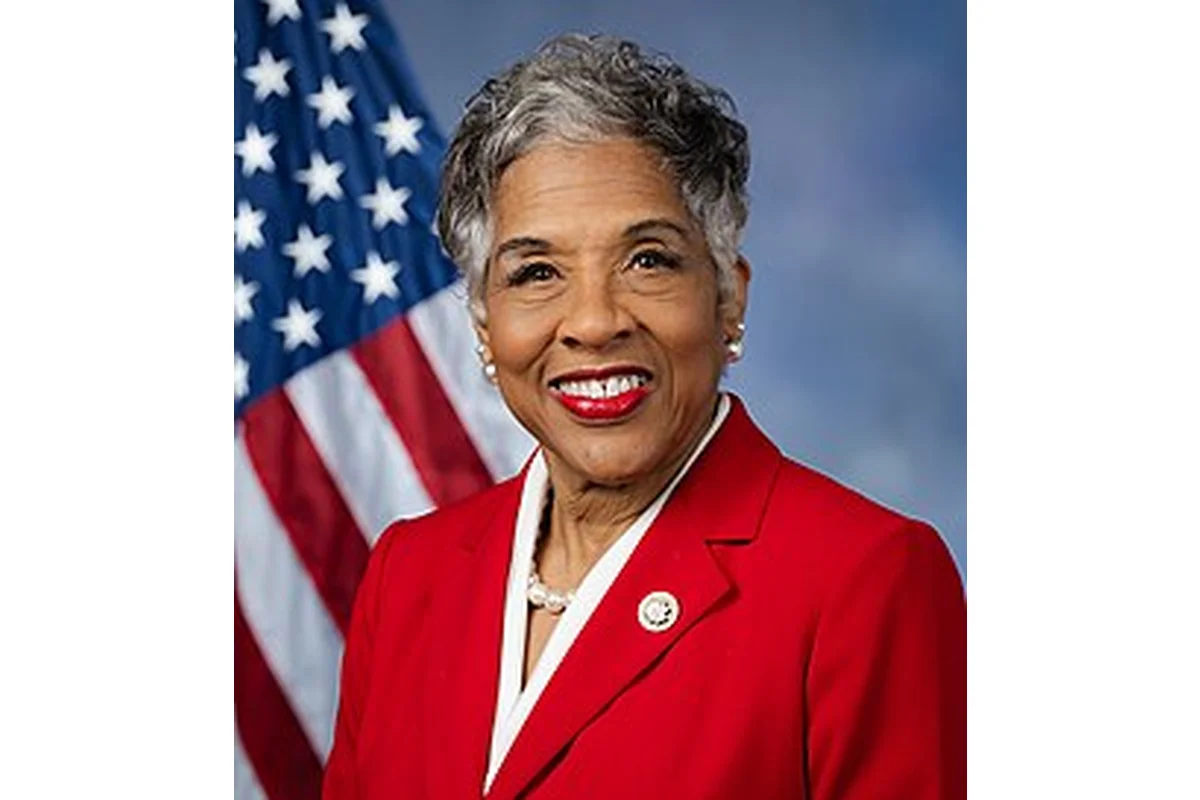
Joyce Beatty Bio
Joyce Marie Beatty (born March 12, 1950) is an American politician and university administrator who has served as the U.S. representative for Ohio’s 3rd congressional district since 2013. A member of the Democratic Party, she chaired the Congressional Black Caucus from 2021 to 2023 and previously represented the 27th district in the Ohio House of Representatives. Before her election to Congress, Beatty held senior roles in higher education and county government in Ohio, building a career that combined public service, legislative leadership, and community advocacy.
Over the course of her career, Beatty has worked on issues including health care access, voting rights, economic equity, and support for small businesses. She has been recognized by organizations such as the YWCA, the NAACP, the Ohio Health network, and the Urban League for her leadership and service. Her career reflects a steady path from local administration in Montgomery County to statewide office in Columbus and, ultimately, to the U.S. House of Representatives in Washington, D.C.
Early Life and Background
Joyce Marie Beatty was born on March 12, 1950, in Dayton, Ohio. She grew up in a community that would shape her later interest in public health and human services, and she went on to pursue higher education in fields connected to communication and counseling. Beatty earned a Bachelor of Arts degree in speech from Central State University, a historically Black university in Wilberforce, Ohio.
She continued her studies at Wright State University, where she received a Master of Science in counseling psychology in 1975. Beatty later undertook doctoral studies at the University of Cincinnati, and in 2003 she was awarded an honorary doctorate from Ohio Dominican University. Her academic training in speech and counseling provided a foundation for years of work in administration, advocacy, and elected office.
Before entering politics, Beatty served as the Montgomery County health and human services director. In that role, she was responsible for administering the county’s health levy and overseeing area public nursing homes, including Stillwater Nursing Home. This early position gave her direct experience managing public programs and serving vulnerable populations in the Dayton region.
Path to US Politics
Beatty’s entry into electoral politics came in 1999, when her husband, Otto Beatty Jr., resigned from his seat representing Ohio’s 21st House district to take a position in the private sector. She was appointed to fill his seat, beginning a stretch of service in the Ohio General Assembly. In 2000, she won a full term with 82 percent of the vote, signaling strong support in her district.
After redistricting, Beatty ran in the newly drawn Ohio’s 27th House district and was reelected in 2002 with 82 percent of the vote. She was reelected unopposed in 2004 and returned to office again in 2006 with 87 percent of the vote. When Chris Redfern stepped down to lead the Ohio Democratic Party, Beatty was named minority leader of the Ohio House. She was the first female Democratic House leader in Ohio history and served in that role during the 127th General Assembly.
Term limits prevented Beatty from seeking another state House term in 2008, which opened the door to her next chapter. In the years that followed, she took on a senior role at Ohio State University as senior vice president for outreach and engagement, deepening her connections across Columbus and Central Ohio. She also served as a delegate for John Kerry on the Ohio delegation to the 2004 Democratic National Convention in Boston, further establishing her presence within the state Democratic Party.
Joyce Beatty Career
Early Career (1999-2008)
Joyce Beatty’s early political career was defined by her rapid rise in the Ohio House of Representatives. After her 1999 appointment and 2000 election win, she became a consistent voice for her district, focusing on issues ranging from health care to economic development. Her strong electoral performances reflected broad constituent support across multiple remappings of her district.
Her promotion to minority leader marked a historic moment for Ohio politics, as she became the first woman to hold that position for House Democrats in the state. She used the platform to advocate for party priorities and to mentor newer members of the caucus. By the time she left the state House in 2008, Beatty had built a reputation as a pragmatic and effective legislator ready for higher office.
Congressional Breakthrough (2012-2020)
In 2012, Beatty ran in the newly redrawn Ohio’s 3rd congressional district, based in Columbus. She won a competitive Democratic primary, defeating former U.S. representative Mary Jo Kilroy along with Columbus city councilwoman Priscilla Tyson and state representative Ted Celeste, capturing 38 percent of the vote. She went on to defeat Republican Chris Long in the general election and took office in 2013.
Once in Congress, Beatty focused on financial services, health care, and economic equity, eventually joining the House Financial Services Committee. Between 2013 and 2020, five of the 88 bills she sponsored became law, all of them incorporated into broader legislative packages. In 2020, she highlighted her work securing local funding for revitalization efforts in Dayton and research projects at Ohio State University.
Beatty faced her first primary challenge since 2012 in 2020, when progressive activist Morgan Harper entered the race. Beatty won the Democratic primary with 68 percent of the vote to Harper’s 32 percent and went on to defeat Republican nominee Mark Richardson with 71 percent of the vote in the general election. The race drew national attention, in part because of questions about her campaign fundraising from financial services political action committees.
Congressional Leadership Era (2021-Present)
In January 2021, Beatty began a two-year term as chair of the Congressional Black Caucus, one of the most prominent racial and ethnic caucuses in the U.S. Congress. She used the position to advocate for voting rights legislation, economic equity, and investments in underserved communities. Her leadership came at a time of heightened national debate over democracy, policing, and pandemic recovery.
On July 15, 2021, Beatty was one of nine protesters arrested by United States Capitol Police for illegally demonstrating in the Hart Senate Office Building. She and roughly 20 other voting rights protesters sought to pressure the Senate to support the For the People Act and the John Lewis Voting Rights Advancement Act. After multiple warnings, she was arrested for violating a Washington, D.C., law against crowding, obstructing, or incommoding.
More recently, in June 2025, Beatty was one of four Democrats who did not vote on a $9 billion rescission package tied to spending cuts proposed by the Department of Government Efficiency. The measure passed the House by a narrow two-vote margin. She has also been a vocal opponent of renaming the Kennedy Center to include President Donald Trump’s name, suing Trump and members of the board in late 2025 and calling the vote a “thinly-veiled sham” that she argued violated federal law.
Notable Events and Milestones
One of the defining moments of Beatty’s tenure was her 2021 arrest during a voting rights protest, which she framed as a peaceful act of civil disobedience in defense of democratic participation. The episode drew national attention to her long-standing advocacy for federal voting protections. She also made history as the first female Democratic House leader in Ohio and as chair of the Congressional Black Caucus during a period of national debate over racial equity and election access.
Joyce Beatty Career Wins
Joyce Beatty has compiled a long record of electoral victories at the state and federal levels, beginning with her appointment to the Ohio House in 1999. She has won multiple terms in both the Ohio General Assembly and the U.S. House of Representatives, often by wide margins, reflecting durable support from voters in the Dayton and Columbus areas. Her wins have spanned more than two decades of continuous public service.
Ohio House Highlights
Beatty won her first full term in 2000 with 82 percent of the vote and was reelected with the same share in 2002 after redistricting. In 2004, she ran unopposed, and in 2006 she returned to office with 87 percent of the vote. Her Ohio House tenure ended in 2008 due to term limits, not electoral defeat.
U.S. House Highlights
Beatty first won Ohio’s 3rd congressional district in 2012, defeating Republican Chris Long in the general election. She has been reelected multiple times since, including a 2020 victory over Republican Mark Richardson with 71 percent of the vote. Her most recent successful campaign extended her streak of congressional wins into the mid-2020s.
Other Wins & Achievements
Beyond electoral victories, Beatty has been recognized with awards including the 2002 YWCA Woman of Achievement Award, the Ohio Health Speaking of Women Health Award, the NAACP Freedom Award, the Woman of Courage Award, the Urban League Leadership Recognition Award, and the 2019 Dayton NAACP Leadership Award. She has also been a national spokesperson for the American Heart Association and a longtime member of Delta Sigma Theta sorority.
Joyce Beatty Family
Family Background and Political Lineage
Joyce Marie Beatty was born into the Birdsong family in Dayton, Ohio, and later took the surname Beatty through marriage. Her father was diabetic, a personal experience that helped shape her later legislative work on insulin pricing. She was married to Otto Beatty Jr., an attorney and former Ohio state representative whose 1999 resignation from the 21st House district opened the seat she would go on to hold.
Personal Life
Beatty was previously married to John Hannah from 1970 to 1990, when the couple divorced. She married Otto Beatty Jr. in 1992, and he remained her husband until his death in 2021, after which she became a widow. She has long been active in civic organizations, including the American Heart Association, the NAACP, Delta Sigma Theta sorority, The Links, and the Columbus Urban League Board.