
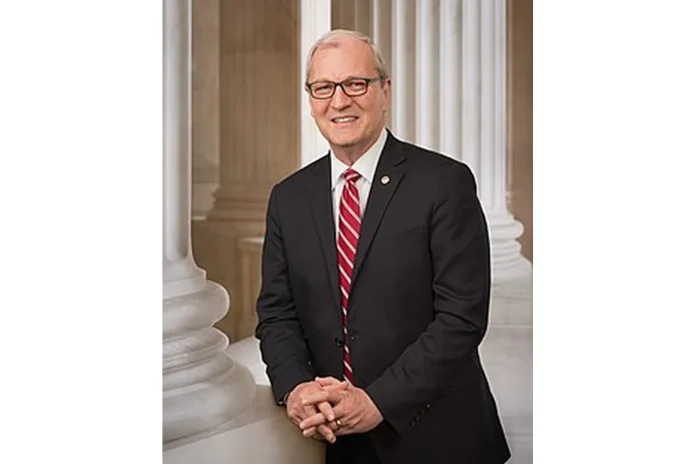
Kevin Cramer Bio
Kevin John Cramer (born January 21, 1961) is an American politician and a member of the Republican Party. He has served as the junior United States senator from North Dakota since 2019 and currently sits on several powerful Senate committees. Before joining the U.S. Senate, Cramer represented North Dakota’s at-large congressional district in the U.S. House of Representatives from 2013 to 2019, building a reputation as a conservative voice on energy, fiscal, and social issues.
Over the course of his career, Cramer has chaired the North Dakota Republican Party, directed state tourism and economic development programs, and served on the North Dakota Public Service Commission. In 2018, he defeated Democratic incumbent Heidi Heitkamp to claim a Senate seat, and he was reelected in 2024 with a wide margin.
Early Life and Background
Kevin John Cramer was born in Rolla, North Dakota, on January 21, 1961. He is the first of five children born to Richard Cramer and Clarice (Hjelden) Cramer. The family later moved to Kindred, North Dakota, in Cass County, where Cramer spent most of his childhood and graduated from Kindred High School.
Cramer attended Concordia College in Moorhead, Minnesota, where he earned a Bachelor of Arts degree in 1983. He continued his education years later at the University of Mary in Bismarck, North Dakota, completing a Master of Arts degree in management in 2003. His academic background in the arts and management helped prepare him for the leadership roles he would later take on in state government and politics.
Path to US Politics
Cramer’s political career began shortly after college, when he campaigned for Republican tax commissioner candidate Scott Hove in 1984 and later worked on U.S. Senator Mark Andrews’s reelection bid in 1986. After Andrews narrowly lost to Democrat Kent Conrad, Cramer joined the staff of the state Republican Party, where he quickly rose through the ranks.
In 1991, at just 30 years old, Cramer became the youngest person ever named chairman of the North Dakota Republican Party, a position he held until 1993. That same year, Republican Governor Ed Schafer appointed him state Tourism Director, and he later added the role of state Economic Development Director. These early positions gave Cramer extensive experience in state government and set the stage for his later campaigns for federal office.
Kevin Cramer Career
Early Career (1991–2012)
Following his time as state party chairman, Cramer served as North Dakota’s Tourism Director from 1993 to 1997 before being appointed Economic Development Director, a post he held until December 2000. He then directed the Harold Schafer Leadership Foundation from 2000 to 2003. In 2003, Governor John Hoeven appointed Cramer to the North Dakota Public Service Commission, where he won a full six-year term in 2004 and was reelected in 2010, serving until 2012.
Cramer also tested the waters in federal politics during this period, running unsuccessfully for North Dakota’s at-large U.S. House seat in 1996 and 1998 against Democrat Earl Pomeroy. He later entered the 2010 House race but withdrew at the state Republican convention when Rick Berg secured the nomination. These early campaigns sharpened his political skills and built a statewide network of supporters.
U.S. House Breakthrough (2013–2019)
When Berg retired from his House seat in 2012 to run for the U.S. Senate, Cramer entered the race for a fourth time. With endorsements from national conservative groups such as FreedomWorks and the Club for Growth, he won the Republican primary with 54 percent of the vote and went on to defeat Democratic-NPL candidate Pam Gulleson in the general election with 55 percent. He was sworn into office on January 3, 2013.
Cramer won reelection to the House in 2014 with 55 percent of the vote and again in 2016 with a commanding 69 percent. During his time in the House, he served on committees dealing with energy, the environment, and small business, and he built a strong record of supporting oil and gas development, lower taxes, and conservative social policies. He also authored a national energy policy plan for Donald Trump’s 2016 presidential campaign, which promoted fossil fuels and called for U.S. withdrawal from the Paris Agreement.
U.S. Senate Era (2019–Present)
On January 11, 2018, Cramer announced he would seek reelection to the House, but he reversed course weeks later and entered the U.S. Senate race. He secured the Republican Party endorsement in April 2018 and won the nomination in June. In the November 2018 general election, he defeated Democratic incumbent Heidi Heitkamp with 55 percent of the vote, becoming the first Republican elected to North Dakota’s Class I Senate seat since 1958. He was sworn into the Senate in January 2019.
As senator, Cramer has been closely allied with President Donald Trump and has supported many of his policy priorities, including tax cuts, deregulation, and tough immigration measures. He opposes abortion, same-sex marriage, and the Affordable Care Act, and rejects the scientific consensus on climate change, earning a reputation as one of America’s most ardent drilling advocates. In 2024, he won reelection against Democratic nominee Katrina Christiansen with 66 percent of the vote, cementing his place as a leading voice for North Dakota in Washington.
Notable Events and Milestones
Cramer authored Donald Trump’s 2016 energy policy, which emphasized fossil fuel production and rolled back environmental regulations. He cast the lone vote in the Senate in December 2019 against a motion recognizing the Armenian genocide after Trump requested the opposition. In 2020, he briefly defended Trump’s claims of election fraud before publicly acknowledging that the election was not stolen. He also co-chairs the Roughrider Honor Flight program, which sends World War II veterans to visit their memorial in Washington, D.C.
Kevin Cramer Family
Family Background and Personal Life
Kevin Cramer married Kris Neumann in 1986, and the couple adopted her two sons, Isaac and Ian, from a previous marriage. The Cramers also adopted the young son of an ex-girlfriend of Isaac’s, and as of 2024 they have five children and six grandchildren. Tragedy struck the family in 2018, when Isaac died from complications of alcoholism. In December 2023, Ian Cramer was involved in a police chase that led to the death of a North Dakota deputy, and he later pleaded guilty and was sentenced to 28 years in prison.
Beyond his family responsibilities, Cramer co-chairs the Roughrider Honor Flight program, which gives World War II veterans the chance to visit the World War II Memorial in Washington, D.C. In June 2022, he suffered a serious hand injury during yard work that required surgery and carried a risk of finger amputation. Despite these personal challenges, Cramer has remained active in public service, representing North Dakota in the U.S. Senate and continuing his work on energy, veterans’ affairs, and conservative policy issues.