

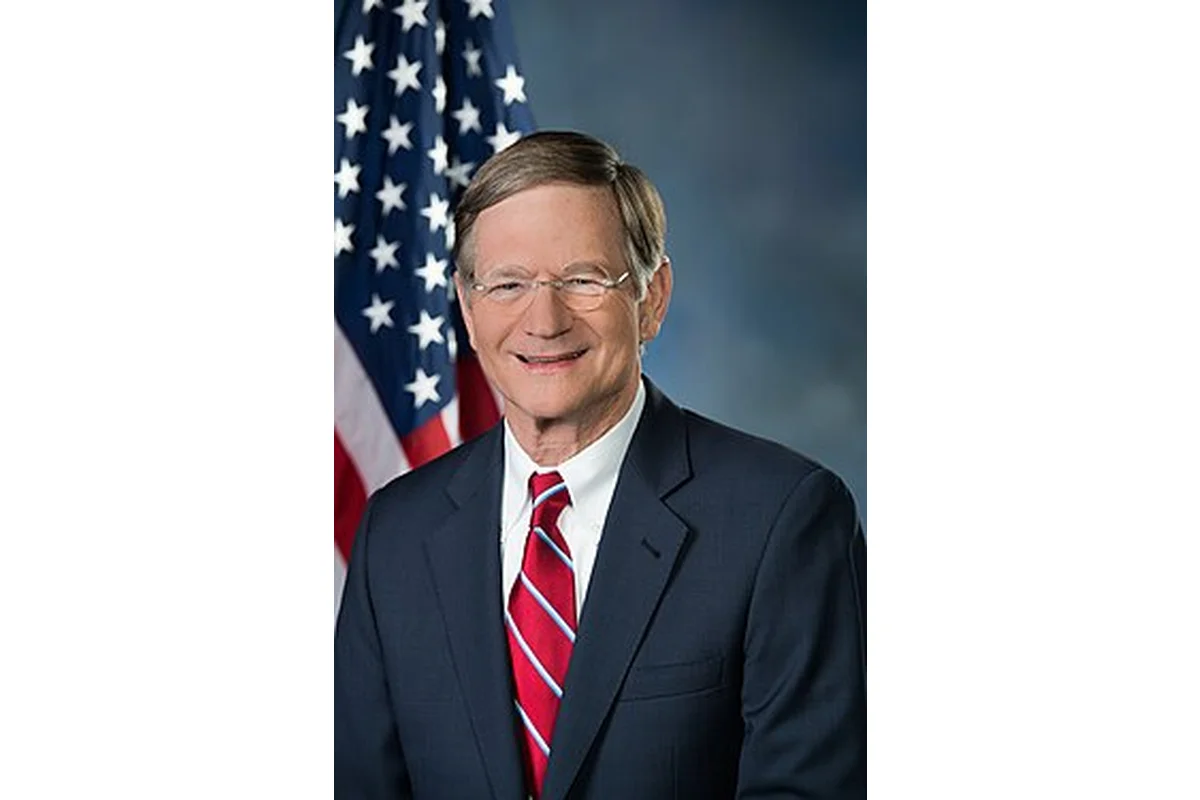
Lamar Smith Bio
Lamar Seeligson Smith (born November 19, 1947) is an American politician, attorney, and lobbyist who served sixteen terms in the United States House of Representatives. A Republican from Texas, he represented the 21st congressional district, which covers much of San Antonio and stretches into parts of Austin and the Texas Hill Country. During his lengthy tenure on Capitol Hill, Smith became known for his work on science policy, intellectual property, and internet regulation, and he chaired both the House Judiciary Committee and the House Committee on Science, Space and Technology.
After retiring from Congress in 2018, Smith transitioned to the private sector. He registered as a lobbyist in 2021 and officially registered as a foreign agent in 2022. He is remembered for both legislative accomplishments, such as co-sponsoring the Leahy–Smith America Invents Act, and for controversial stands, including his support of the Stop Online Piracy Act (SOPA) and his skepticism about the established science of climate change.
Early Life and Background
Lamar Seeligson Smith was born on November 19, 1947, in San Antonio, Texas, where he has lived for most of his life. He grew up in a city with deep cultural and political roots in South Texas, and he would later represent the same region in the state legislature and in Congress for more than three decades.
Smith attended the Texas Military Institute, a private school now known as TMI — The Episcopal School of Texas, and graduated in 1965. He went on to earn a Bachelor of Arts degree in American Studies from Yale University in 1969, giving him a grounding in history, government, and culture that shaped his later interest in public policy.
He later returned to Texas to study law, completing a Juris Doctor at Southern Methodist University in 1975. After passing the bar that same year, he began his professional life in journalism and then law, working as a business and financial writer for the Christian Science Monitor from 1970 to 1972 before entering private legal practice in San Antonio with the firm of Maebius and Duncan, Inc.
Path to US Politics
Smith’s entry into politics began at the local level in Bexar County, the same county that contains San Antonio. In 1969, shortly after graduating from Yale, he worked as a management intern at the Small Business Administration in Washington, D.C., an experience that exposed him to the federal government and its operations. He then spent two years as a business writer for the Christian Science Monitor before returning to San Antonio to practice law.
In 1978, Smith was elected chairman of the Republican Party of Bexar County, marking his formal step into party leadership. Two years later, in 1980, he won a seat in the Texas House of Representatives, representing the 57th District, which also covered Bexar County. He served on the Energy Resources Committee and the Fire Ants Select Committee during his time in the state legislature, building a record on issues ranging from energy to agriculture.
In 1982, Smith won election to the 3rd Precinct of the Bexar County Commissioners Court, a position he held from 1983 to 1986. His steady climb from county party chair to state legislator to county commissioner positioned him for a run for federal office when an opening appeared in 1986.
Lamar Smith Career
Early Career (1986–2002)
Smith’s federal career began in 1986, when four-term incumbent Republican Tom Loeffler of Texas’s 21st congressional district stepped aside to run for governor. Smith led a crowded six-way Republican primary with 31 percent of the vote and then defeated Van Archer in the runoff, 54 percent to 46 percent. In the general election that fall, he won with 61 percent of the vote, beginning what would become one of the longest continuous House tenures in modern Texas politics.
Over the next sixteen years, Smith proved difficult to unseat. He consistently won re-election with comfortable margins, never falling below 72 percent of the vote during this stretch. His district included much of the Texas Hill Country and the wealthier sections of San Antonio, giving him a reliably conservative base that supported his rise within the Republican caucus.
House Committee Leadership (2003–2016)
The 2003 Texas redistricting reshaped Smith’s district. While he lost most of the Hill Country to the neighboring 23rd District, he picked up a significant portion of Austin, including the area around the University of Texas, a traditional center of liberal activism. Smith still won re-election in 2004 with 62 percent of the vote, which at that point was his lowest winning percentage since his first race in 1986.
In 2006, the U.S. Supreme Court invalidated the 23rd District in League of United Latin American Citizens v. Perry, requiring another round of redistricting. Smith regained much of the Hill Country and kept a large share of his Austin territory. That same year, he faced six candidates in the open election and defeated Democrats John Courage and Gene Kelly with about 60 percent of the vote, again one of his narrower wins.
He continued to win easy re-elections through the late 2000s and into the 2010s, including a 2012 victory with 63 percent of the vote over a field of five challengers. In 2014, he secured the Republican nomination for his fifteenth term with about 60 percent of the primary vote, and in 2016, he won renomination to a sixteenth term with a similar share.
House Science Committee Chairmanship and Final Term (2017–2018)
Smith served as chairman of the House Committee on Science, Space and Technology for the 113th Congress, succeeding longtime chairman Ralph Hall. He had previously chaired the Committee on the Judiciary and served on the Committee on Homeland Security, giving him influence over both technology regulation and national security policy.
As chair of the Science Committee, Smith was a vocal skeptic of the mainstream scientific consensus on climate change. He held hearings featuring climate change skeptics, subpoenaed records and communications of climate scientists whose work he questioned, and pushed to cut NASA’s earth sciences budget. In a June 2016 response letter to the Union of Concerned Scientists, he cited the work of the House Un-American Activities Committee in the 1950s as legal precedent for his investigations. Critics accused him of conducting witch hunts against climate researchers.
In November 2017, Smith announced that he would not seek re-election in 2018, ending his 16-term run in the House. His 2016 race had been the closest of his career, as he defeated Democrat Tom Wakely with about 57 percent of the vote, the slimmest margin in the district since the Republican Party’s run began there in 1978.
Notable Events and Milestones
One of Smith’s most prominent legislative moments was his co-sponsorship of the Leahy–Smith America Invents Act in 2011, a sweeping overhaul of the U.S. patent system signed into law by President Barack Obama on September 16, 2011. The law shifted U.S. patent rights from a first-to-invent system to a first inventor-to-file system for applications filed on or after March 16, 2013. He also introduced bills on space launch liability, STEM education, and patent reform that shaped federal science and technology policy.
Lamar Smith Career Wins
Smith’s career in elective office spanned more than three decades, beginning with his election to the Texas House in 1980 and ending with his retirement from the U.S. House in 2018. He won sixteen consecutive terms in Congress, making him one of the longest-serving members of the Texas delegation and a senior figure within the Republican caucus.
U.S. House of Representatives Highlights
Smith first won his U.S. House seat in 1986 with 61 percent of the vote and went on to compile a streak of easy re-elections. His most competitive races came after the 2003 and 2006 redistrictings, which added liberal-leaning Austin neighborhoods to his district. Even so, he consistently won general elections with at least 57 percent of the vote, and he faced no serious challenge in most cycles.
His closest general election came in 2016, when he defeated Democrat Tom Wakely 57 percent to 36.5 percent. Libertarian Mark Loewe drew 4.1 percent, and Green Party candidate Antonio Diaz received 2.4 percent. The race was the tightest of Smith’s career and the closest the district had seen since Republican Tom Loeffler first won it in 1978.
Other Wins and Achievements
Before reaching Congress, Smith won election to the Texas House of Representatives in 1980 and to the Bexar County Commissioners Court in 1982, where he served from 1983 to 1986. He also chaired the Republican Party of Bexar County beginning in 1978, helping to organize the local party apparatus that supported his later campaigns.
Lamar Smith Family
Family Background and Personal Lineage
Smith was born into a San Antonio family with deep roots in South Texas, and he has spent most of his life in and around the city. The name Seeligson, his middle name and a family surname, is associated with established Texas families, and Smith has long been a figure in the social and civic life of San Antonio.
Personal Life
Smith was first married to Jane Shoults, a Christian Science practitioner and teacher, who died in 1991. The couple had two children: a daughter, Nell Seeligson, born in 1976, and a son, Tobin Wells, born in 1979. In 1992, he married Elizabeth Lynn Schaefer, who is also a Christian Science practitioner and teacher. The family has long been based in San Antonio, Texas.