

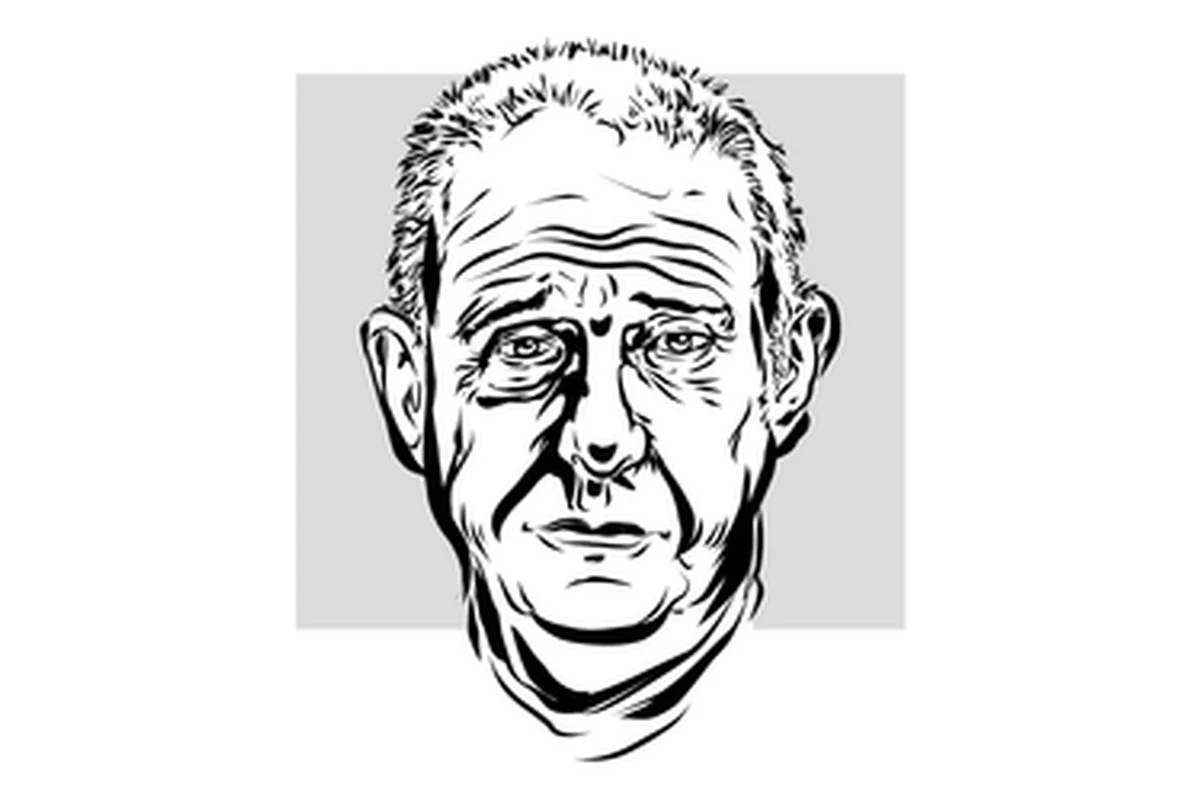
Lee Friedlander Bio
Lee Friedlander (born 14 July 1934) is an American photographer and artist recognized for shaping the visual language of the urban “social landscape” during the 1960s and 1970s. Working primarily in black-and-white with hand-held 35 mm and medium-format cameras, he built a body of work that captures store-front reflections, fence-framed structures, signage, and the layered look of modern city life. His photographs have been exhibited at major institutions worldwide, including the Museum of Modern Art in New York and the San Francisco Museum of Modern Art, and his career has been honored with a Guggenheim Fellowship and a MacArthur Fellowship.
Early Life and Background
Lee Friedlander was born on 14 July 1934 in Aberdeen, Washington, in the United States. He was the son of Fritz (Fred) Friedlander, a German-Jewish émigré, and Kaari Nurmi, a woman of Finnish descent. His mother died of cancer when he was seven years old, an early loss that shaped the course of his childhood in the Pacific Northwest.
Friedlander began earning pocket money as a photographer at the age of 14, an early sign of the profession that would define his life. By 18, he had committed to formal study, enrolling at the Art Center College of Design in Pasadena, California, where he trained in photography. That blend of self-directed practice and academic instruction laid the foundation for his later experimental approach to the medium.
Path to Photography
After completing his studies, Lee Friedlander moved to New York City in 1956, where he took on work photographing jazz musicians for record album covers. The city’s music scene offered him a steady stream of subjects and sharpened his ability to work quickly in available light. His early style was shaped by the documentary tradition established by Eugène Atget, Robert Frank, and Walker Evans, and he is often regarded as one of Atget’s heirs.
In 1960, Friedlander received a Guggenheim Fellowship that allowed him to focus on his art full-time, and he was awarded subsequent grants in 1962 and 1977. A breakthrough moment came in 1963, when Nathan Lyons, then assistant director and curator of photography at the International Museum of Photography at George Eastman House, mounted Friedlander’s first solo exhibition. Four years later, curator John Szarkowski included Friedlander in the influential 1967 “New Documents” exhibition at the Museum of Modern Art in New York, alongside Garry Winogrand and Diane Arbus, cementing his place in postwar American photography.
Lee Friedlander Career
Early Career (1956–1962)
Lee Friedlander’s early career in New York centered on music, portraiture, and the rhythms of city life. His album-cover work for jazz musicians sharpened his instincts for decisive, layered compositions, and the urban environment became his principal subject. The 1960 Guggenheim Fellowship marked a turning point, giving him the financial support to devote himself to independent projects.
During these years he developed the working methods that would define his output, including the use of hand-held Leica 35 mm cameras and black-and-white film. The visual vocabulary he refined, marked by reflections, framed structures, and street signs, began to draw the attention of curators and editors.
“New Documents” Breakthrough (1963–1972)
The 1963 solo exhibition at George Eastman House introduced Lee Friedlander’s work to a wider institutional audience. It was followed in 1967 by inclusion in John Szarkowski’s “New Documents” exhibition at the Museum of Modern Art, a landmark survey that placed Friedlander alongside Garry Winogrand and Diane Arbus. The exhibition positioned his photographs as a fresh, observational take on American daily life.
In 1973, his work was honored at the Rencontres d’Arles festival in France with a screening titled “Soirée américaine : Judy Dater, Jack Welpott, Jerry Uelsmann, Lee Friedlander,” presented by Jean-Claude Lemagny. These international recognitions helped establish his reputation beyond the United States and confirmed the global reach of his urban imagery.
Later Career and Olmsted Parks Series (1988–Present)
Beginning in 1988, Lee Friedlander undertook a six-year commission from the Canadian Centre for Architecture in Montreal to photograph parks designed by Frederick Law Olmsted. After completing the commission, he continued documenting Olmsted-designed parks for two additional decades, totaling roughly 20 years of work on the subject. The series includes New York City’s Central Park, Brooklyn’s Prospect Park, Manhattan’s Morningside Park, World’s End in Hingham, Massachusetts, Cherokee Park in Louisville, Kentucky, and Niagara Falls State Park.
In 1990, the MacArthur Foundation awarded Friedlander a MacArthur Fellowship, one of the most prestigious honors available to American artists. A major 2005 retrospective at the Museum of Modern Art presented nearly 400 photographs drawn from across his career since the 1950s, and the exhibition traveled to the San Francisco Museum of Modern Art in 2008. In 2023, filmmaker Joel Coen curated an exhibition of 70 of Friedlander’s photographs, shown at the Fraenkel Gallery in San Francisco and at Luhring Augustine in New York.
Notable Events and Milestones
Among the most discussed bodies of work from Lee Friedlander’s career is a set of black-and-white nude photographs of Madonna taken in the late 1970s, when she was a student; she was paid $25 for the 1979 session. The images appeared in the September 1985 issue of Playboy, and in 2009 one of the photographs sold for $37,500 at a Christie’s Art House auction, illustrating the cultural reach of his archive.
Lee Friedlander Career Wins
Over the course of his career, Lee Friedlander has received a series of major institutional honors, beginning with a Guggenheim Fellowship in 1960 and continuing through grants in 1962 and 1977, a MacArthur Fellowship in 1990, and large-scale museum retrospectives. These recognitions reflect a sustained influence on the direction of American documentary and art photography.
Major Awards and Honors
Friedlander’s Guggenheim Fellowship in 1960 was an early marker of national recognition, and the grants that followed in 1962 and 1977 supported continued experimentation in the field. The 1990 MacArthur Fellowship, often called a “genius grant,” confirmed his standing as one of the defining visual artists of his generation.
Other Wins & Achievements
Beyond the awards, his inclusion in John Szarkowski’s 1967 “New Documents” exhibition at the Museum of Modern Art and his 2005 retrospective at the same institution are central to his legacy. The 2023 Joel Coen-curated exhibition and the 2008 San Francisco Museum of Modern Art presentation extended that record of high-profile museum engagement.
Lee Friedlander Family
Family Background and Artistic Lineage
Lee Friedlander was raised in Aberdeen, Washington, by his father, Fritz (Fred) Friedlander, a German-Jewish émigré, and his mother, Kaari Nurmi, who was of Finnish descent. Her early death, when he was seven, left a lasting mark on the photographer’s life and on the solitary, observational tone of his images.
Personal Life
Lee Friedlander married his wife, Maria, in 1958, and she has been a frequent subject of his portraits over the decades. The couple have a daughter, Anna, who is married to photographer Thomas Roma, and a son, Erik, who works as a cellist and composer. Despite his long career in the public eye, Friedlander has been described as notoriously media shy, although he granted an interview to The New York Times in April 2023 to discuss his work.