
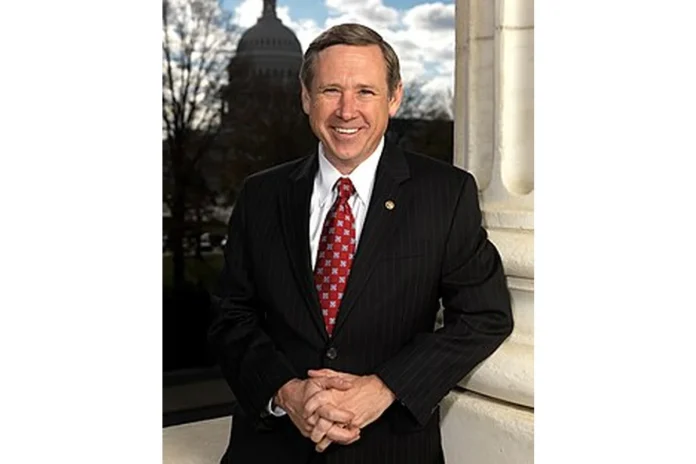
Mark Kirk Bio
Mark Steven Kirk (born September 15, 1959) is an American retired politician and attorney who served as a United States senator from Illinois from 2010 to 2017 and as the United States representative for Illinois’s 10th congressional district from 2001 to 2010. A member of the Republican Party, Kirk described himself as socially liberal and fiscally conservative. He is the last Republican to represent Illinois in the U.S. Senate. Beyond politics, Kirk built a parallel career as a U.S. Navy Reserve intelligence officer, a background that shaped much of his legislative work on national security and veterans’ affairs.
Early Life and Background
Mark Steven Kirk was born in Champaign, Illinois, the son of Francis Gabriel “Frank” Kirk and Judith Ann (Brady) Kirk. He grew up in the Chicago suburbs and graduated from New Trier East High School in 1977. After high school, Kirk spent two years at Blackburn College in Carlinville, Illinois, before briefly attending the Autonomous University of Mexico and then transferring to Cornell University, where he earned a Bachelor of Arts in History, graduating cum laude.
While an undergraduate at Cornell, Kirk served as president of The Seal and Serpent Society and held a work-study job supervising a play group at the Forest Home Chapel nursery school. He went on to earn a Master of Science from the London School of Economics and a Juris Doctor from Georgetown University Law Center, building the academic foundation that would later support a career in law, government, and public service.
Path to US Politics
After college, Kirk joined the staff of Congressman John Porter, who represented Illinois’s 10th congressional district, ultimately serving as Porter’s chief of staff. He later worked at the World Bank and as an aide at the U.S. State Department on the Central American peace process. Between 1993 and 1995, he practiced international law at Baker & McKenzie, and from 1995 to 1999 he served as counsel to the House International Relations Committee.
Kirk’s path into elected office was shaped by his years working alongside Porter and by his increasing involvement in moderate Republican policy circles. He also developed a public profile as a U.S. Navy Reserve intelligence officer, joining the Reserve in 1989 and being recalled to active duty for the 1999 NATO bombing of Yugoslavia. These experiences in foreign policy, intelligence work, and legislative procedure helped him build the credentials that would carry him to Congress in 2000.
Mark Kirk Career
Early Career (1989-2000)
Kirk was commissioned as an intelligence officer in the United States Navy Reserve in 1989, beginning a parallel career in military service that would continue for more than two decades. In 1999, he was recalled to active duty for Operation Allied Force, serving as the intelligence officer of VAQ-209 during the NATO bombing of Yugoslavia. He participated in Operation Northern Watch in Iraq the following year, flying over the no-fly zone in northern Iraq as part of an EC-130 squadron based in Turkey.
On the civilian side, Kirk practiced law, worked at the State Department, and served as counsel to the House International Relations Committee. He ran for Congress in 2000 to succeed the retiring Porter, winning his first race with 51 percent of the vote against Democrat Lauren Beth Gash and beginning a career in the House that would last a decade.
U.S. House Breakthrough (2001-2010)
During his five terms in the House, Kirk compiled a centrist voting record, leaning more liberal on social issues and more conservative on foreign policy. He served on the House Appropriations Committee and was a member of the House Iran Working Group. He founded and co-chaired the House U.S.-China Working Group, co-chaired the Congressional Caucus on Armenian Issues, and chaired The Tuesday Group, a bloc of moderate House Republicans.
Kirk was reelected by comfortable margins in 2002 and 2004. In 2006, he defeated Democrat Dan Seals by roughly seven points and repeated that margin in a 2008 rematch. He authored a 2004 amendment requiring the Congressional Budget Office to publish annual comparisons of projected and actual entitlement spending, fought funding for the Alaska “bridge to nowhere,” and pushed for reforms in the intelligence community. In June 2008, he introduced legislation to reinstate the federal assault weapons ban.
U.S. Senate Era (2010-2017)
In November 2010, Kirk won two concurrent Senate elections: one to finish the final months of Barack Obama’s term and another to serve a full six-year term. He was sworn in on November 29, 2010, and began a new Senate term on January 3, 2011. In the Senate, he worked closely with Democrat Dick Durbin on Illinois-related projects, including modernizing O’Hare International Airport and bringing federal rail funds to the Chicago-to-St. Louis corridor.
Kirk authored the Lincoln Legacy Infrastructure Development Act, parts of which were later incorporated into the Moving Ahead for Progress in the 21st Century Act. He co-chaired the Senate’s Great Lakes Task Force and introduced the Great Lakes Ecological and Economic Protection Act. He was one of only two Republicans in 2011 to oppose indefinite detention of American citizens and was the only Senate Republican to vote for a 2013 assault weapons ban, earning a lifetime achievement award from the Illinois Council Against Handgun Violence in 2015. He retired from the Navy Reserve as a Commander in May 2013, after 23 years of service.
Notable Events and Milestones
On January 21, 2012, at age 52, Kirk suffered an ischemic stroke caused by a damaged blood vessel in his neck. He underwent neurosurgery at Northwestern Memorial Hospital in Chicago and spent months in inpatient rehabilitation, learning to walk again. He returned to the Capitol on January 3, 2013, escorted up the steps by Vice President Joe Biden, and cited his recovery as motivation to advocate for early stroke detection and rehabilitation funding. In 2016, he became the first Republican senator to publicly state that President Barack Obama’s eventual Supreme Court nominee deserved a hearing and a vote, meeting with nominee Merrick Garland and encouraging colleagues to do the same.
Mark Kirk Family
Family Background and Personal Life
Mark Steven Kirk is the son of Francis Gabriel “Frank” Kirk and Judith Ann (Brady) Kirk. Public details about his extended family remain limited, and no children are noted in the available record. He was raised in the Chicago suburbs and has long maintained his residence in Fort Sheridan, Illinois.
In February 1998, Kirk met Kimberly Vertolli, a Naval Intelligence Officer, while both were on duty at the Pentagon. The two married in 2001 and divorced in 2009. Kirk has generally kept his personal life out of the public spotlight, with much of what is publicly known tied to his military service, his political career, and his recovery from a 2012 stroke.