
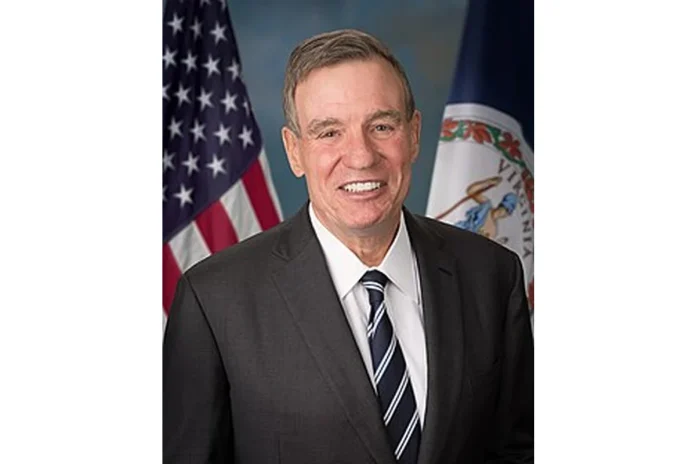
Mark Warner Bio
Mark Robert Warner (born December 15, 1954) is an American businessman and politician serving as the senior United States senator from Virginia, a position he has held since 2009. A member of the Democratic Party, he served as the 69th governor of Virginia from 2002 to 2006. Warner is vice chair of the Senate Democratic Caucus and vice chair of the Senate Intelligence Committee.
Before entering politics, Warner built a career in telecommunications venture capital during the 1980s, founding Columbia Capital and co-founding Capital Cellular Corporation. With an estimated net worth of $215 million as of 2018, he is one of the wealthiest members of Congress. He has been active on issues including fiscal policy, technology, and national security, and he delivered the keynote address at the 2008 Democratic National Convention.
Early Life and Background
Mark Robert Warner was born in Indianapolis, Indiana, the son of Marjorie (née Johnston) and Robert F. Warner. He has a younger sister, Lisa. The family later moved to Illinois and then to Vernon, Connecticut, where Warner graduated from Rockville High School, a public secondary school. He was class president at Rockville High School and hosted a weekly pick-up basketball game at his house.
Warner has credited his interest in politics to his eighth-grade social studies teacher, Jim Tyler, who inspired him to work for social and political change during the tumultuous year of 1968. He graduated from George Washington University with a Bachelor of Arts degree in political science in 1977, was inducted into Phi Beta Kappa, and graduated valedictorian with a 4.0 grade point average, making him the first in his family to earn a college degree.
While at George Washington University, Warner worked on Capitol Hill to pay for his tuition, riding his bike early mornings to the office of U.S. Senator Abraham Ribicoff. He later took time off to serve as the youth coordinator on Ella Grasso’s successful gubernatorial bid in Connecticut. Warner then graduated from Harvard Law School with a Juris Doctor in 1980 and has never practiced law.
Path to US Politics
After law school, Warner raised money for the Democratic Party based in Atlanta from 1980 to 1982, building relationships across the party. He then founded two unsuccessful businesses before becoming a general contractor for cellular businesses and investors, leveraging his knowledge of federal telecommunications law to trade pieces of cellular spectrum. As founder and managing director of Columbia Capital, he helped found or was an early investor in a number of technology companies, including Nextel.
Warner managed Douglas Wilder’s successful 1989 gubernatorial campaign and served as chairman of the state Democratic Party from 1993 to 1995. He also served on the Virginia Commonwealth Transportation Board in the early 1990s. He unsuccessfully ran for the U.S. Senate in 1996 against incumbent Republican John Warner, performing strongly in rural areas and losing the contest 52% to 47%.
Warner spent years slowly building up a power base in rural Virginia, particularly Southwest Virginia, before campaigning for governor as a moderate Democrat in 2001. He won that race with 52.16 percent of the vote, defeating Republican Mark Earley by nearly 97,000 votes. He was sworn in as Virginia’s 69th governor in 2002.
Mark Warner Career
Early Career (2002-2006)
After being elected in 2002, Warner drew upon a $900 million rainy day fund left by his predecessor, Jim Gilmore. He campaigned in favor of two regional sales tax increases, especially in Northern Virginia and Hampton Roads, to fund transportation, though Virginians rejected both regional referendums. In 2004, Warner worked with Democratic and moderate Republican legislators and the business community to reform the tax code, lowering food and some income taxes while increasing sales and cigarette taxes, effecting a net tax increase of approximately $1.5 billion annually.
Warner credited the additional revenues with saving Virginia’s AAA bond rating and allowing the single largest investment in K-12 education in Virginia history. He chaired the National Governors Association in 2004-2005, led a national high school reform movement, and chaired the Southern Governors’ Association. A 2005 Government Performance Project graded Virginia and Utah with an A− rating, prompting Warner to call Virginia the best managed state in the nation. He left office with a 71% approval rating.
2008 Senate Breakthrough (2008-2014)
Warner was widely expected to pursue the Democratic nomination for the 2008 U.S. presidential election, but he announced in October 2006 that he would not run, citing a desire not to disrupt his family life. He announced in September 2007 that he would run for the U.S. Senate seat being vacated by the retiring John Warner. Warner immediately gained the endorsement of most national Democrats and held a wide lead over his Republican opponent, former governor Jim Gilmore, for virtually the entire campaign.
In the November 2008 election, Warner defeated Gilmore with 65% of the vote to Gilmore’s 34%, carrying all but four counties in the state. This was the most lopsided margin for a contested Senate race in Virginia since 1988. He delivered the keynote address at the 2008 Democratic National Convention. In 2014, Warner faced Ed Gillespie and won by only 17,727 votes, a much narrower margin than expected.
Senior Senator Era (2013-Present)
Warner became Virginia’s senior senator on January 3, 2013, when Jim Webb left the Senate and was replaced by Tim Kaine. Upon arriving in the U.S. Senate in 2009, he was appointed to the Banking, Budget, and Commerce committees, and was later named to the Senate Intelligence Committee in 2011. In 2020, Warner defeated Republican nominee Daniel Gade, a college professor and U.S. Army veteran, with 56% of the vote to Gade’s 44%.
Warner has been identified as a radical centrist, working to foster compromise in the Senate. He was ranked the 10th most bipartisan member of the U.S. Senate during the 114th Congress in the Bipartisan Index, and the second most bipartisan Democrat in the 115th Congress. On December 2, 2025, Warner announced he would seek re-election to the United States Senate for a fourth term.
Notable Events and Milestones
Warner was awarded the Distinguished Public Service Medal, the Navy’s highest honor for a civilian, by U.S. Secretary of the Navy Ray Mabus for his consistent support of Virginia’s military families and veterans. In 2013, he was inducted into the Wireless Hall of Fame in recognition of his dedication to the telecommunications industry. He and Republican Senator Saxby Chambliss received the bipartisan Concord Coalition’s Economic Patriots Award in 2011 for their work with the Senate’s Gang of Six on deficit and debt reduction.
Mark Warner Family
Family Background and Personal Lineage
Mark Robert Warner was born to Marjorie (née Johnston) and Robert F. Warner and has a younger sister, Lisa. The family moved from Indianapolis, Indiana, to Illinois and then to Vernon, Connecticut, where Warner attended Rockville High School. He was the first in his family to graduate from college, earning his bachelor’s degree from George Washington University in 1977.
Personal Life
Warner is married to Lisa Collis, whom he wed in 1989. While on their honeymoon in Egypt and Greece, Warner became ill and was later found to have suffered a near-fatal burst appendix, spending two months in the hospital recovering. During her husband’s tenure as governor, Collis was the first Virginia first lady to use her birth name. Warner and Collis have three daughters. Warner is involved in farming and winemaking at his Rappahannock Bend farm, where he grows 15 acres of grapes for Ingleside Vineyards. He is not related to John Warner, his predecessor in the Senate.