

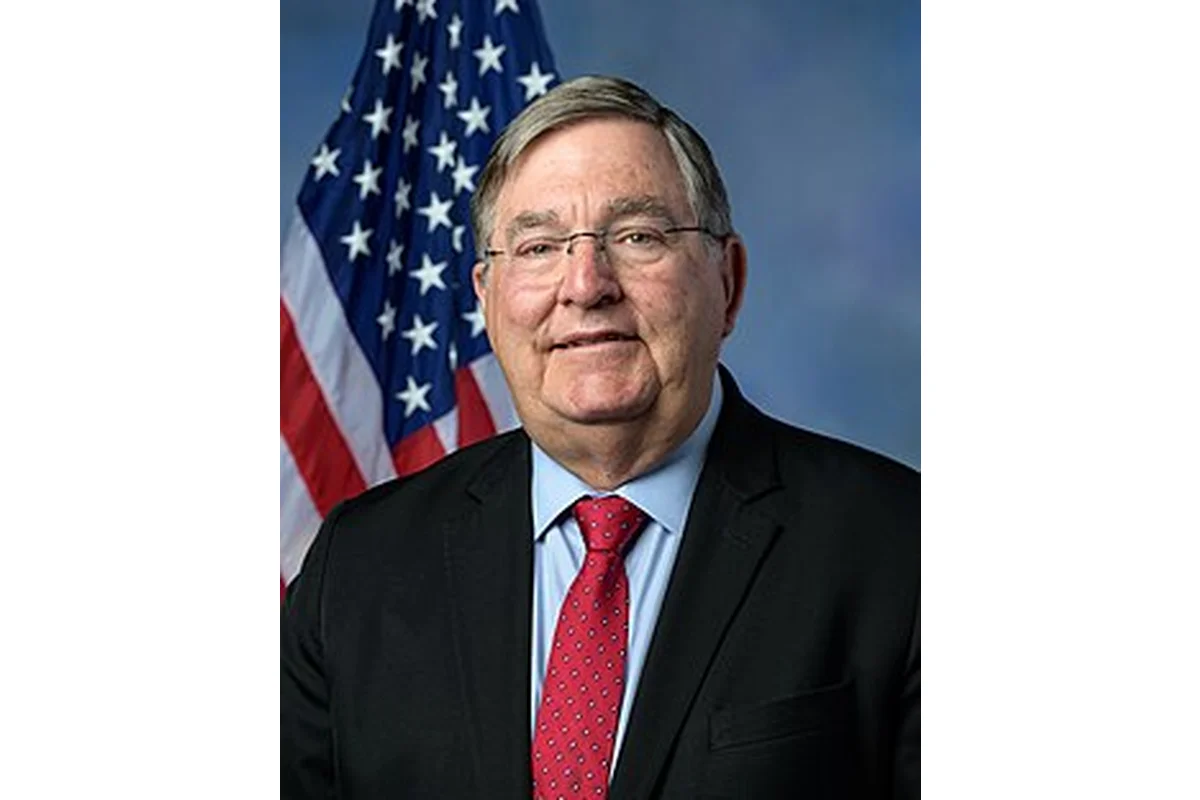
Michael C. Burgess Bio
Michael Clifton Burgess, born on December 23, 1950, is an American physician and politician who represented Texas’s 26th congressional district in the United States House of Representatives from 2003 to 2025. A Republican from Denton County, he became known as a prominent conservative voice on health-care and energy issues during more than two decades in Congress.
Before entering politics, Burgess practiced as an obstetrician–gynecologist, delivering more than 3,000 babies over the course of his medical career. He chaired the GOP Doctors Caucus and was a member of the congressional Tea Party Caucus. He declined to seek reelection in 2024 and retired from Congress in January 2025.
Early Life and Background
Michael Clifton Burgess was born in Rochester, Minnesota, to Norma (née Crowhurst) Burgess and Harry Meredith Burgess. His paternal family emigrated from Nova Scotia, Canada. Raised in a household that valued service and education, he went on to pursue studies in science and medicine.
He graduated from North Texas State University, now known as the University of North Texas, earning a Bachelor of Science and later a Master of Science. He then attended McGovern Medical School at the University of Texas Health Science Center at Houston, receiving his Doctor of Medicine in 1977.
After medical school, Burgess completed a residency in obstetrics and gynecology at Parkland Memorial Hospital in Dallas. He also earned a Master of Science from the University of Texas at Dallas. Over the course of his medical practice, he delivered more than 3,000 babies and built a reputation as a careful and respected physician. He is an Episcopalian.
Path to US Politics
Burgess practiced medicine for several years in North Texas before deciding to run for public office. He had never held any political position before launching his 2002 congressional campaign. His medical background and reputation in the community gave him a strong base of support among local voters.
In the 2002 Republican primary, he challenged Scott Armey, the son of House Majority Leader Dick Armey, to replace the retiring congressman. Armey led the first round with 45 percent of the vote, while Burgess took second with 23 percent, sending the race into a runoff.
Before the runoff, The Dallas Morning News published a series of articles alleging that Armey had used his influence as a judge to secure county jobs and contracts for his friends. The reports damaged Armey’s campaign, and Burgess won the runoff with 55 percent of the vote. He then won the general election with 75 percent of the vote, beginning what would become a long career in Congress.
Michael C. Burgess Career
Early Career (2003–2008)
After his 2002 election, Burgess took office in the U.S. House of Representatives in January 2003, representing a strongly Republican district anchored in Denton County. He quickly established himself as a reliable conservative voice and worked on issues related to health care, energy, and federal spending.
He drew on his background as a physician to speak out on medical policy, and he joined the House Energy Subcommittee on Energy and Power. During his early terms, he built relationships within the Republican caucus and began laying the groundwork for his later work on health-care reform.
Health Care and Tea Party Breakthrough (2009–2014)
In May 2009, Congressional Quarterly reported that Burgess had become a prominent voice on health-care issues in the House. He became a leading critic of the Affordable Care Act and supported efforts to repeal it. He also became a founding member of the congressional Tea Party Caucus, aligning with the conservative movement that emerged in 2009.
Through 2011, he had a lifetime rating of 93.59 percent from the American Conservative Union. He signed Americans for Tax Reform’s Taxpayer Protection Pledge and was recognized as one of nine medical doctors serving in Congress. Since the 111th Congress, he chaired the GOP Doctors Caucus, a group of medical professionals in the House Republican Conference.
In 2013, he voted for legislation to ban abortion after the 22nd week of pregnancy and was a staunch pro-life advocate throughout his career. On February 25, 2014, he introduced the Trauma Systems and Regionalization of Emergency Care Reauthorization Act, a bill that would authorize funding for trauma and emergency care services across the country.
Energy and Conservative Leadership Era (2015–2020)
As a member of the House Energy Subcommittee on Energy and Power, Burgess remained active in the debate over energy policy. On April 30, 2015, he introduced an amendment to the fiscal 2016 energy and water spending bill to defund the Department of Energy’s enforcement of incandescent light bulb efficiency standards. The amendment passed 232–189, largely along party lines.
He also expressed skepticism about the scientific consensus on climate change, stating in a March 8, 2011, hearing that the science behind global temperature changes was not settled. He supported President Donald Trump’s 2017 executive order imposing a temporary ban on entry to the United States for citizens of seven Muslim-majority countries and backed restrictions on refugee immigration.
In 2016, 2018, and 2020, he won reelection with strong margins, defeating Democratic and Libertarian challengers in the heavily Republican 26th district. His vote share remained above 59 percent in each of those elections, reflecting his durable support among North Texas voters.
Final Years and Retirement (2021–2025)
In his later terms, Burgess sponsored the American Tech Workforce Act of 2021, which would establish a wage floor for the high-skill H-1B visa program. In January 2022, Business Insider reported that he had violated the Stop Trading on Congressional Knowledge (STOCK) Act by failing to properly disclose a stock sale in Cigna Corp.
In 2023, he was among 47 Republicans to vote in favor of H.Con.Res. 21, directing President Joe Biden to remove U.S. troops from Syria. He voted to provide Israel with support following the October 7 attacks. He declined to seek a 12th term during the 2024 election cycle and retired from Congress in January 2025.
Notable Events and Milestones
One of the defining moments of Burgess’s early career was his 2002 primary runoff victory over Scott Armey, which launched him into Congress. As chairman of the GOP Doctors Caucus, he became a leading congressional voice on health-care policy, and his 2015 amendment to defund enforcement of light bulb efficiency standards became one of his most visible legislative victories on energy issues.
Michael C. Burgess Family
Family Background and Personal Life
Michael Clifton Burgess is the son of Harry Meredith Burgess and Norma (née Crowhurst) Burgess. His paternal family emigrated from Nova Scotia, Canada. He has been married to Laura Burgess since 1976, and the couple has been together throughout his medical and political career.
Burgess is an Episcopalian. He practiced medicine in North Texas for years before entering Congress, and his family supported his transition from obstetrics and gynecology to public service.