

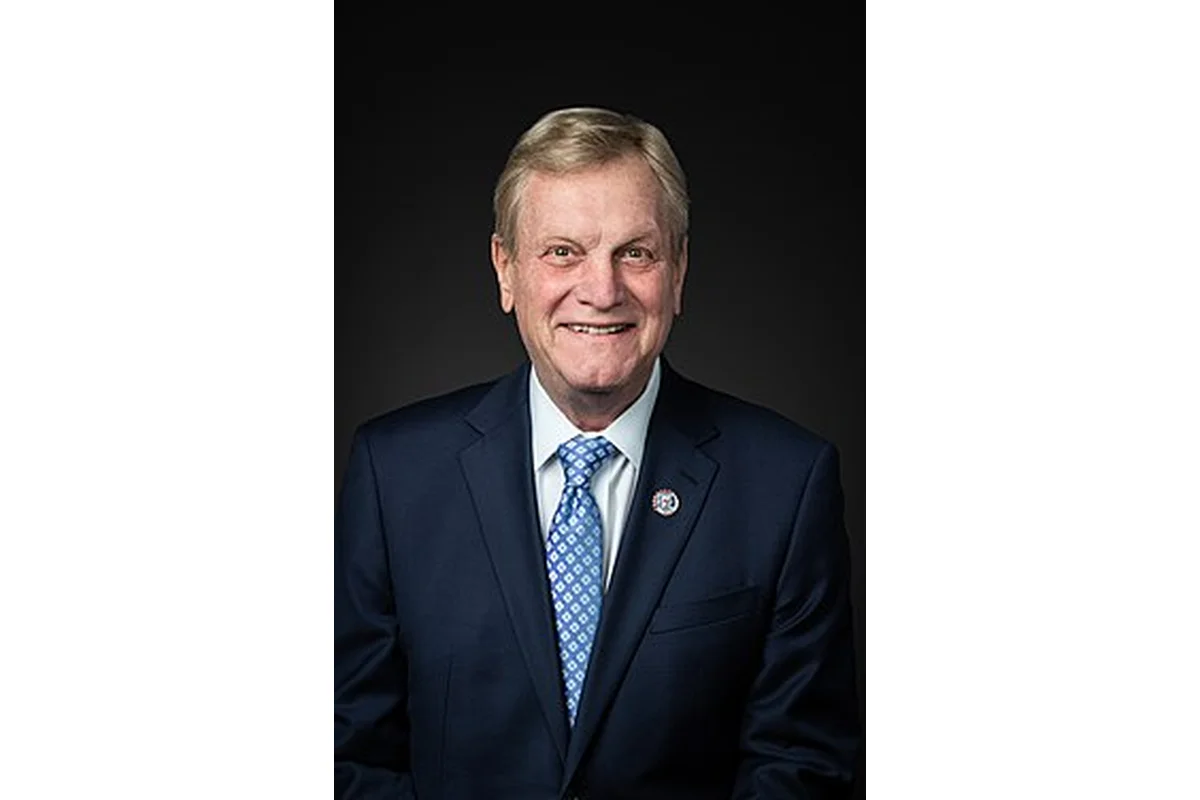
Mike Simpson Bio
Michael Keith Simpson (born September 8, 1950) is an American politician and dentist who has served as the U.S. Representative for Idaho’s 2nd congressional district since 1999. A member of the Republican Party, he represents a wide swath of eastern Idaho that includes Idaho Falls, Pocatello, Sun Valley, Twin Falls, and the northern two-thirds of Boise. Generally regarded as a moderate Republican, Simpson is known for working across the aisle on energy, public lands, immigration, and rural healthcare issues.
Before his election to Congress, Simpson built a long career in Idaho state politics, serving seven terms in the Idaho House of Representatives and acting as Speaker from 1992 to 1998. He is a practicing dentist by training and is one of the few members of Congress to have brought a professional medical background into federal lawmaking. His longevity in the House has allowed him to rise into leadership on key appropriations subcommittees.
Early Life and Background
Michael Keith Simpson was born on September 8, 1950, in Burley, Idaho, and was raised in nearby Blackfoot. His father worked as a dentist in the small eastern Idaho community, and Simpson grew up around a family medical practice that helped shape his later career path. He graduated from Blackfoot High School in 1968 and went on to attend Utah State University in Logan, where he earned a Bachelor of Science degree in 1972.
Simpson continued his education at the dental school of Washington University in St. Louis, Missouri, earning his Doctor of Dental Medicine (DMD) degree in 1977. After completing dental school, he returned to his hometown of Blackfoot and established a dental practice. His commitment to public service emerged early, and he was elected to the Blackfoot City Council in 1980, just three years after beginning his dental career.
Path to US Politics
Simpson’s entry into Idaho politics began in 1984, when he won election to the Idaho House of Representatives. He represented his district for seven consecutive terms, building a reputation as a pragmatic conservative willing to work with members of both parties. His colleagues elevated him to Speaker of the Idaho House, a position he held from 1992 to 1998, giving him significant influence over state legislative priorities during a transformational era for Idaho.
When longtime U.S. Representative Mike Crapo announced his run for the U.S. Senate in 1998, Simpson saw an opportunity to expand his service to the national stage. He entered the race for Idaho’s 2nd congressional district and won the general election with 52 percent of the vote, defeating former Democratic congressman Richard H. Stallings. The victory launched a congressional career that has now spanned more than two decades and numerous policy battles.
Mike Simpson Career
Early Career (1980-1998)
Simpson’s public career began at the local level when he joined the Blackfoot City Council in 1980, while still maintaining his dental practice in the same community. He transitioned to state-level politics in 1984 with his election to the Idaho House of Representatives, where he quickly established himself as a thoughtful legislator with deep roots in eastern Idaho.
By 1992, Simpson had risen to become Speaker of the Idaho House, a role he held for six years. His tenure as Speaker was marked by fiscal discipline and bipartisan deal-making, foreshadowing the moderate approach he would later bring to Washington. These formative years in Idaho politics provided him with the procedural knowledge and negotiation skills that would later define his work in the U.S. House.
Congressional Breakthrough (1999-2010)
Simpson took office in the U.S. House of Representatives in January 1999 and immediately sought positions on committees relevant to his district’s needs. He joined the House Appropriations Committee, where his seniority would later allow him to chair and rank on influential subcommittees. His command of House procedure quickly made him a frequent choice to serve as Speaker pro tempore, particularly during contentious debates on legislation. The role was so frequent that Simpson famously broke several sounding boards with the gavel, prompting him to commission replacements made in Idaho and present them to then-Speaker Dennis Hastert as a joke.
In the 111th Congress, Simpson became the Ranking Member on the Interior, Environment, and Related Agencies Appropriations Subcommittee, a powerful position overseeing public lands and natural resource policy. He also served as the small-state representative on the 33-member House Republican Steering Committee, replacing longtime Alaska congressman Don Young. In 2008, Esquire magazine named him one of the 10 best members of Congress, citing his commitment to finding common ground rather than ideological advantage.
Senior Leadership Era (2011-Present)
When Republicans regained control of the House in 2010, Simpson resumed his frequent service as Speaker pro tempore. His signature legislative achievement during this period is the Central Idaho Economic Development and Recreation Act (CIEDRA), a complex proposal balancing wilderness protection with motorized recreation and economic development. A revised version, the Sawtooth National Recreation Area and Jerry Peak Wilderness Additions Act, passed Congress in August 2015 and was signed by President Obama, creating the Hemingway-Boulders, Jim McClure-Jerry Peak, and White Clouds wilderness areas covering a combined 275,665 acres in central Idaho.
Simpson has continued to lead on energy and water issues, particularly through his role on the House Appropriations Subcommittee on Energy and Water Development, which oversees the Idaho National Laboratory. He is an outspoken proponent of nuclear power as a low-carbon energy source and has sponsored multiple bills to divide the U.S. Court of Appeals for the Ninth Circuit. In 2021, he introduced a “Salmon and Energy” concept aimed at restoring Snake River salmon while protecting agricultural and energy interests across the Columbia River basin.
Notable Events and Milestones
One of Simpson’s most notable moments came in 2007, when he was openly considered for an appointment to the U.S. Senate following the arrest of Senator Larry Craig. Simpson asked Governor Butch Otter to remove his name from consideration, arguing that Idaho’s congressional delegation would be stronger if he remained in the House to preserve his seniority on the Appropriations Committee. He has been a vocal advocate for bipartisanship, voting to end the 2013 government shutdown, supporting DACA recipients, and backing the Farm Workforce Modernization Act of 2021. In 2025, he drew attention for calling to rename the Opera House at the John F. Kennedy Center for the Performing Arts after Melania Trump.
Mike Simpson Family
Family Background and Personal Life
Simpson was raised in Blackfoot, Idaho, by a father who worked as a dentist in the community, an influence that guided his own career path. He returned to his hometown after dental school to practice, and his roots in eastern Idaho have remained central to his political identity throughout his career in public service.
Michael Keith Simpson married Kathy Simpson in 1977, and the couple has built a life together rooted in the same eastern Idaho communities he has represented in office. Simpson’s personal and professional commitments have long been anchored in the region, where he practiced dentistry for more than two decades before being elected to Congress.