

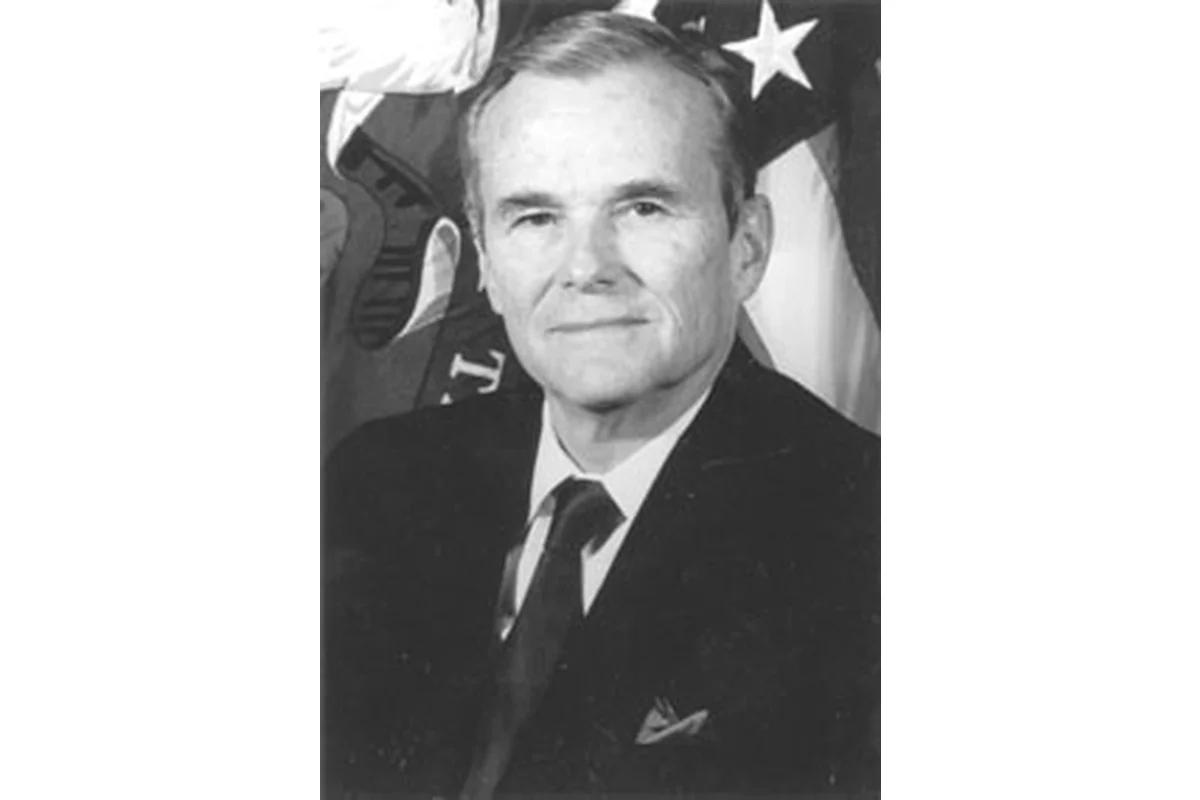
Nicholas F. Brady Bio
Nicholas Frederick Brady (born 11 April 1930) is an American banker and Republican politician from New Jersey whose public service spanned two of the most visible arenas in American government. He briefly served as a United States senator in 1982 after being appointed to fill an unexpired term, and later served as the 68th United States Secretary of the Treasury from 1988 to 1993 under Presidents Ronald Reagan and George H. W. Bush. During his tenure at Treasury he developed the Brady Plan, which led to the issuance of Brady Bonds to address sovereign debt problems in developing countries. Before his government service, Brady built a long career in finance, rising to the chairmanship of the investment bank Dillon, Read & Co.
Early Life and Background
Nicholas Frederick Brady was born on 11 April 1930 in Manhattan, New York City, the son of James Cox Brady Jr. and his wife, Eliot Chace. He was named for his paternal great-uncle, the businessman and philanthropist Nicholas Frederic Brady, and his great-grandfather was the industrialist Anthony N. Brady. His father was a major figure in thoroughbred horse racing in the United States and Europe, a tradition that would later shape Brady’s own involvement with the sport.
He grew up on an estate in Far Hills, New Jersey, and attended St. Mark’s School in Southborough, Massachusetts. After graduating from St. Mark’s, Brady enrolled at Yale University, where he earned a Bachelor of Arts degree in 1952 and became a member of Chi Psi fraternity. He went on to receive a Master of Business Administration from Harvard University in 1954, completing the academic foundation that would support a career on Wall Street.
Path to US Politics
Brady’s entry into public life came gradually, through civic commissions rather than electoral campaigns. In 1981, he served as head of the transition team for Thomas Kean following Kean’s election as Governor of New Jersey, signaling the trust New Jersey Republicans placed in his judgment and organization. The following years brought a series of federal appointments that connected him to the Reagan administration.
In 1983, he served on the President’s Commission on Strategic Forces, the National Bipartisan Commission on Central America, and the Commission on Security and Economic Assistance. In 1984, Reagan appointed him Chairman of the President’s Commission on Executive, Legislative and Judicial Salaries, and in 1985 he joined the Blue Ribbon Commission on Defense Management. In 1987, he chaired the Presidential Task Force on Market Mechanisms. These roles positioned Brady as a reliable Republican troubleshooter and set the stage for his Senate appointment in 1982 and his later nomination as Secretary of the Treasury.
Nicholas F. Brady Career
Early Career (1954–1982)
Brady joined the New York investment bank Dillon, Read & Co. in 1954, beginning a 34-year career in the banking industry. He rose steadily through the firm, ultimately becoming chairman of the board in 1970, a position he held until 1988. He also served as chairman of Purolator Filters from 1971 to 1987, balancing financial leadership with corporate board experience.
Alongside his banking career, Brady became active in New Jersey Republican politics. He served as the Republican committeeman of Somerset County, New Jersey, building the local relationships that would later prove decisive. In April 1982, Governor Thomas Kean appointed Brady to the United States Senate to fill the vacancy created by the resignation of Senator Harrison A. Williams. Brady served from 12 April 1982 to 27 December 1982, sitting on the Senate Committee on Armed Services and the Senate Committee on Banking, Housing, and Urban Affairs. He resigned before the term ended so that Frank Lautenberg, the winner of the 1982 election, could take office early for seniority purposes. Brady did not seek election to the seat.
New Jersey Senate Appointment (1982)
Brady’s eight months in the United States Senate remain one of the more unusual chapters in New Jersey political history. Governor Kean had to fill the seat left empty by Harrison A. Williams following his Abscam-related bribery conviction, and after weighing several potential candidates, he chose Brady as a caretaker. The appointment allowed Brady to contribute to two major Senate committees while stepping aside for the winner of the regularly scheduled election.
Secretary of the Treasury Era (1988–1993)
Brady became the 68th United States Secretary of the Treasury on 15 September 1988, serving during the final months of the Reagan administration and throughout the presidency of George H. W. Bush. Early in his tenure, The New York Times reported that he had a rocky start, describing him as bland on television and awkward as a public speaker. Yet as a close friend and adviser to President Bush, Brady wielded considerable influence, and members of both parties credited him with tackling difficult problems rather than avoiding them.
His most lasting achievement came in 1989, when he developed the Brady Plan to help developing countries restructure their external debt after a wave of sovereign defaults, including Mexico’s. The plan allowed these countries to issue United States dollar-denominated bonds, soon known as Brady Bonds, providing a market-based path to debt relief. He also chaired the Presidential Task Force on Market Mechanisms in 1987, work that informed his later approach to financial policy. Beyond Treasury, Brady has served as a trustee of Rockefeller University and a member of the Board of the Economic Club of New York, and he is a member of the Council on Foreign Relations.
Notable Events and Milestones
Brady’s signature achievement, the Brady Plan and the Brady Bonds that grew out of it, reshaped how the international financial community addresses sovereign debt in developing nations. He is also the last Republican to serve in New Jersey’s Class 1 United States Senate seat, and in September 2024 he became the oldest living former United States senator following the death of Daniel J. Evans.
Nicholas F. Brady Career Wins
Brady’s career is defined less by electoral victories than by institutional achievements in banking and government. He rose to the chairmanship of Dillon, Read & Co. in 1970, was appointed to the United States Senate in 1982, and was confirmed as the 68th United States Secretary of the Treasury in 1988.
Public Service Highlights
His most significant public service came as Treasury Secretary, where the Brady Plan and the resulting Brady Bonds gave heavily indebted developing countries a workable path to restructuring their obligations. His earlier work on federal commissions, including the 1987 Presidential Task Force on Market Mechanisms, laid the intellectual groundwork for that approach. He also contributed to civic life as a trustee of Rockefeller University and as a former member of the Steering Committee of the Bilderberg Meeting.
Other Wins & Achievements
Brady received the Golden Plate Award of the American Academy of Achievement in 1977, recognizing his standing in business and public affairs. He has also served on the boards of Hess Corporation, Weatherford International, NCR Voyix, the Mitre Corporation, and Heinz, and he is Chairman of Franklin Templeton Investment Funds and of Darby Overseas Investments, Ltd.
Nicholas F. Brady Family
Family Background and Public Service Lineage
Brady was born into a family with deep roots in American industry and finance. His great-grandfather, Anthony N. Brady, was a prominent industrialist, and his paternal great-uncle, Nicholas Frederic Brady, was a noted businessman and philanthropist for whom he was named. His father, James Cox Brady Jr., became a major figure in thoroughbred horse racing in the United States and Europe, a legacy that shaped Brady’s later connection to the sport.
Personal Life
Brady married Katherine Douglas, known as Kitty and the daughter of Percy Livingston Douglas, president of the Otis Elevator Company, in 1952. The couple had four children and 13 grandchildren, and Katherine Brady died on 6 January 2021 at the age of 89, leaving Nicholas a widower. Although he never raced at the same level as his father, he served for a time as chairman of The Jockey Club, and his racing operation operates under the name Mill House Stable.