
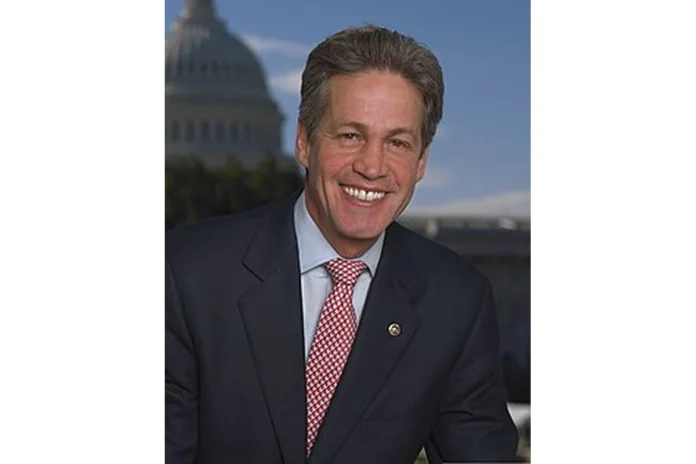
Norm Coleman Bio
Norman Bertram Coleman Jr. (born August 17, 1949) is an American politician, attorney, and lobbyist who built a lengthy career in Minnesota public life. He served as the mayor of Saint Paul, Minnesota from 1994 to 2002 and as a United States senator for Minnesota from 2003 to 2009. Originally elected as a Democrat, Coleman switched to the Republican Party in 1996 and remains a leading figure in conservative political circles, including his work with the Republican Jewish Coalition and the American Action Network.
Early Life and Background
Norman Bertram Coleman Jr. was born on August 17, 1949, in Brooklyn, New York. He is the son of Norman Bertram Coleman Sr. and Beverly (Behrman) Coleman, and he grew up in a Jewish family, with his paternal grandfather having changed the family surname from Goldman to Coleman. Coleman attended James Madison High School in Brooklyn before moving on to higher education in New York and the Midwest.
He earned a Bachelor of Arts degree from Hofstra University on Long Island, where he became deeply involved in the antiwar movement and counterculture of the early 1970s. Coleman was a liberal Democrat in his youth, leading campus protests and serving as president of the student senate. He later attended Brooklyn Law School from 1972 to 1974 and completed his Juris Doctor at the University of Iowa College of Law in 1976.
Path to US Politics
After graduating from law school, Coleman joined the office of the Minnesota Attorney General as a prosecutor, eventually rising to chief prosecutor and then solicitor general. His experience in state-level law enforcement gave him a strong foundation in public policy and legal practice. In 1993, he successfully ran for mayor of Saint Paul as a member of the Democratic-Farmer-Labor Party, beginning his transition into electoral politics.
Coleman’s political transformation accelerated in 1996, when he chaired the Senate reelection campaign of Democrat Paul Wellstone. Later that same year, citing frustrations with the DFL and a desire to pursue conservative policies on taxes and economic growth, he announced he was leaving the party to join the Republicans. He was reelected mayor of Saint Paul in 1997 with nearly 60 percent of the vote, this time as a Republican.
Norm Coleman Career
Early Career (1993-2002)
Norm Coleman’s electoral career began in 1993 when he won the race for mayor of Saint Paul, Minnesota’s capital and second-largest city. One of his first acts as mayor was to eliminate underfunded retirement health benefits for city workers, signaling his fiscal conservatism. He served two terms as mayor while building a reputation for tax discipline and management reform.
In 1998, Coleman won the Republican nomination for governor of Minnesota, but lost the general election to Reform Party candidate Jesse Ventura, who won 37 percent of the vote to Coleman’s 34.3 percent. Despite the gubernatorial defeat, his popularity in Saint Paul and his work on bringing professional hockey back to Minnesota kept his political profile strong heading into the new century.
US Senate Breakthrough (2002-2003)
Coleman had planned a second run for governor in 2002, but Karl Rove and President George W. Bush persuaded him to challenge incumbent Democratic Senator Paul Wellstone instead. The race became one of the most dramatic Senate campaigns in Minnesota history. On October 25, 2002, Wellstone died in a plane crash, and the Democrats chose former Vice President Walter Mondale to replace him on the ballot.
Coleman defeated Mondale by just over 61,000 votes out of more than 2 million cast, winning the Senate seat in November 2002. He was sworn in as a United States senator in January 2003, representing Minnesota in the upper chamber of Congress.
US Senate Era (2003-2009)
During his six years in the Senate, Coleman served on the Agriculture Committee, the Small Business Committee, and the Senate Committee on Homeland Security and Governmental Affairs. He helped author the 2008 Farm Bill and played a key role in breaking a stalemate that had delayed its consideration, earning praise for his work on sugar and dairy provisions important to Minnesota farmers.
He also chaired the Senate’s Permanent Subcommittee on Investigations, which held high-profile hearings in 2005 on abuses of the United Nations Oil-for-Food program. Coleman joined the bipartisan Gang of 20 in 2008 to address America’s energy challenges and consistently voted to increase the minimum wage. He was a member of the Republican Main Street Partnership and was ranked by the National Journal in 2007 as the fourth most liberal Republican in the Senate.
2008 Reelection and Defeat (2008-2009)
Coleman sought reelection in 2008 against Democrat Al Franken and Independence Party candidate Dean Barkley. On election night, Coleman initially led in the vote count and claimed victory, but Minnesota law required an automatic recount because the margin was less than 0.5 percent of all votes cast. After the recount, Franken was certified the winner by 225 votes.
Coleman filed a legal challenge, and a three-judge panel ultimately ruled in Franken’s favor by 312 votes out of more than 3 million cast. Coleman appealed to the Minnesota Supreme Court, which unanimously sided with Franken on June 30, 2009, prompting Coleman to concede. He left office in January 2009, and he remains the last Republican to have represented Minnesota in the United States Senate.
Notable Events and Milestones
Coleman’s career is defined by several signature moments, including his 1996 party switch, his 2002 Senate victory in the wake of Paul Wellstone’s death, and his razor-thin 2008 defeat to Al Franken. He also led Senate hearings on the United Nations Oil-for-Food program, became an outspoken advocate for Israel, and co-founded the American Action Network as a leading voice in conservative politics.
Norm Coleman Career Wins
Across his political career, Norm Coleman won multiple key elections at the state and federal levels, beginning with his 1993 victory for mayor of Saint Paul and his 1997 reelection as a Republican. He then won a United States Senate seat in 2002 before losing his 2008 reelection bid in one of the closest Senate races in American history.
US Senate Highlights
Coleman won the 2002 United States Senate election in Minnesota, defeating former Vice President Walter Mondale by more than 61,000 votes. His victory came in extraordinary circumstances, following the death of incumbent Senator Paul Wellstone just days before the election. Coleman’s Senate tenure lasted from January 2003 until January 2009.
His most recent electoral loss was the 2008 Senate race, which ended with Al Franken declared the winner by 312 votes after an automatic recount, a legal challenge, and a unanimous Minnesota Supreme Court ruling.
Other Wins and Achievements
Beyond the Senate, Coleman served two terms as mayor of Saint Paul, winning his initial race in 1993 and his reelection in 1997 with nearly 60 percent of the vote. He also won the 1998 Republican nomination for governor of Minnesota, advancing to the general election where he finished second in a three-way race against Jesse Ventura and Hubert H. Skip Humphrey III.
Norm Coleman Family
Family Background and Personal Heritage
Norman Bertram Coleman Jr. is the son of Norman Bertram Coleman Sr. and Beverly (Behrman) Coleman, both of Brooklyn, New York. His paternal grandfather changed the family surname from Goldman to Coleman. He is of Jewish heritage and is a member of the Freemason fraternity, having been made a Mason at sight in 2003 by the then Grand Master of Masons in Minnesota.
Personal Life
Coleman married actress Laurie Casserly in 1981, and the couple have two surviving children, Jacob and Sarah. Two other children, Adam (1983) and Grace (1992), died in infancy from a rare genetic disorder known as Zellweger syndrome, an experience Coleman has cited as a key reason for his anti-abortion stance. In 2016, his son Jacob announced a candidacy for a Minnesota Senate seat but did not win the Republican endorsement. Coleman’s daughter-in-law, Julia Coleman, won election to a state senate seat in 2021. In 2009, Coleman was diagnosed with Bell’s palsy, and in 2018 he announced that cancer in his neck and throat had spread to his lungs.