

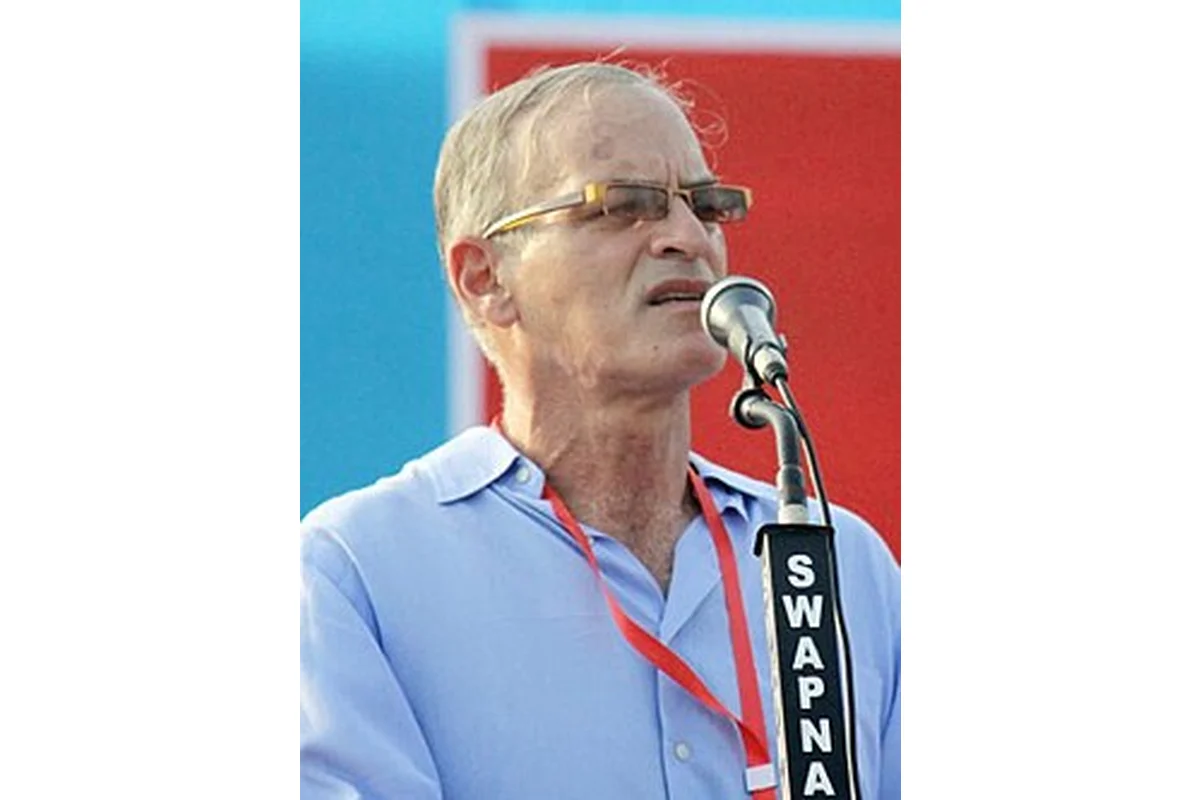
Norman Gary Finkelstein Bio
Norman Gary Finkelstein, born on 8 December 1953, is an American political scientist, author, and activist whose work centers on the politics of the Holocaust and the Israeli-Palestinian conflict. Trained at Binghamton University and Princeton, he has written widely read books including The Holocaust Industry (2000) and Gaza: An Inquest into Its Martyrdom (2018). Over the course of his career, Finkelstein has built a reputation for sharply critical reviews of other scholars and for outspoken public advocacy. His views have made him a deeply polarizing figure in debates about Israel, Palestine, and free speech in academia.
Finkelstein is the son of Holocaust survivors, a background that has shaped his focus on memory, human rights, and academic freedom. He has held faculty posts at several U.S. colleges, and his tenure dispute at DePaul University received widespread public attention. He is also known for a 2008 ban from entering Israel that lasted ten years, a decision that drew international comment.
Early Life and Background
Norman Gary Finkelstein was born on 8 December 1953 in New York City, New York, United States. He grew up in a Jewish household with deep ties to the experience of the Holocaust. His father, Harry Finkelstein, and his mother, Maryla (née Husyt) Finkelstein, were both survivors of the Nazi genocide, and their experiences had a lasting influence on his intellectual and moral outlook.
Finkelstein attended James Madison High School in Brooklyn, where he completed his secondary education. After high school, he enrolled at Binghamton University, where he earned a Bachelor of Arts degree in 1974. He then pursued advanced study at the École Pratique des Hautes Études in France before continuing his graduate training in political science at Princeton University, where he completed both his Master of Arts degree and his Doctor of Philosophy.
Path to US Politics and Political Science
Finkelstein’s path into political science began with his doctoral research at Princeton, which examined the demographic history of Palestine. That research led him to scrutinize Joan Peters’s best-selling book From Time Immemorial, a work he eventually labeled a monumental hoax. His forensic exposure of the book’s manipulated Ottoman records became a defining early test of his scholarly style, drawing praise from some and sharp criticism from others.
During this period, Finkelstein established a working relationship with linguist and political commentator Noam Chomsky, who encouraged his research despite warning him of likely professional fallout. He also began publishing polemical essays in outlets such as New Left Review, sharpening the combative approach that would mark his later books. These formative years laid the foundation for his transition from graduate student to public intellectual.
Norman Gary Finkelstein Career
Early Career (1977-2000)
Finkelstein began his teaching career as an adjunct lecturer in international relations at Rutgers University from 1977 to 1978. After a period away from full-time academia, he returned to the classroom at Brooklyn College, where he taught from 1988 to 1991. He then held positions at Hunter College and New York University concurrently from 1992 to 2001.
It was during this stretch that he completed the research behind The Holocaust Industry, published in 2000, which brought him broad public attention. In the book, Finkelstein argued that the memory of the Holocaust had been turned into an ideological weapon to shield Israel from criticism. The book provoked intense debate and quickly became a lightning rod for both supporters and detractors of his methods.
The Holocaust Industry Breakthrough (2000-2007)
The publication of The Holocaust Industry in 2000 was Finkelstein’s breakthrough moment, transforming him from a niche academic critic into a widely discussed public figure. He toured international media to defend the book’s claim that a small group of American Jewish leaders had exploited Holocaust memory for political and financial ends. The German historian Raul Hilberg, in a 2000 interview with Swiss National Radio, said the book expressed views he himself found detestable about the exploitation of the Holocaust by organizations such as the World Jewish Congress.
He followed this success with Beyond Chutzpah (2005), a detailed rebuttal of Alan Dershowitz’s The Case for Israel, which deepened his ongoing feud with the Harvard law professor. In 2001, Finkelstein joined the political science faculty at DePaul University as an assistant professor, where he continued to teach and write through 2007.
DePaul University Era and Tenure Dispute (2001-2007)
Finkelstein’s years at DePaul University in Chicago marked the peak of his mainstream academic career and also the most visible professional controversy of his life. In 2006, the political science department and the college-level tenure committees at DePaul voted in favor of awarding him tenure. The university administration, however, did not grant tenure, citing undisclosed reasons. After reaching a settlement with the university, Finkelstein announced his resignation.
The case drew national attention and became a flashpoint in debates over academic freedom, Middle East scholarship, and the politics of higher education. Finkelstein and his supporters argued that the administration’s decision reflected outside pressure, while critics maintained that his scholarship did not meet the standard for tenure. The episode remains one of the most discussed tenure disputes in recent U.S. academic history.
Post-DePaul Period and International Work (2008-Present)
After leaving DePaul, Finkelstein continued to write and speak publicly, though he described a sharp drop in his speaking invitations. In 2008, the Israeli government barred him from entering the country for ten years, a move that drew commentary from the Israeli newspaper Haaretz and human rights observers. He taught at Sakarya University’s Middle East Institute in Turkey during 2014-2015.
His most recent book on the region, Gaza: An Inquest into Its Martyrdom, was published in 2018. He has also written on the Boycott, Divestment and Sanctions (BDS) movement, critiquing its demands, and on topics ranging from the Ukraine-Russia war to academic freedom. Two documentaries, American Radical: The Trials of Norman Finkelstein (2009) and Yoav Shamir’s Defamation (2009), examined his life and the debates surrounding him.
Notable Events and Milestones
Among Finkelstein’s most significant milestones are the 2000 publication of The Holocaust Industry, the 2006 DePaul tenure vote, the 2008 Israeli entry ban, and the 2018 publication of Gaza: An Inquest into Its Martyrdom. In February 2025, he was publicly harassed in the street by the right-wing Zionist group Betar, an incident that received media coverage.
Norman Gary Finkelstein Career Highlights
Academic and Publishing Highlights
Finkelstein’s career highlights include his widely read book The Holocaust Industry (2000), which established his reputation as a polemical scholar; Beyond Chutzpah (2005), a pointed response to Alan Dershowitz; and Gaza: An Inquest into Its Martyrdom (2018), his most recent sustained examination of the Israeli-Palestinian conflict. The 2009 documentary American Radical brought his story to a wider audience.
Other Notable Achievements
Finkelstein has taught at Brooklyn College, Hunter College, New York University, and DePaul University in the United States, and at Sakarya University Middle East Institute in Turkey. He earned his Ph.D. in political science from Princeton University and his Bachelor of Arts from Binghamton University in 1974.
Norman Gary Finkelstein Family
Family Background and Holocaust Lineage
Finkelstein is the son of Harry Finkelstein and Maryla (née Husyt) Finkelstein, both of whom were Holocaust survivors. The history of his parents has been a central influence on his scholarship, which often returns to questions of memory, exploitation, and the moral weight of the Holocaust. In his writing, he has described growing up in a household shaped by the survivor experience.
Personal Life
Publicly available information about Finkelstein’s personal relationships is limited. He has spoken about being the child of survivors and has described a long personal connection to the Israeli-Palestinian conflict rooted in that family history. Verified details about partners or children have not been confirmed by the available sources.