

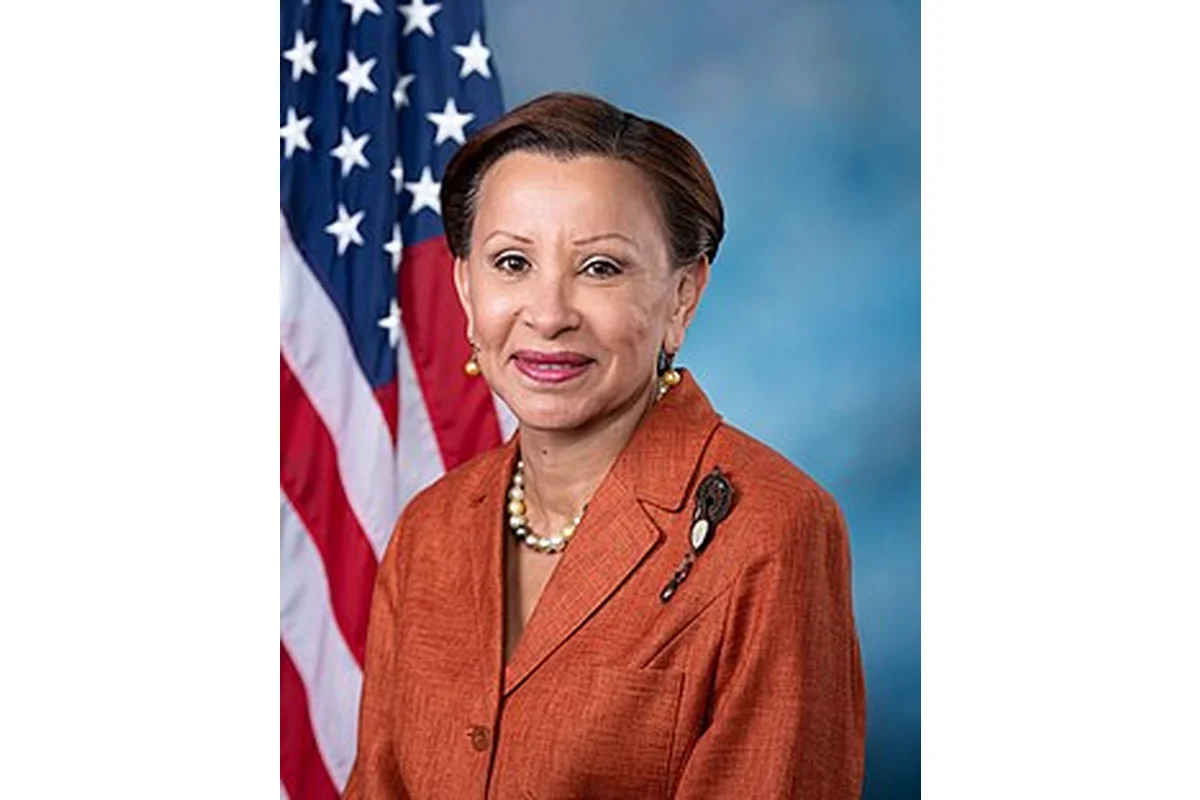
Nydia Velázquez Bio
Nydia Margarita Velázquez Serrano (born March 28, 1953) is an American politician and educator who has represented New York in the United States House of Representatives since 1993. She currently serves New York’s 7th congressional district, a seat she has held since 2013, after representing the 12th district from 1993 to 2013. A member of the Democratic Party, she is widely recognized as the first Puerto Rican woman to serve in Congress and as a leading voice for Hispanic communities, small businesses, and the people of Puerto Rico.
Throughout her career in the House, Velázquez has chaired key committees and caucuses, including the United States House Committee on Small Business and the Congressional Hispanic Caucus. She has also been known by the nickname “la luchadora,” a Spanish term that translates to “the fighter,” reflecting her lifelong advocacy for working families and civil rights. On November 20, 2025, she announced she would not run for re-election in 2026, closing a chapter in a career that has spanned more than three decades.
Early Life and Background
Velázquez was born in the small community of Limones, in the municipality of Yabucoa, Puerto Rico, on March 28, 1953. She grew up in a modest house along the Río Limones as one of nine children, raised by her mother, Carmen Luisa Serrano Medina, and her father, Benito Velázquez Rodríguez. Her father worked in the sugarcane fields and later became a self-taught political activist who founded a local political party. Dinner table conversations in the Velázquez household often centered on workers’ rights, helping to shape the political outlook that would later define her career in public service.
She attended public schools and proved to be an exceptional student, skipping three grades during her childhood. Velázquez became the first person in her family to graduate from high school, a milestone that opened the door to higher education. At the age of 16, she enrolled at the University of Puerto Rico, Río Piedras campus, where she went on to earn a Bachelor of Arts degree in political science, magna cum laude, in 1974. During her college years, she was involved in activism supporting Puerto Rican independence, a cause she would later deemphasize in her national political work.
Path to US Politics
After completing her undergraduate studies, Velázquez began her professional life as a teacher, but her interest in politics quickly drew her into community organizing and public service. In 1976, she earned a Master of Arts degree in political science from New York University, which strengthened her academic foundation. She then served as an instructor of political science at the University of Puerto Rico at Humacao from 1976 to 1981, before returning to New York City, where she became an adjunct professor of Puerto Rican studies at Hunter College from 1981 to 1983.
Her entry into electoral politics began in 1983, when she was hired as a special assistant to Representative Edolphus Towns, a Democrat representing New York’s 10th congressional district in Brooklyn. The following year, in 1984, Velázquez was appointed by Brooklyn Borough President Howard Golden to fill a vacant seat on the New York City Council, a milestone that made her the first Hispanic woman to serve on that body. Although she lost her bid for election to the council in 1986, she continued building her political experience by serving as national director of the Puerto Rico Department of Labor and Human Resources’ Migration Division Office from 1986 to 1989, and later as director of the Department of Puerto Rican Community Affairs in the United States.
Nydia Velázquez Career
Early Career (1983-1992)
Velázquez’s early career combined academic teaching, community organizing, and government service. After her time as a special assistant to Representative Edolphus Towns and her groundbreaking 1984 appointment to the New York City Council, she expanded her reach by working on behalf of migrant workers and Puerto Rican communities living in the mainland United States. She pioneered the program Atrévete Con Tu Voto, a voter registration and civic engagement initiative designed to politically empower Latinos. The program eventually expanded from New York to Hartford, Connecticut, New Jersey, Chicago, and Boston, helping Hispanic candidates secure electoral wins across multiple states.
By the early 1990s, she had built a strong political network in New York and earned a reputation as a street-smart and politically savvy leader. When New York’s 12th congressional district was redrawn as a majority-Hispanic district, Velázquez decided to run for the U.S. House of Representatives in 1992. She won the Democratic primary by defeating nine-term incumbent Stephen J. Solarz, who had been politically weakened by the House banking scandal, along with four other Hispanic candidates, paving the way for her historic election to Congress.
U.S. House of Representatives Breakthrough (1993-2008)
Velázquez took office in January 1993, becoming the first Puerto Rican woman to serve in the United States Congress. She quickly rose through the ranks of the House, and in 1998, she became the first woman to serve as Ranking Democratic Member of the House Small Business Committee. In January 2007, she achieved another historic first when she became the first woman and the first Hispanic woman to chair a United States House standing committee, taking the gavel of the House Committee on Small Business. She also emerged as a leading advocate for the people of Puerto Rico, playing a central role in the Vieques movement, which sought to end U.S. Navy bombing exercises on the inhabited island of Vieques. In May 2000, she was one of nearly 200 people arrested for refusing to leave the area, and the effort was ultimately successful when the Atlantic Fleet Weapons Training Facility on Vieques Island was closed in May 2003.
Congressional Leadership and Current Era (2009-Present)
In November 2008, Velázquez’s colleagues in the Congressional Hispanic Caucus elected her to lead the organization during the 111th Congress, and she chaired the caucus from 2009 to 2011. After redistricting in 2012, she began representing New York’s 7th congressional district in 2013, the seat she continues to hold today. Throughout her tenure, she has continued to champion small businesses, working families, and the rights of Puerto Ricans on the mainland and the island. According to a FiveThirtyEight analysis, she voted with President Joe Biden’s stated position 100% of the time during the 117th Congress. In April 2024, she was one of nearly 20 members of Congress who voted against additional military aid to Israel, and in September 2024, she introduced a federal bill known as the “Mel Law,” which guarantees posthumous degrees to students who die before completing their studies. On November 20, 2025, she announced that she would not seek re-election in 2026.
Notable Events and Milestones
Velázquez’s career is marked by a series of historic firsts, including being the first Hispanic woman on the New York City Council, the first Puerto Rican woman in Congress, and the first woman to chair the House Small Business Committee. Her successful campaign to end U.S. Navy bombing on Vieques remains one of the signature achievements of her career, as does her leadership of the Congressional Hispanic Caucus from 2009 to 2011. Her decision in 2025 not to seek re-election in 2026 closes a chapter in U.S. political history defined by groundbreaking representation for Hispanic Americans and Puerto Ricans.
Nydia Velázquez Family
Family Background and Political Lineage
Velázquez was raised in a large, working-class family in Yabucoa, Puerto Rico, where her father, Benito Velázquez Rodríguez, was a sugarcane worker who later became a self-taught political activist and founder of a local political party. Her mother, Carmen Luisa Serrano Medina, helped raise nine children in a small home on the Río Limones. The family environment, with its strong emphasis on workers’ rights and civic engagement, played a defining role in shaping her political values and her lifelong commitment to public service.
Personal Life
Velázquez, also known by the nickname “la luchadora,” married Brooklyn-based printer Paul Bader in 2000, in what was her second marriage. By 2010, she and Bader were in the process of divorce. Velázquez is Catholic, and her personal faith has been a quiet but consistent part of her public life. In 1991, before her first run for Congress, she experienced a period of clinical depression and survived a suicide attempt, an experience she later discussed publicly and which she said ultimately made her stronger and more committed to public service.