

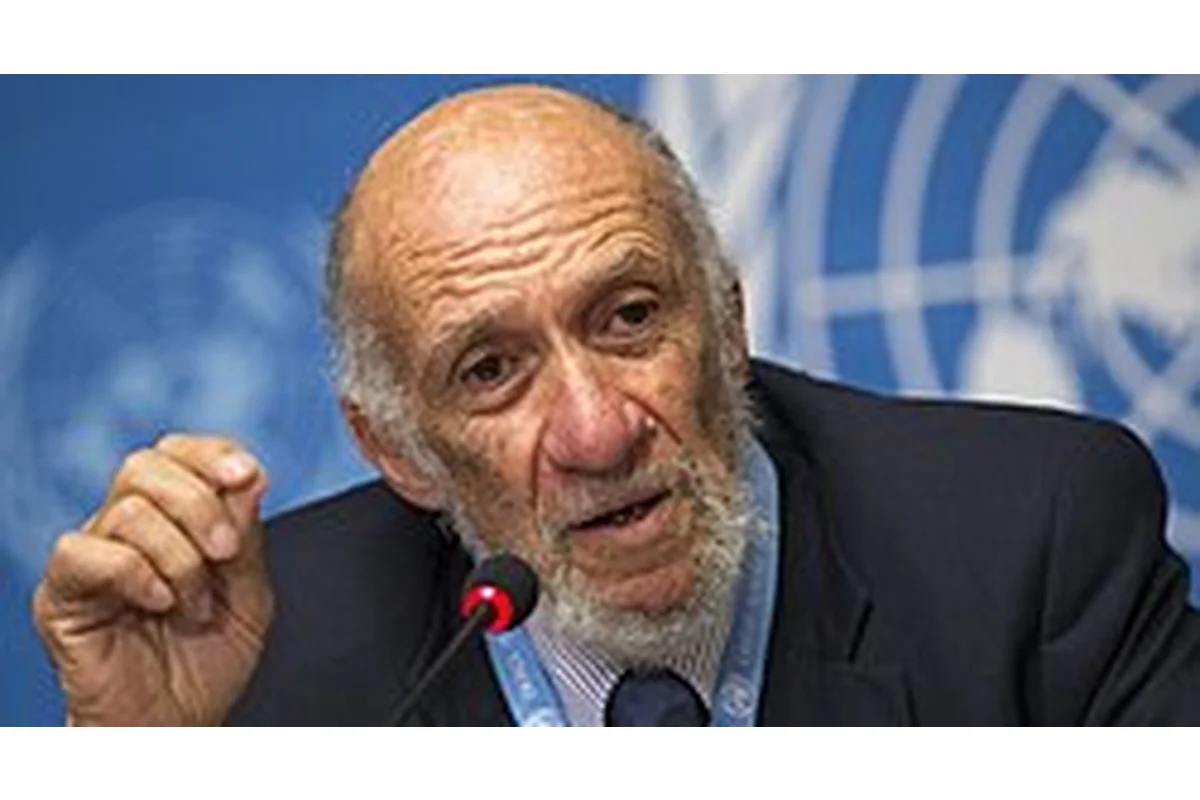
Richard A. Falk Bio
Richard Anderson Falk (born November 13, 1930) is an American professor emeritus of international law, scholar, and human rights advocate whose career has spanned more than six decades in academia and public policy. He spent the bulk of his teaching life at Princeton University, where he held the Albert G. Milbank Professorship in International Law and Practice, and later continued his research at the University of California, Santa Barbara. Falk has written and edited roughly forty books on subjects that include international law, the United Nations, and global human rights, and his work is frequently cited in debates on humanitarian law and world order.
On the international stage, Falk is best known for his 2008 appointment by the United Nations Human Rights Council as Special Rapporteur on the situation of human rights in the Palestinian territories occupied since 1967, a six-year mandate he held through 2014. He has also served on inquiry commissions, editorial boards, and advisory bodies linked to global governance. His scholarship and public commentary have been widely influential and, at times, sharply controversial.
Early Life and Background
Richard Anderson Falk was born on November 13, 1930, in New York City, New York, into a New York Jewish family. He has described himself as an American Jew and has suggested that a sense of outsider status may have shaped his later willingness to question American foreign policy. For Falk, his Jewish identity is tied to a commitment to opposing injustice and showing empathy for victims of suffering wherever they are found.
Falk pursued his higher education at several of the most prominent institutions in the United States. He earned a Bachelor of Science in Economics from the Wharton School at the University of Pennsylvania in 1952. He then completed a Bachelor of Laws degree at Yale Law School and, in 1962, received a Doctorate in Law (SJD) from Harvard University. His early intellectual influences included the writings of Karl Marx, Herbert Marcuse, and C. Wright Mills, and he developed a lasting concern with efforts to abolish war and aggression as social institutions.
Path to International Law
Falk began his teaching career in the late 1950s, with early appointments at Ohio State University and Harvard. In 1961, he moved to Princeton University, where the law program was closely tied to politics and international relations. He was appointed the Albert G. Milbank Professor of International Law and Practice in 1965, a title he retained as emeritus professor. In 1985, he was awarded a Guggenheim Fellowship in recognition of his scholarship.
Beyond the classroom, Falk cultivated a public role he described as a citizen-pilgrim, combining academic work with political engagement. He joined the editorial boards of The Nation and The Progressive, and he served as a former advisory board member of the World Federalist Institute, the American Movement for World Government, and as a fellow at the Transnational Institute. He was active in campus lectures and policy debates, gradually building a reputation as both a teacher and an advocate for global institutional reform.
Richard A. Falk Career
Early Career (Late 1950s–1960s)
Falk started his academic career in the late 1950s at Ohio State University and Harvard, where he taught law and observed the civil unrest of the era. His time at Ohio State coincided with civil rights struggles on campus, including incidents of racism directed at Black students, which left a strong impression on his later thinking about law and society.
His 1961 move to Princeton University marked the beginning of a long association with one of the nation’s leading law schools. There, the integration of international law with political and social science allowed him to connect his professional expertise to broader debates about war, peace, and global order. He was named Albert G. Milbank Professor of International Law and Practice in 1965 and continued to publish on the legal dimensions of conflict, including early writings on the legality of the Vietnam War.
United Nations Engagement (2008–2014)
In 2008, the United Nations Human Rights Council appointed Falk to a six-year term as Special Rapporteur on the situation of human rights in the Palestinian territories occupied since 1967. The role made him a focal point of international attention, and his reports addressed issues such as accountability for military operations, settlement policies, and the treatment of Palestinian children in Area C.
During his mandate, Falk’s travel was at times restricted. In May 2008, Israel refused him entry to gather information for a report, and in December 2008, he was detained at Ben Gurion Airport for roughly twenty hours before being expelled. He continued to issue statements and reports, including a 2010 report that accused Israel of practices amounting to apartheid and that called on the United Nations to support a worldwide boycott, divestment, and sanctions campaign.
Princeton and UC Santa Barbara Era (1961–Present)
Princeton University served as Falk’s primary academic home for more than thirty years. In 2001, he retired from active teaching, and since 2002 he has been a research professor at the Orfalea Center for Global and International Studies at the University of California, Santa Barbara. As of 2013, he was director of the Global Climate Change, Human Security, and Democracy project at UCSB.
In 2025, Falk was detained for four hours by the Canada Border Services Agency upon entering the country to attend a conference about Palestine, after which officials determined he was not a threat to national security and allowed him and his wife to enter. In January 2026, he wrote about the United States attack on Venezuela, describing the capture of Nicolás Maduro as part of a broader shift toward nihilistic geopolitics and a collapse of confidence in the United Nations system to restrain aggression.
Notable Events and Milestones
Falk’s career includes several signature moments, including a 1979 New York Times op-ed about Ayatollah Khomeini that drew intense criticism, his 2004 preface to David Ray Griffin’s book on the September 11 attacks, and a 2007 essay titled Slouching toward a Palestinian Holocaust that compared certain Israeli policies to Nazi practices. He has also written on the 2003 invasion of Iraq, the 2011 intervention in Libya, and the Boston Marathon bombing, all of which drew significant public attention.
Richard A. Falk Family
Family Background and Upbringing
Falk was raised in a New York Jewish family, and he has often linked his identity to a sense of outsider status that informed his career as a critic of American foreign policy. He has written that being Jewish, for him, means being preoccupied with overcoming injustice and showing respect for all peoples regardless of nationality or religion.
Personal Life
Falk is married to Hilal Elver, a scholar of international law and human rights. The couple has appeared together at academic and policy events, including the 2025 trip to Canada where Falk was briefly detained by border officials.