

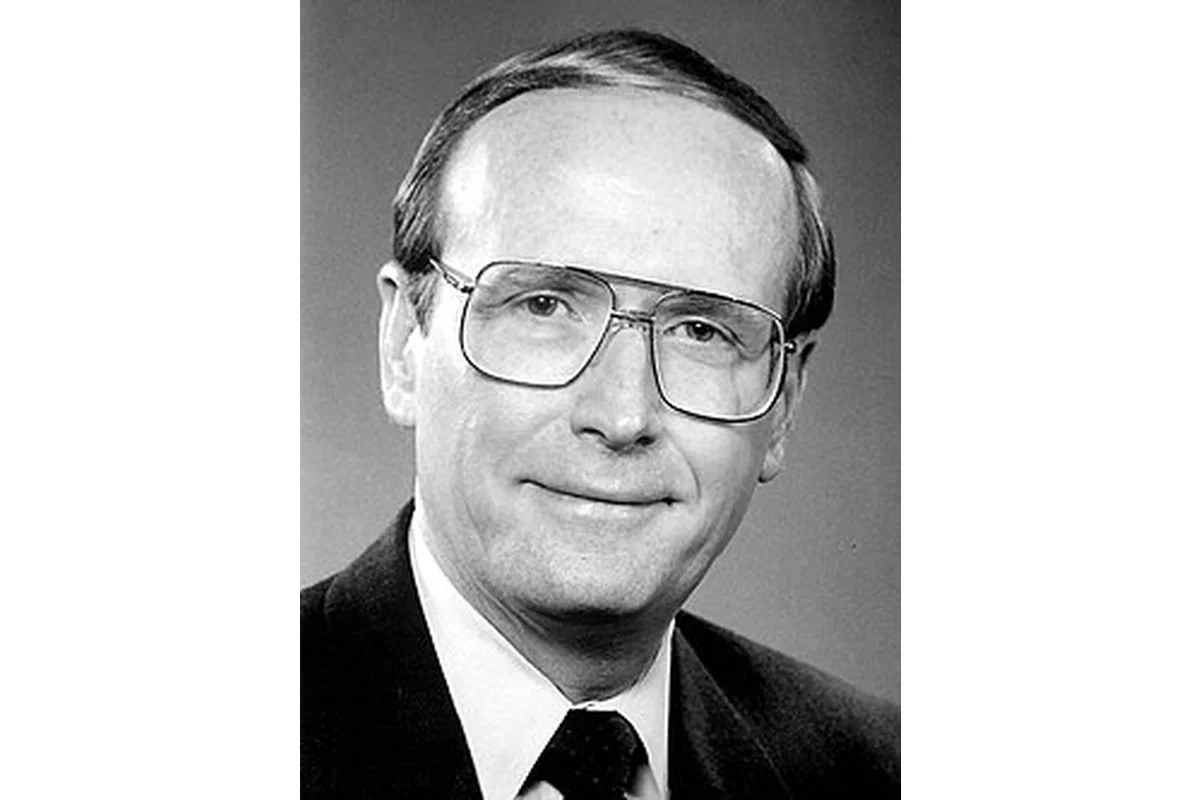
Richard Hudson Bryan Bio
Richard Hudson Bryan is an American retired politician and attorney whose career in public service spanned nearly three decades in Nevada. A member of the Democratic Party, he served as the 25th Governor of Nevada from 1983 to 1989 and later represented Nevada in the United States Senate from 1989 to 2001. Before entering statewide office, he practiced law as Clark County’s first public defender and worked in both chambers of the Nevada Legislature.
Born in the nation’s capital and educated on the West Coast, Bryan built his political identity in Nevada, where he rose from local legal work to the state’s highest executive office and on to the federal legislature. He is remembered for his opposition to nuclear waste storage at Yucca Mountain and for an amendment that ended NASA’s Search for Extraterrestrial Intelligence program in 1994.
Early Life and Background
Richard Hudson Bryan was born on July 16, 1937, in Washington, D.C. He grew up during a period when the country’s political life was centered in the capital, and his early years laid the foundation for a career in law and public service. After completing his secondary education, he moved west to attend college.
Bryan graduated from the University of Nevada at Reno in 1959 with a Bachelor of Arts degree. During his time on campus, he joined the Alpha Tau Omega fraternity and served as president of the Associated Students of the University of Nevada, demonstrating early leadership among his peers. He then pursued legal studies at the University of California, Hastings College of the Law, where he earned his Juris Doctor degree, and was admitted to the Nevada Bar in 1963.
Shortly after entering the bar, Bryan took on a pioneering role in Nevada’s legal community by becoming Clark County’s first public defender. The position gave him courtroom experience and connected him to the everyday legal concerns of residents in the state’s largest county, setting the stage for his later entry into electoral politics.
Path to US Politics
Bryan began his political career in the Nevada State Senate, where he served from 1972 to 1978. His work in the state legislature allowed him to focus on Nevada-specific issues and to build relationships with colleagues across the political spectrum. The experience sharpened his understanding of state budgeting, criminal law, and the needs of a rapidly growing state.
In 1979, he was elected Nevada Attorney General, a position he held until 1983. As the state’s chief legal officer, Bryan argued cases on behalf of Nevada and advised state agencies on legal matters. The role raised his profile heading into the next phase of his career and gave him a statewide platform from which to launch a campaign for governor.
Encouraged by fellow Democrats, including Harry Reid and Alan Cranston, Bryan decided in 1987 to seek a seat in the United States Senate. He declared his candidacy shortly thereafter, beginning a transition that would move him from state-level politics to national office.
Richard Hudson Bryan Career
Early Career (1972–1982)
Bryan’s early political career began in 1972 when he joined the Nevada Senate, serving six years in the state legislature. His time in the chamber allowed him to develop a reputation as a steady and approachable lawmaker focused on Nevada’s interests.
In 1979, Bryan was elected Nevada Attorney General, and he served in that role until 1983. The position broadened his experience in state government and prepared him for a run at the governorship, which he launched against the incumbent in 1982.
Breakthrough (1982–1989)
Bryan’s breakthrough came in 1982 when he challenged incumbent Republican Governor Robert List. He won the election and was sworn in as the 25th Governor of Nevada in January 1983. As governor, he became known for regularly inviting state legislators of both parties to meals at the governor’s mansion, a practice that built goodwill across the aisle.
He won reelection easily in 1986, defeating Nevada State Treasurer Patricia Cafferata. His success at the state level drew national attention, and by 1987, prominent Democrats including Harry Reid and Alan Cranston were encouraging him to consider a Senate bid.
Democratic Era (1989–2001)
In the 1988 United States Senate election, Bryan defeated incumbent Republican Senator Chic Hecht and was sworn in at the convening of the 101st Congress on January 3, 1989. During his tenure in the Senate, he served on the Finance, Banking, Intelligence, and Commerce Committees, working on issues ranging from tax policy to national security.
Bryan became a vocal opponent of the Search for Extraterrestrial Intelligence program, once remarking that millions had been spent without finding a single visitor from another world. He introduced an amendment to the 1994 budget that ended the High Resolution Microwave Survey and terminated NASA’s SETI efforts less than a year after their launch.
He also fought against plans to use Yucca Mountain as a long-term nuclear waste storage site. Although the repository was built during his time in the Senate, his opposition delayed actual storage, and the plans were later discontinued by President Barack Obama after Bryan had retired.
In 1994, Bryan won reelection by defeating Republican challenger Hal Furman. He chose not to seek a third term in 2000 and left the Senate at the end of the 106th Congress, closing a chapter of public service that had lasted nearly three decades.
Notable Events and Milestones
Among Bryan’s signature achievements was his 1994 amendment that ended NASA’s SETI program, a decision that shaped federal science funding for years. His long opposition to Yucca Mountain delayed the storage of nuclear waste at the Nevada site, and his bipartisan outreach as governor became a model for cooperative state leadership.
Richard Hudson Bryan Career Wins
Richard Hudson Bryan won every major election he entered during the height of his career, beginning with his 1982 victory for governor and continuing through his 1994 Senate reelection. His only departure from office came on his own terms, when he declined to seek a third Senate term in 2000.
Governorship and Senate Highlights
Bryan first won statewide office in 1982 by defeating Republican Governor Robert List, then secured reelection in 1986 against Patricia Cafferata. His most notable win came in 1988, when he unseated Republican incumbent Senator Chic Hecht to claim a seat in the United States Senate.
He followed that with a comfortable 1994 reelection over Hal Furman. Across his career as governor and senator, Bryan never lost a general election and built a reputation as a consistent campaigner in Nevada politics.
Other Wins & Achievements
Before his statewide victories, Bryan earned election as Nevada Attorney General in 1978 and served six years in the Nevada State Senate starting in 1972. He also made legal history as Clark County’s first public defender, establishing a position that has shaped public defense work in the region.
Richard Hudson Bryan Family
Family Background and Public Service Lineage
Public records about Richard Hudson Bryan’s parents and extended family are limited, and he is best known through his own record of public service. His rise from a Washington, D.C., upbringing to leadership in Nevada reflects a personal commitment to civic work that defined his adult life.
Personal Life
Richard Hudson Bryan married Bonnie Fairchild in 1962, and the couple remained together as of 2016. Their long marriage paralleled his decades in public service, providing personal stability throughout his time in the Nevada State Senate, the Attorney General’s office, the governorship, and the United States Senate.