

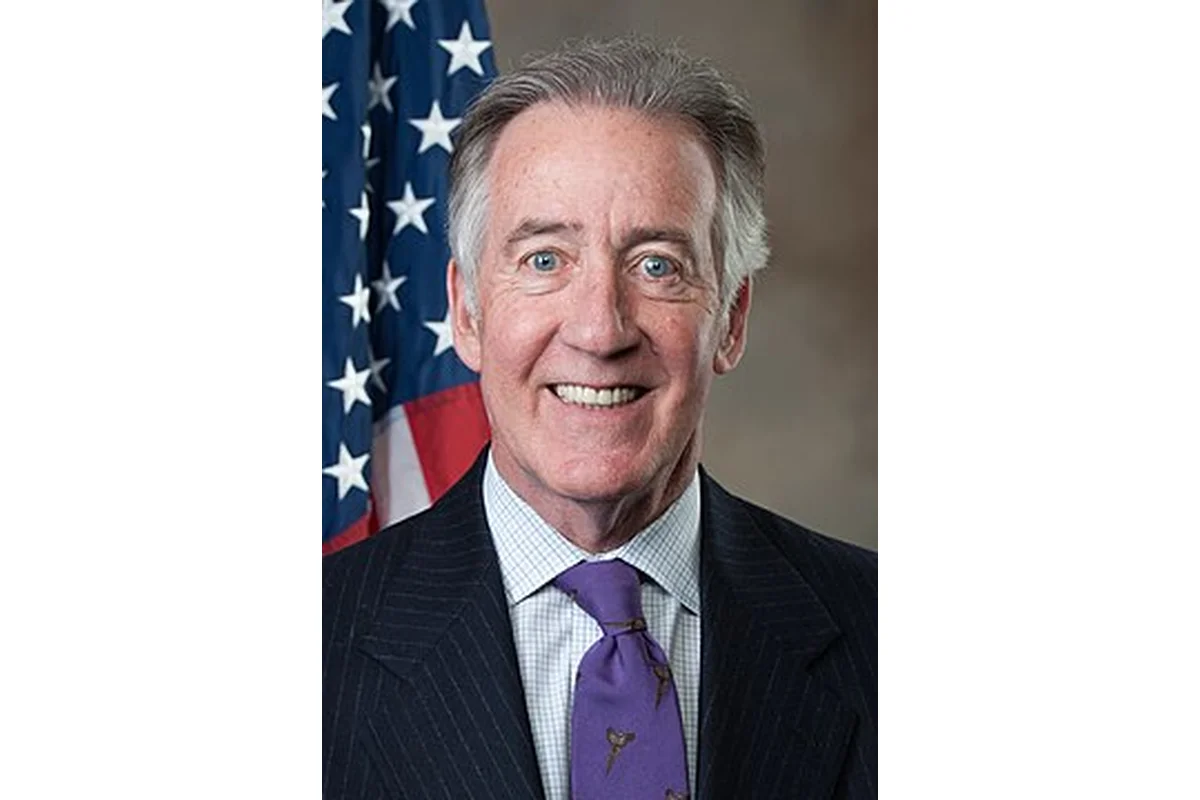
Richard Neal Bio
Richard Edmund Neal, born on February 14, 1949, is an American politician who has represented Massachusetts in the U.S. House of Representatives since 1989. A member of the Democratic Party, he currently serves the 1st congressional district, a seat that was numbered as the 2nd district from 1989 to 2013. Before his long tenure in Congress, Neal served as mayor of Springfield, Massachusetts, from 1983 to 1989, following his earlier work as president of the Springfield City Council.
Throughout his career, Neal has built a reputation as a pragmatic legislator focused on economic policy, Social Security, retirement savings, and trade. He chaired the influential House Ways and Means Committee from 2019 to 2023 and has been the dean of Massachusetts’s House delegation since 2013. In addition to his congressional duties, he teaches a journalism course at the University of Massachusetts Amherst.
Early Life and Background
Richard Edmund Neal was born in 1949 in Worcester, Massachusetts, the oldest of three children of Mary H. (Garvey) Neal and Edmund John Neal. He and his two younger sisters were raised in Springfield by their mother, a housewife, and their father, a custodian at MassMutual. Neal’s maternal grandparents came from Northern Ireland, while his paternal grandparents came from Ireland, giving him a deep connection to Irish heritage that would later shape his political priorities.
Tragedy struck early when Neal’s mother died while he was attending Springfield Technical High School, and his father also passed away during his teenage years. He and his sisters were raised by their grandmother and later their aunt, relying on Social Security benefits to make ends meet. These formative experiences left a lasting impression on Neal and helped spark his lifelong interest in economic policy and the social safety net.
After high school, Neal attended Holyoke Community College and then American International College in Springfield, graduating in 1972 with a Bachelor of Arts in political science, supported by survivor benefits. He later earned a Master of Arts in public administration from the University of Hartford’s Barney School of Business and Public Administration in 1976, where he was a member of Tau Kappa Epsilon fraternity. Early in his career, he taught history at Cathedral High School, laying the groundwork for his future in public service.
Path to US Politics
Neal began his political journey in 1972 as co-chairman of Democratic presidential candidate George McGovern’s campaign in Western Massachusetts. In 1973, he became an assistant to Springfield Mayor William C. Sullivan, learning the workings of municipal government from the inside. He was elected to the Springfield City Council in 1978 and was named president of the council the following year, establishing himself as a rising figure in local Democratic politics.
In 1983, Neal decided to challenge incumbent Democratic Mayor Theodore Dimauro of Springfield. The pressure of the contest led Dimauro to retire, clearing Neal’s path to the mayor’s office. He was reelected in 1985 and 1987, serving as mayor until 1989. During his tenure, Springfield experienced significant economic growth, with more than $400 million in development and investment, and a budget surplus. He championed the preservation of historic homes and launched a Clean City Campaign to reduce litter.
With his mayoral record behind him, Neal set his sights on Congress. When 18-term Democratic incumbent Edward Boland announced his retirement from the 2nd congressional district in 1988, Neal had already been tipped off and was well-positioned to run. He raised $200,000 in contributions and gathered signatures across the district before the official announcement, paving the way for his first successful campaign for the U.S. House of Representatives.
Richard Neal Career
Early Career (1989–2006)
Neal took office in the U.S. House of Representatives in 1989 after a decisive general-election victory. He spent his first two terms on the House Banking Committee, serving on the Financial Services Subcommittee and warning that early reform proposals could harm small businesses and minority-owned lenders. An amendment he offered to require reports on lending to these businesses was adopted, marking an early legislative win.
In 1993, Neal moved to the House Ways and Means Committee, the body that would eventually define his career. He chaired the Subcommittee on Select Revenue Measures beginning in 2008 and was a member of the Subcommittee on Trade. His focus on simplifying the tax code and protecting lower-income taxpayers from the Alternative Minimum Tax (AMT) became a defining feature of his work. In 1998 he successfully pushed to exempt the child tax credit from the AMT, and the exemption was made permanent in 2001.
Ways and Means Breakthrough (2007–2018)
By the late 2000s, Neal was widely regarded as a leading candidate to chair the House Ways and Means Committee. When Charles B. Rangel departed the chairmanship in 2010, Neal actively sought the post, though his bid drew criticism over a high-dollar Cape Cod fundraiser. He continued to build influence on tax policy, trade, and Social Security throughout the decade, and was a key figure in efforts to challenge President George W. Bush’s proposal to partially privatize Social Security.
Neal was a leading voice in crafting the House version of the Affordable Care Act in 2009 and 2010, working on the bill’s financing plan as chairman of the Select Revenue Measures subcommittee. He also championed retirement security, introducing the bipartisan SECURE Act of 2019, which expanded access to retirement planning and encouraged employers to set up retirement plans for workers. The bill became law in December 2019 as part of a broader federal appropriations package.
House Ways and Means Era (2019–2023)
In January 2019, Neal achieved one of the highest positions in the House when he became chairman of the Ways and Means Committee, one of the oldest and most powerful committees in Congress. As chair, he led debates over tax filing policy, prescription drug pricing, and trade. He delayed issuing a subpoena for President Donald Trump’s tax returns for several months, citing the need to build a strong legal case, before acting in May 2019.
During his chairmanship, Neal also led the committee’s work on retirement savings, prescription drug pricing, and protections against surprise medical bills, though he was criticized by some for his role in stalling the surprise billing legislation. He chaired the committee until 2023, when Republican control of the House ended his tenure. Throughout, he remained a leading voice on U.S.–Ireland relations, an area where he had been an advocate since his earliest years in Congress.
Notable Events and Milestones
Among Neal’s most notable achievements was the unanimous passage of H.R. 6081 in 2008, which required federal contractors to pay federal taxes for workers hired through offshore shell headquarters, a long-standing concern of his. He was also a central figure in the 2019 legislative fight over President Trump’s tax returns and led House passage of a bill to prohibit the IRS from creating a free electronic tax filing system. In January 2020, he was inducted into the Irish American Hall of Fame in recognition of his decades of work on Irish concerns.
Richard Neal Career Wins
Richard Neal has won every congressional election he has contested since 1988, securing reelection in every cycle and continuing to represent his district into his nineteenth term. His electoral success reflects a durable coalition in Western Massachusetts, where he has remained a dominant figure for more than three decades.
U.S. House Highlights
Neal first won his seat in 1988 with more than 80 percent of the vote against a Communist Party candidate. Since then he has prevailed in every primary and general election, with the closest general-election contest coming in 1992, when he won 53 percent of the vote amid the House banking scandal. He was reelected in 2018 with about 71 percent in the Democratic primary, in 2020 against Holyoke mayor Alex Morse, in 2022 against Republican Dean Martilli with 61.4 percent, and in 2024 against independent candidate Nadia Milleron with 62.4 percent.
Other Wins & Achievements
Before his time in Congress, Neal won election to the Springfield City Council in 1978 and became its president the following year. He was elected mayor of Springfield in 1983 and reelected in 1985 and 1987, becoming a recognized leader in Western Massachusetts long before reaching Capitol Hill. He has also earned recognition beyond elections, receiving the International Leadership Award from The American Ireland Fund in 2002 and being named one of the top 100 Irish-Americans by Irish America magazine.
Richard Neal Family
Family Background and Political Lineage
Richard Neal was raised in Springfield, Massachusetts, by his mother, Mary H. (Garvey) Neal, a housewife, and his father, Edmund John Neal, a custodian at MassMutual. His Irish heritage, with grandparents from both Ireland and Northern Ireland, has shaped both his personal identity and his political priorities. After his parents passed away during his teenage years, Neal and his two younger sisters were raised by their grandmother and later their aunt, an experience that grounded his commitment to Social Security and family-supporting policy.
Personal Life
Neal is a Roman Catholic and lives in Springfield, Massachusetts. He married Maureen Conway in 1975, and the couple had four children. In addition to his duties as a congressman, he teaches a journalism course at the University of Massachusetts Amherst titled “The Politician and the Journalist.” He is also a member of Tau Kappa Epsilon from his time at the University of Hartford.