

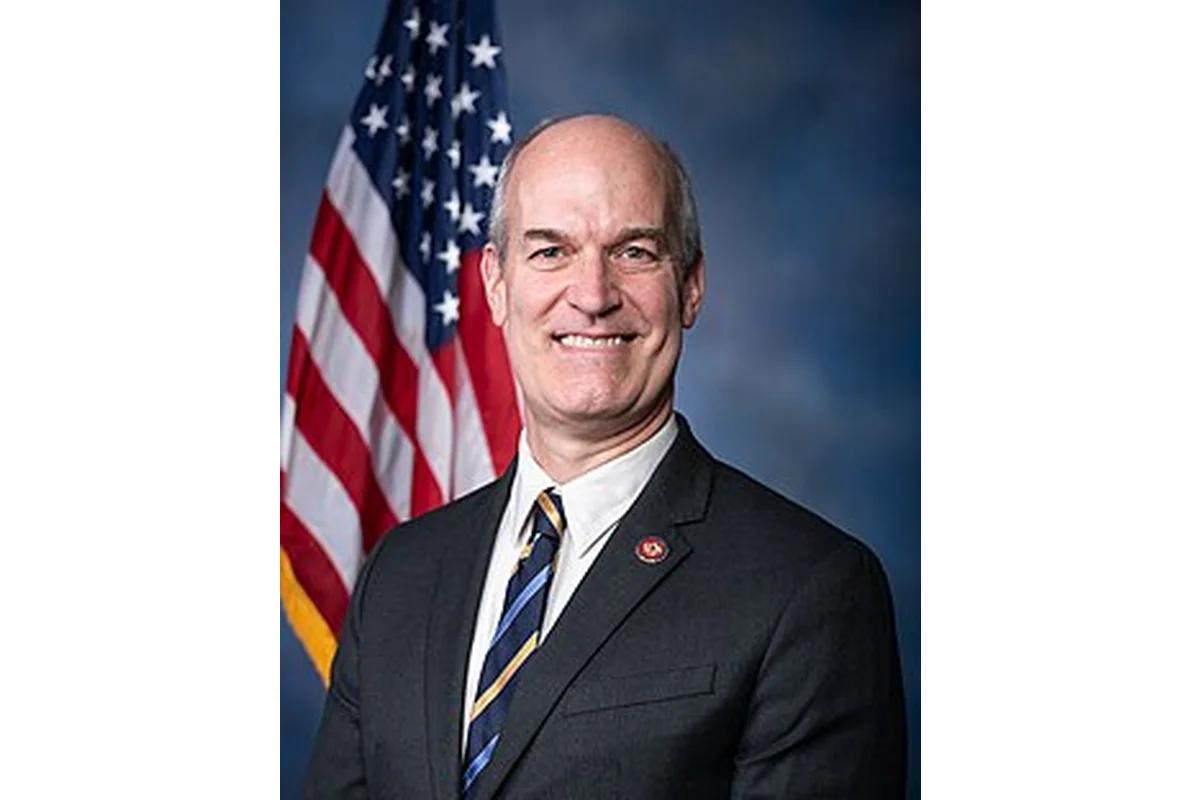
Rick Larsen Bio
Richard Ray Larsen, known professionally as Rick Larsen, is an American politician who has represented Washington’s 2nd congressional district in the United States House of Representatives since 2001. A member of the Democratic Party, Larsen is the ranking member of the House Transportation and Infrastructure Committee, a position that reflects his long-standing focus on infrastructure, trade, and economic development in the Pacific Northwest. Over more than two decades in Congress, he has built a reputation as a centrist Democrat who works across the aisle on transportation policy while maintaining progressive positions on healthcare, abortion rights, and environmental protection.
Early Life and Background
Richard Ray Larsen was born on June 15, 1965, in Arlington, Washington, a small city in the northwestern part of the state. He grew up in the same community, attending local schools and graduating from Arlington High School. During his youth, Larsen played youth soccer and later served as a ball boy for the original Seattle Sounders, experiences that helped shape his early connection to the Pacific Northwest’s civic and sporting life.
After high school, Larsen enrolled at Pacific Lutheran University, a private liberal arts institution in Tacoma, Washington, where he earned his Bachelor of Arts degree. He later pursued graduate studies at the University of Minnesota, where he completed a Master of Public Affairs degree, providing him with a formal background in policy analysis and public administration that would later inform his career in government and political advocacy.
Path to US Politics
Before entering elected office, Larsen built a career in association management and government affairs. He served as the director of public affairs for the Washington State Dental Association and worked as a lobbyist representing the dental profession, roles that gave him firsthand experience navigating state-level politics and legislative processes. These positions helped him develop relationships across the political spectrum and sharpened his understanding of how policy decisions affect working professionals and small businesses.
His work in the dental profession and his growing involvement in Democratic politics at the local level eventually led him to run for Congress. In 2000, Larsen campaigned for Washington’s 2nd congressional district, a politically competitive seat covering parts of western Washington, including the cities of Everett and Bellingham. His professional background in public affairs and his moderate political profile made him a strong candidate, and he won his first election to the U.S. House of Representatives that year, beginning a tenure that has continued for more than two decades.
Rick Larsen Career
Early Career (2001-2006)
Richard Ray Larsen took office in January 2001 and quickly established himself as a pragmatic voice on the House Transportation and Infrastructure Committee. In his early terms, he focused on regional transportation priorities, including ferry systems, highway funding, and border-crossing improvements that mattered to his district’s port economies. He won his first re-election in 2002 and continued building a record that combined infrastructure advocacy with moderate positions on fiscal and labor issues.
By 2006, Larsen had solidified his hold on the 2nd district, defeating Republican Doug Roulstone, a retired Navy officer from Snohomish, with 65 percent of the vote to Roulstone’s 34 percent. That decisive margin reflected his growing popularity in the district and his ability to appeal to swing voters in a competitive coastal region. During this period, he also gained attention for his support of the Iraq War after initially voting against the original authorization of military force in October 2002, a stance that drew both support and criticism from different sides of the political debate.
2008 Reelection Breakthrough (2008-2012)
In 2008, Larsen faced a Democratic primary challenge from perennial candidate Glen Johnson before going on to defeat recently retired Snohomish County Sheriff Rick Bart in the general election. That year’s campaign raised more than $1.3 million, with major contributions coming from Boeing, Microsoft, the American Dental Association, McBee Strategic Consulting, and Puget Energy, reflecting his ties to the region’s major employers. The strong fundraising and his broad base of support in the transportation, labor, and health sectors helped him weather a competitive cycle.
By 2010, Larsen was in a tougher fight, narrowly defeating Republican nominee John Koster to win a sixth term in a year when many Democrats faced headwinds. He followed that with another comfortable win in 2012, taking 61 percent of the vote against Republican Dan Matthews, who received 39 percent. These successive victories cemented his standing as a durable incumbent who could perform well in both favorable and challenging political environments for his party.
2016 Reelection and Later Terms (2016-Present)
In 2016, Larsen was challenged by Republican Marc Hennemann, who entered the race after an exchange at a town hall meeting in Coupeville. Larsen went on to defeat Hennemann by a wide margin, 64 percent to 36 percent, continuing his pattern of strong performances in the 2nd district. Throughout his later terms, he has remained a reliable voice on the Transportation and Infrastructure Committee, voting for every transportation bill since his 2008 reelection and earning a reputation as a key advocate for the region’s port, ferry, and aviation interests.
More recently, Larsen has continued to play an active role in national policy debates, supporting the impeachment of President Donald J. Trump in 2019 and reaffirming his support for abortion rights and protections under Roe v. Wade in 2022. According to a FiveThirtyEight analysis, he voted with President Joe Biden’s stated position 100 percent of the time during the 117th Congress, illustrating his alignment with the Democratic agenda on the major votes of that session.
Notable Events and Milestones
One of the defining moments of Rick Larsen’s career has been his elevation to ranking member of the House Transportation and Infrastructure Committee, a position that places him at the center of federal debates over infrastructure investment, aviation, and maritime policy. He has also been a consistent supporter of the Affordable Care Act, voting for the reform bill in November 2009, and has advocated for the Wild Sky Wilderness in his home district. His lengthy tenure, combined with his willingness to break with his party on some trade and labor issues, has made him a recognizable figure in Washington state politics.
Rick Larsen Family
Family Background and Personal Life
Rick Larsen married Tiia Ingrid Karlen in 1994, and the couple has two children. He shares a birthday with fellow Washington State representative Adam Smith, a small personal detail that has been noted in biographical accounts of his life. Public information about his extended family and upbringing is limited, and Larsen has generally kept his personal and family life separate from his political work in Washington, D.C.
Beyond his immediate family, Larsen’s early life in Arlington, Washington, and his time as a youth soccer player and ball boy for the original Seattle Sounders reflect a deep connection to the Pacific Northwest community he now represents. His career path from local public affairs work to a long tenure in Congress has been shaped by the values and relationships he built in that region.