
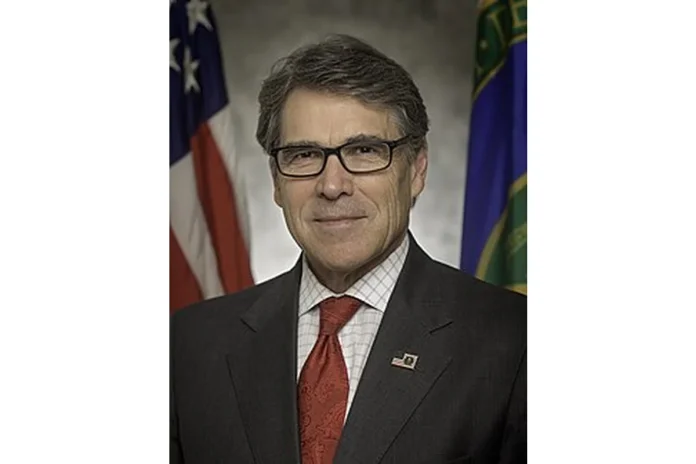
Rick Perry Bio
James Richard Perry, widely known as Rick Perry, is an American politician born on March 4, 1950, in Haskell, Texas. A fifth-generation Texan, he graduated from Texas A&M University in 1972, served as a captain in the United States Air Force, and later built a long career in Texas state government. He is best known for serving as the 47th Governor of Texas from 2000 to 2015, the longest tenure in state history, and as the 14th United States Secretary of Energy from 2017 to 2019.
Originally elected as a Democrat to the Texas House of Representatives, Perry switched to the Republican Party in 1989 and rose through statewide offices before assuming the governorship. A staunch conservative, he ran for the Republican presidential nomination in both 2012 and 2016. After leaving the Energy Department, he returned to Texas and pursued private ventures in energy and data infrastructure.
Early Life and Background
Perry was raised in Paint Creek, Texas, the son of dryland cotton farmers Joseph Ray Perry and Amelia June Holt Perry. He has one older sister, and his family has been in Texas since before the Texas Revolution. His father, a Democrat, served for years as a Haskell County commissioner and a school board member. Perry has said that his interest in politics was sparked in November 1961, when his father took him to the funeral of U.S. Representative Sam Rayburn.
As a young man, Perry was active in the Boy Scouts of America and earned the rank of Eagle Scout. The Boy Scouts of America later honored him with the Distinguished Eagle Scout Award. He was also a member of the National Society of the Sons of the American Revolution and received its Gold Good Citizenship Medal. Growing up in the United Methodist Church, Perry was later baptized as an adult in 2014.
In the early 1970s, Perry interned during several summers with Southwestern Advantage as a door-to-door book salesman, an experience he described as one of the most formative of his life. He credited the company’s president, Dortch Oldham, with teaching him how to communicate quickly, clearly, and with passion.
Path to Politics
After graduating from Texas A&M University in 1972 with a Bachelor of Science degree in animal science, Perry was commissioned as an officer in the United States Air Force. He completed pilot training in February 1974 and was assigned as a Lockheed C-130 Hercules pilot with the 772nd Tactical Airlift Squadron at Dyess Air Force Base in Abilene, Texas. His duties included two-month overseas rotations at RAF Mildenhall in England and Rhein-Main Air Base in Frankfurt, Germany, along with humanitarian missions in Africa and Guatemala.
Perry left the Air Force in 1977 at the rank of captain, returned to Texas, and went into cotton farming with his father. In 1984, he was elected to the Texas House of Representatives as a Democrat from District 64, which included his home county of Haskell. During three two-year terms, he served on the House Appropriations and Calendars committees and was named by The Dallas Morning News as one of the ten most effective members of the legislature.
On September 29, 1989, Perry announced that he was switching to the Republican Party. He later cited Ronald Reagan as a major influence in his decision. In 1990, he challenged Democratic incumbent Jim Hightower for Agriculture Commissioner, with Karl Rove serving as his campaign manager. Perry won the office and served two terms before winning election as lieutenant governor of Texas in 1998, becoming the first Republican to hold that office since Reconstruction.
Rick Perry Career
Governor of Texas (2000–2015)
Perry assumed the governorship of Texas on December 21, 2000, following the resignation of George W. Bush, who was preparing to become President of the United States. He won the office in his own right in the 2002 gubernatorial election, receiving 58 percent of the vote against Tony Sanchez, and was re-elected in 2006 and 2010. His 2010 victory made him the first Texas governor elected to three four-year terms, and he ultimately served more than 14 consecutive years in office, the longest tenure in state history.
As governor, Perry was a vocal proponent of fiscal conservatism, opposing the creation of a state income tax and signing Grover Norquist’s pledge to veto any tax increases. He signed legislation that created the Texas Enterprise Fund, which distributed hundreds of millions in grants to businesses, though he faced criticism for supporting corporate tax breaks during periods of budget deficits. In the 2001 legislative session, Perry set a record for his use of the veto, rejecting 82 acts, more than any governor in a single session since Reconstruction.
Conservative Policy Agenda
Perry championed conservative priorities, including restrictions on abortion, expanded gun rights, and a strong law-and-order approach. In 2001, he signed the James Byrd Jr. Hate Crimes Act, strengthening penalties for crimes motivated by hate, and in 2007, he signed a law ending automatic arrest for cannabis possession. He was a strong supporter of the death penalty, vetoing a 2001 ban on the execution of intellectually disabled inmates and presiding over 234 executions during his tenure.
On education, Perry supported reforms aimed at increasing teacher pay, classroom technology, and accountability, and he tasked John Sharp with developing a bipartisan education plan. He supported extending in-state tuition to undocumented immigrants who met Texas residency requirements, a position he reaffirmed during a 2014 debate. On health care, Perry opposed the federal Affordable Care Act, signing a 2003 bill that restricted non-economic damages in medical malpractice judgments. He also issued an executive order in February 2007 mandating that Texas girls receive the HPV vaccine, though he later reversed the order and called it a mistake.
Perry was an outspoken opponent of LGBT rights. He supported Texas Proposition 2 in 2005, which defined marriage as a union between a man and a woman, and condemned the U.S. Supreme Court’s 2015 decision in Obergefell v. Hodges. He also called on the Boy Scouts in 2013 to maintain their ban on homosexuality.
Secretary of Energy (2017–2019)
On December 14, 2016, President-elect Donald Trump nominated Perry as Secretary of Energy, and the United States Senate confirmed him on March 2, 2017, by a vote of 62–37. His nomination drew attention because Perry had called for abolishing the Department of Energy during his 2012 presidential campaign and had struggled to recall the department’s name in a debate. Once in office, Perry ordered a study of the U.S. electric grid with a focus on coal power, acknowledged the role of human activity in climate change, and supported Trump’s ban on transgender individuals serving in the U.S. military.
On October 17, 2019, Perry told Trump he would resign by the end of the year, with his departure linked to his role in the Trump–Ukraine scandal that led to Trump’s first impeachment. He left office on December 1, 2019. After resigning, he rejoined the board of Energy Transfer Partners in January 2020 and rejoined MCNA Dental’s board of directors in February 2020 as chief strategy officer and vice chairman.
Rick Perry Presidential Campaigns
2012 Republican Primary
Perry officially announced his candidacy for the 2012 Republican presidential nomination in August 2011. He initially polled well and demonstrated strong fundraising, positioning him as a serious contender for the nomination. His support declined after widely covered debate performances and disappointing early primary finishes, and he withdrew from the race in January 2012.
2016 Republican Primary
Perry declined to seek a fourth term as governor of Texas and left office in January 2015, launching a second presidential campaign shortly thereafter. His second bid failed to gain substantial polling, fundraising, or media traction, and he withdrew after only three months. Perry had been an early critic of Donald Trump’s 2016 campaign, but he endorsed Trump after he secured the Republican nomination. Following Trump’s victory, he was nominated to lead the Department of Energy.
Rick Perry Notable Events and Milestones
Perry’s tenure as governor was defined by his record-setting use of the veto pen, his lengthy service as the longest-serving governor in Texas history, and his run for the presidency in 2012. His tenure as Secretary of Energy was marked by his role in shaping U.S. energy policy and his involvement in the events that led to Trump’s first impeachment in 2019.
Rick Perry Family
Family Background and Lineage
Perry was raised in Paint Creek, Texas, as the son of dryland cotton farmers Joseph Ray Perry and Amelia June Holt Perry. His family has lived in Texas since before the Texas Revolution, and his ancestry is almost entirely English, dating back to the original Thirteen Colonies. He has one older sister.
Personal Life
In 1982, Perry married Mary Anita Thigpen, his childhood sweetheart whom he had known since elementary school. They have two adult children, Griffin and Sydney. Anita Perry attended West Texas State University and earned a nursing degree. She has championed health-related initiatives, including the Anita Thigpen Perry Endowment at the University of Texas Health Science Center at San Antonio, and helped develop the Texas Conference for Women. The family attended Tarrytown United Methodist Church in Austin until 2010, when they began attending Lake Hills Church, a non-denominational evangelical Christian megachurch in western Travis County.
Rick Perry Awards and Recognitions
Perry has been recognized with the Distinguished Eagle Scout Award from the Boy Scouts of America and the Gold Good Citizenship Medal from the National Society of the Sons of the American Revolution, reflecting his long-standing ties to civic and patriotic organizations in Texas and across the country.