
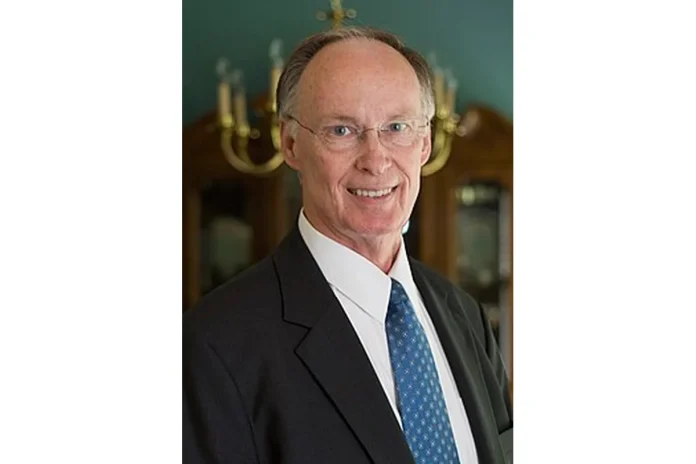
Robert J. Bentley Bio
Robert Julian Bentley (born February 3, 1943) is an American physician and former politician who served as the 53rd Governor of Alabama from 2011 until his resignation in 2017. A member of the Republican Party, he previously represented the 63rd district in the Alabama House of Representatives from 2003 to 2010, and he won the Alabama governorship in 2010 before being re-elected in 2014. A board-certified dermatologist by training, Bentley built a regional medical practice before entering public life, and his later years in office were consumed by a high-profile ethics and campaign finance scandal.
Early Life and Background
Robert Julian Bentley was born on February 3, 1943, in Columbiana, Alabama, the seat of Shelby County. He is the son of Mattie Boyd Vick Bentley and David Harford Bentley. Both of his parents ended their formal schooling by junior high. His father worked in a sawmill and was associated with the Populist Republicans, a short-lived splinter of the state Republican Party rooted in Alabama’s earlier populist movement. At one point during his childhood, the family lived in a home that lacked electricity and running water, an experience Bentley has cited as formative.
Bentley grew up in Columbiana and attended Shelby County High School, where he joined the school’s 1961 state championship debate team and was elected student body president in his senior year. He graduated at the top of his class and went on to the University of Alabama, where he majored in chemistry and biology and completed a Bachelor of Science degree in three years. He then entered the University of Alabama School of Medicine, earning his M.D. in 1968, and met Martha Dianne Jones of Montgomery during his first year of medical school. The couple married on July 24, 1965, and Bentley began a one-year internship at Carraway Methodist Hospital in Birmingham.
Path to US Politics
After earning his medical degree, Bentley joined the United States Air Force in 1969, serving as a captain and general medical officer at Pope Air Force Base in Fayetteville, North Carolina, where he also served briefly as an interim hospital commander. He later returned to Alabama for a three-year dermatology residency at the University of Alabama, after which he opened a private practice in Tuscaloosa. He built that practice into Alabama Dermatology Associates, one of the largest dermatology practices in the southeastern United States, and served two terms as president of the Alabama Dermatology Society. He was also recognized as one of the Best Doctors in America by his peers.
Bentley’s entry into elective politics came in 1998, when he ran for the Alabama State Senate as a Republican and lost to the incumbent Democrat Phil Poole by just 58 votes. The narrow defeat did not deter him. In 2002, he won a seat in the Alabama House of Representatives from Tuscaloosa County with almost 65 percent of the vote, and in 2006 he was re-elected unopposed. In the legislature, he focused on healthcare workforce training and on revising Alabama’s organ donor laws, while also helping to establish the Alabama Medical Education Consortium.
Robert J. Bentley Career
Early Career (1998–2010)
Bentley’s earliest political work came with his 1998 state Senate campaign, a near-win that put his name in front of Republican voters across Tuscaloosa County. After his 2002 election to the Alabama House of Representatives, he served two four-year terms representing the 63rd district, during which he became a leading voice on healthcare training and organ donation policy. In 2008, he was elected as a Republican Presidential Delegate for Mike Huckabee and represented Alabama on the Republican Platform Committee at the national convention. He also shepherded the Reemployment Act of 2010 through both chambers of the Alabama Legislature, and the bill was signed into law by Governor Bob Riley in April 2010.
During his time in the House, Bentley served on the Education Appropriations Committee, the Boards and Commissions Committee, the Agriculture and Forestry Committee, and the Tuscaloosa County Legislative Delegation, and he rose to vice-chairman of the Internal Affairs Committee. He also signed the No New Taxes Pledge from the Americans for Tax Reform, a stance that would later define his gubernatorial platform. By the end of his second term, he was widely seen as one of the more experienced healthcare-focused conservatives in the legislature.
2010 Gubernatorial Election Breakthrough
In 2010, Bentley launched his campaign for the Republican nomination for governor, entering a crowded seven-candidate primary. In the June 1 primary, he finished second behind Bradley Byrne, edging out Tim James and forcing a runoff. With the support of former U.S. Representative Sonny Callahan and the endorsement infrastructure of the Alabama Education Association, Bentley defeated Byrne 56 percent to 44 percent in the July 13 runoff to claim the nomination. In the general election, he faced Democrat Ron Sparks, the outgoing Alabama Commissioner of Agriculture, and won 57.9 percent to 42.1 percent. His margin of more than 230,000 votes was the largest ever recorded for a Republican in an open-seat race in Alabama history.
Throughout the campaign, Bentley emphasized his opposition to new taxes, his support for the No New Taxes Pledge, and his record on healthcare and education. He also expressed personal opposition to gambling while supporting a public referendum on the issue, a position that allowed him to appeal to social conservatives in the primary without alienating moderates in the general election. His victory made him only the second Republican governor of Alabama since Reconstruction, and it marked the start of what would become a turbulent term in office.
Governorship of Alabama (2011–2017)
As governor, Robert Julian Bentley pursued an agenda centered on tax restraint, criminal justice expansion, and conservative social policy. He refused to accept his gubernatorial salary until Alabama’s unemployment rate reached 5.2 percent, and he signed into law the controversial Alabama HB 56 anti-illegal immigration bill in 2011, portions of which were later struck down by the Eleventh Circuit Court of Appeals. He also advocated for increased funding for pre-kindergarten programs, signed legislation to remove Confederate flags from the State Capitol grounds in 2015, and proposed a $700 million revenue package that included targeted tax increases. An April 2013 analysis by Nate Silver of The New York Times ranked him the 16th most conservative governor in the country at that time.
Bentley’s response to the deadly April 2011 tornado outbreak was widely praised, including by the Montgomery Advertiser, and his administration highlighted job creation, reporting nearly 60,000 jobs gained and more than 55,000 future jobs recruited during his first three years in office. He also pushed for a 2 percent teacher pay raise and a strengthening of penalties for drug-related crimes while supporting rehabilitation for non-violent offenders. In 2014, he won re-election against Democrat Parker Griffith with 63 percent of the vote, the largest share ever recorded for a Republican gubernatorial candidate in modern Alabama history.
Ethics Violations, Impeachment, and Resignation
Bentley’s second term was dominated by scandal. In March 2016, he fired Alabama Law Enforcement Agency Secretary Spencer Collier, who then alleged an extramarital relationship between Bentley and his senior political adviser, Rebekah Caldwell Mason. An audio recording released by AL.com on March 23, 2016, captured Bentley making sexually charged remarks to a woman he called “Rebekah,” and he apologized for the language while denying a physical affair. In April 2016, Republican State Representative Ed Henry filed an impeachment resolution, and on April 5, 2017, the Alabama Ethics Commission found probable cause that Bentley had violated state ethics and campaign finance laws.
On April 10, 2017, the same day impeachment proceedings began in the state House, Bentley resigned as governor. He pleaded guilty to two misdemeanor charges, one for failing to file a major contribution report and one for knowingly converting campaign contributions to personal use, and was sentenced to a suspended 30-day jail term, one year of probation, and 100 hours of community service to be performed in his role as a physician. He was also required to refund nearly $9,000 to his campaign account and surrender an additional account worth about $37,000 to the state. As part of the plea deal, he accepted a lifetime ban from ever holding public office in Alabama again. Lieutenant Governor Kay Ivey was sworn in that same day as the 54th Governor of Alabama.
Robert J. Bentley Awards
Recognitions and Honors
Throughout his medical and political career, Robert Julian Bentley received several recognitions from professional peers, faith-based organizations, and civic groups. He was named to Best Doctors in America, an honor selected by fellow physicians, and in 2009 he received the Christian Coalition of Alabama’s Statesmanship Award for his public service and conservative policy record. As governor, he also served on the board of trustees for Alabama’s public colleges and universities and on the board of the Alabama Medical Education Consortium, an organization he helped to found during his time in the state legislature.
Robert J. Bentley Family
Family Background and Personal Lineage
Robert Julian Bentley was born into a working-class family in Columbiana, Alabama. His father, David Harford Bentley, was a sawmill worker who identified with the Populist Republicans, a short-lived faction within the Alabama Republican Party. His mother, Mattie Boyd Vick Bentley, and his father both left school by junior high. The family experienced significant financial hardship during his early years, including a period in which they lived in a home without electricity or running water.
Personal Life
Bentley married Martha Dianne Jones of Montgomery on July 24, 1965, after meeting her during his first year of medical school at the University of Alabama School of Medicine. The couple had four sons and, by the time of his governorship, six granddaughters and a grandson. Dianne Bentley filed for divorce in August 2015, citing an irretrievable breakdown of the marriage, and the divorce was finalized on September 29, 2015. Bentley was an active member of First Baptist Church of Tuscaloosa, where he served multiple terms as chairman of the board of deacons, taught Sunday School, and served on advisory boards for Youth for Christ and the church’s Family Counseling ministry. During the 2016 scandal, the church’s senior pastor confirmed that both Bentley and Rebekah Mason were no longer members of the congregation.