

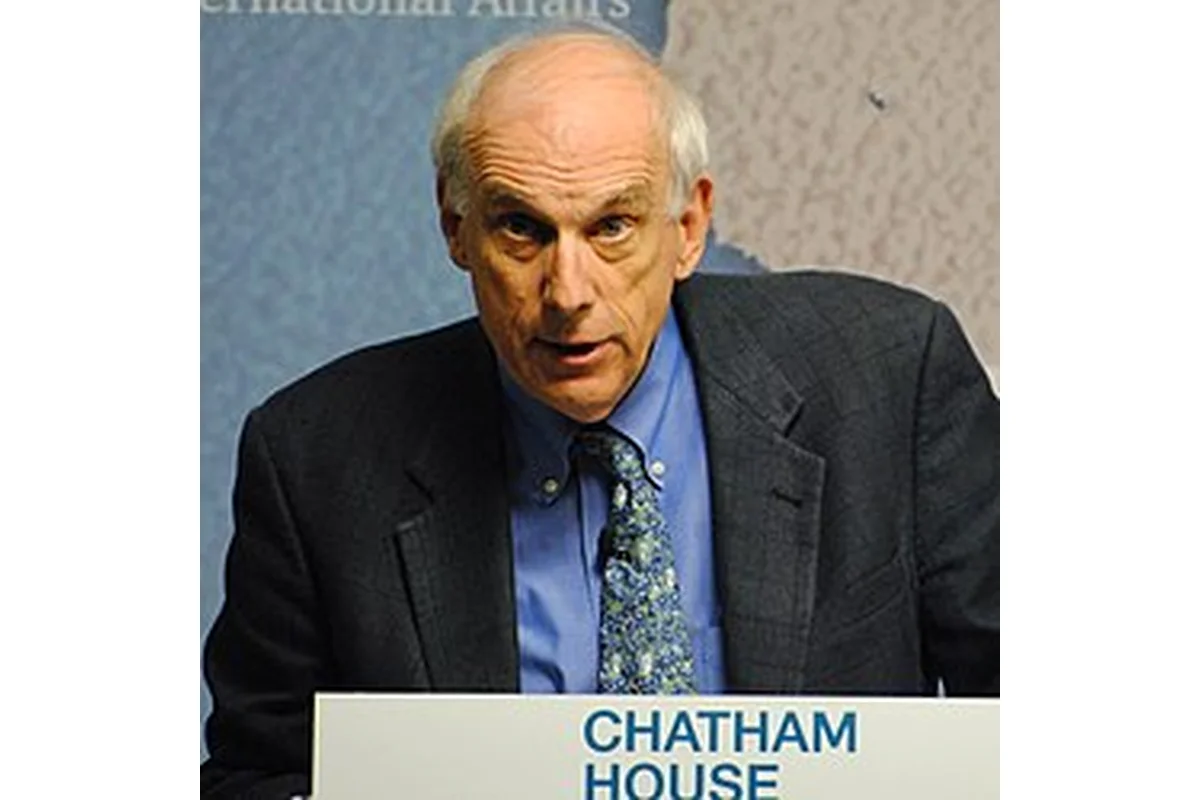
Robert Keohane Bio
Robert Owen Keohane (born October 3, 1941) is an American political scientist whose scholarship has shaped the modern study of international relations and international political economy. He is widely associated with neoliberal institutionalism, a framework that explains how international cooperation can persist without a single dominant state. Keohane is Professor Emeritus of International Affairs at the Princeton School of Public and International Affairs and has held teaching positions at Swarthmore College, Stanford University, Harvard University, Duke University, and other institutions. A 2011 survey of international relations scholars ranked him second in influence and quality of scholarship over the preceding twenty years.
Beyond his research, Keohane has influenced the discipline through editorial leadership at major journals, presidencies of professional associations, and mentorship of a generation of prominent scholars. His books and articles remain standard references in political science curricula, and the Open Syllabus Project has identified him as the most frequently cited author on college syllabi for political science courses.
Early Life and Background
Robert Owen Keohane was born on October 3, 1941, at the University of Chicago Hospitals in Chicago, Illinois. He spent his earliest school years at the University of Chicago Laboratory Schools, an environment connected to a major academic community. When he was ten years old, his family relocated to Mount Carroll, Illinois, a small town where his parents taught at Shimer College and where he attended local public school. The move introduced him to a close-knit Midwestern academic setting that would shape his early intellectual life.
After the tenth grade, Keohane enrolled at Shimer College through the school’s early entrance program, a path that allowed selected high school students to begin college before completing secondary school. Reflecting later on this experience, he observed that it was not clear to him that he had ever been with a brighter set of people than those early entrants. He earned a Bachelor of Arts degree, with honors, from Shimer College in 1961, and he continues to serve on the institution’s Board of Trustees.
Keohane then pursued graduate study at Harvard University, where he obtained his PhD in 1966. At Harvard he studied under Stanley Hoffmann and credited Judith Shklar as his strongest intellectual mentor during his graduate years. He has also acknowledged the influence of Kenneth Waltz and Karl Polanyi on his thinking about international politics and political economy.
Path to Political Science
Keohane’s path into international relations theory began during his graduate studies at Harvard and deepened through his early teaching career. He joined the faculty of Swarthmore College in 1965, one year before completing his doctorate, and there he became an active member of a community of scholars debating the structure of the international system. While at Swarthmore, he also engaged in public life as an activist against the Vietnam War and a campaign volunteer for 1968 presidential candidate Eugene McCarthy.
His early research focused on transnational relations and world politics, and he joined the journal International Organization in 1968, beginning a long association with one of the field’s most important publications. Between 1974 and 1980, he served as editor of the journal, helping to redirect its focus from scholarship on formal international organizations to a broader review of international relations research. His editorial work positioned him at the center of theoretical debates that would soon transform the discipline.
A decisive intellectual turn came in the late 1970s, when Keohane began integrating insights from the new institutional economics into the study of international cooperation. Attending a National Science Foundation-sponsored meeting at the University of Minnesota, where economist Anne Krueger organized discussions and Charles P. Kindleberger spoke about transaction costs, risk, and uncertainty, he recognized a new way to explain cooperation among states. He later described the December 1979 moment at Stanford when the theoretical puzzle of cooperation without hegemony came into focus.
Robert Keohane Career
Early Career (1965–1983)
Keohane began his academic career at Swarthmore College in 1965, where he taught as an assistant professor and developed his early research on world politics. He later moved through positions at Stanford University, Brandeis University, Harvard, and Duke University, building a wide-ranging teaching portfolio. At Harvard, he held the title of Stanfield Professor of International Peace, and at Duke he served as the James B. Duke Professor of Political Science.
During this period, he also produced influential early work on transnational relations and, with Joseph Nye, helped coin the concept of complex interdependence to describe the fragmentation and diffusion of power in economic affairs. In a 1980 article, he introduced the term hegemonic stability theory, which held that the international system is more likely to remain stable when a single nation-state is the dominant world power.
After Hegemony Breakthrough (1984–Present)
Keohane’s 1984 book After Hegemony: Cooperation and Discord in the World Political Economy, published by Princeton University Press, became his defining scholarly achievement. Drawing on the new institutional economics, he argued that the international system could remain stable in the absence of a hegemon, rebutting the earlier hegemonic stability theory. He showed that international cooperation could be sustained through repeated interactions, transparency, and monitoring, and in doing so helped establish neoliberal institutionalism as a major school of thought.
The book received the second annual University of Louisville Grawemeyer Award in 1989 for “Ideas Improving World Order,” one of the first major recognitions of his contribution. Keohane has been characterized as a key figure in the development of the discipline of international political economy in the United States. His collaboration with Joseph Nye further refined theories of power and interdependence that continue to inform the field.
Princeton Era (Years–Present)
Keohane serves as Professor Emeritus of International Affairs at the Princeton School of Public and International Affairs, where he has continued to teach and mentor scholars. His career at Princeton followed senior appointments at Harvard and Duke and cemented his standing as a leading voice in the discipline. In this period he has also maintained visiting roles, including a 2013 appointment as the Allianz Distinguished Visitor at the American Academy in Berlin.
At Princeton, he has continued to publish on international institutions, the politics of climate change, and the ethical dimensions of world politics. His work has helped train a generation of political scientists, including Lisa Martin, Andrew Moravcsik, Layna Mosley, Beth Simmons, Ronald Mitchell, and Helen V. Milner, as well as journalist and commentator Fareed Zakaria.
Notable Events and Milestones
Keohane served as president of the International Studies Association from 1988 to 1989 and as president of the American Political Science Association from 1999 to 2000, two of the highest leadership positions in the discipline. A 2005 Foreign Policy poll of international relations scholars listed him as the most influential scholar in the field. In 2007, he was elected to the American Philosophical Society, and in fall 2013 he was the Allianz Distinguished Visitor at the American Academy in Berlin.
Robert Keohane Awards and Honors
Keohane has received a wide range of awards recognizing his scholarship, leadership, and teaching. His honors include the University of Louisville Grawemeyer Award, the Johan Skytle Prize in Political Science, election to the National Academy of Sciences, the Harvard Centennial Medal, the James Madison Award from the American Political Science Association, the Balzan Prize for International Relations: History and Theory, the Quantrell Award, and a Guggenheim Fellowship. He has held fellowships at the Center for Advanced Study in the Behavioral Sciences and the National Humanities Center, and he is a fellow of the American Academy of Arts and Sciences and the American Academy of Political and Social Science.
Major Awards
In 1989, he received the second annual University of Louisville Grawemeyer Award for “Ideas Improving World Order” for After Hegemony. In 2005, he was awarded the Johan Skytle Prize in Political Science and was elected to the National Academy of Sciences. He was elected to the American Philosophical Society in 2007 and received the Harvard Centennial Medal in 2012. In 2014, he was awarded the James Madison Award of the American Political Science Association, and in 2016, he received the Balzan Prize for International Relations: History and Theory. He has also been recognized with a Quantrell Award for teaching and a Guggenheim Fellowship.
Professional Leadership
Keohane served as president of the International Studies Association from 1988 to 1989 and as president of the American Political Science Association from 1999 to 2000. He joined the journal International Organization in 1968 and served as its editor from 1974 to 1980, helping to transform it into the leading journal in the field of international relations. He has been a fellow of the American Academy of Arts and Sciences and the American Academy of Political and Social Science.
Robert Keohane Family
Family Background and Intellectual Lineage
Keohane grew up in an academic family. His parents taught at Shimer College in Mount Carroll, Illinois, where he attended public school after the family relocated from Chicago. He later credited his early education at Shimer College, where he enrolled as a teenager through the school’s early entrance program, with introducing him to a remarkable community of learners. He has served on the Board of Trustees of Shimer College, maintaining a connection to the institution that helped launch his academic career.
Personal Life
Keohane is married to Nannerl O. Keohane, a political scientist who served as president of Wellesley College and Duke University. She is herself a noted figure in higher education and political theory. The couple has four grown children: Sarah, Stephan, Jonathan, and Nathaniel. Keohane’s personal interests have long intersected with his public commitments, including his early activism against the Vietnam War and his work on the politics of global cooperation.