

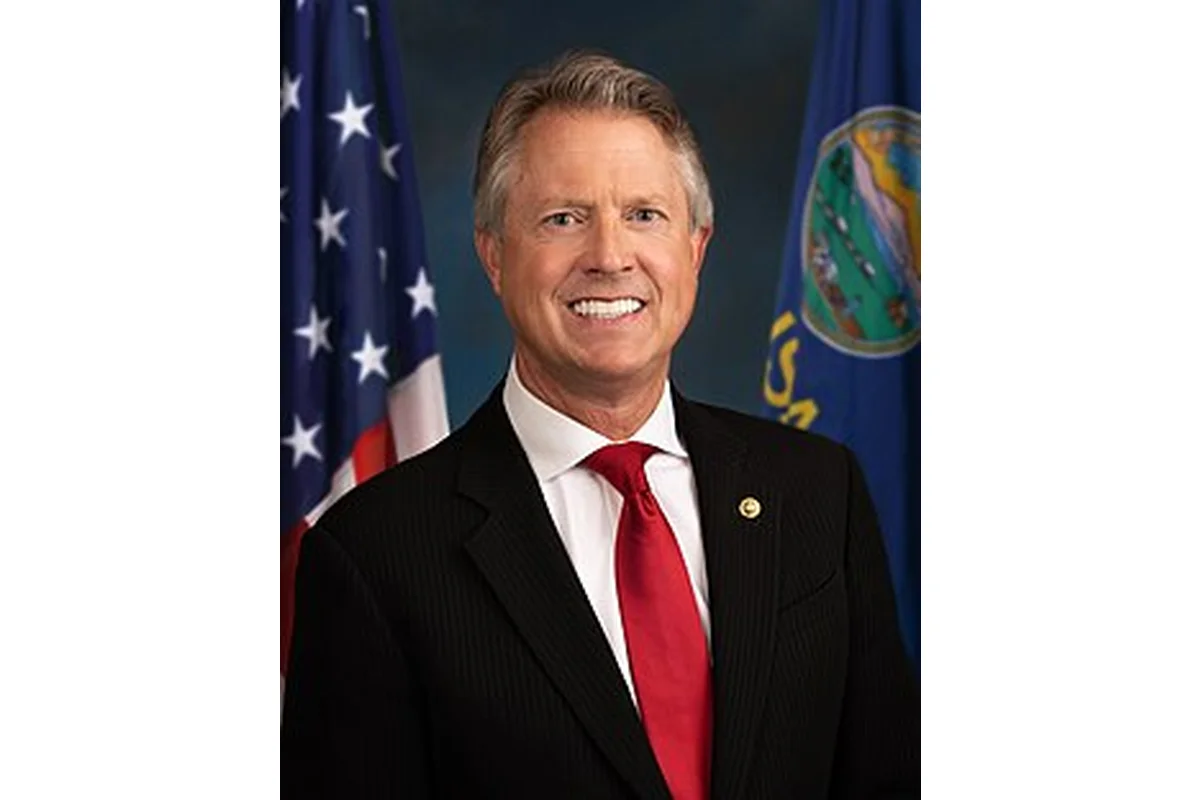
Roger Marshall Bio
Roger Wayne Marshall (born August 9, 1960) is an American politician, physician, and former military officer serving as the junior United States senator from Kansas since 2021. A member of the Republican Party, he represented Kansas’s 1st congressional district in the U.S. House of Representatives from 2017 to 2021. An obstetrician by training, Marshall won the 2020 Senate election to succeed retiring four-term incumbent Pat Roberts.
Before entering public life, Marshall practiced medicine in Great Bend, Kansas, and rose to the rank of captain during seven years in the United States Army Reserve. In the Senate, he serves on the Agriculture, Nutrition, and Forestry; Finance; Budget; and Health, Education, Labor, and Pensions Committees, focusing on agricultural, health, and fiscal policy issues important to his rural state.
Early Life and Background
Roger Wayne Marshall was born on August 9, 1960, in El Dorado, Kansas. He grew up in the Sunflower State, the kind of largely rural landscape that would later define his political base. His Midwestern upbringing helped shape his interest in agricultural communities and family medicine.
Marshall attended Butler Community College before transferring to Kansas State University, where he earned a Bachelor of Science in biochemistry. While at Kansas State, he joined the Beta Theta Pi fraternity. He went on to receive his Doctor of Medicine from the University of Kansas School of Medicine, and later completed a residency in obstetrics and gynecology at Bayfront Medical Center in St. Petersburg, Florida.
Path to US Politics
After completing his medical training, Marshall returned to Kansas and built a career as a physician and community leader in Great Bend. He practiced as an obstetrician and gynecologist, delivering, by his own count, more than 5,000 babies. His medical work and civic engagement made him a well-known figure across central and western Kansas.
Beyond his medical practice, Marshall served as chairman of the board of Great Bend Regional Hospital, vice president of the Farmers Bank and Trust, and a district governor of Rotary International. He also served seven years in the United States Army Reserve, attaining the rank of captain. These experiences in medicine, business, the military, and community service laid the groundwork for his later transition into politics.
Roger Marshall Career
Early Career (2016 Campaign)
Marshall entered elective politics in 2016, challenging two-term incumbent Tim Huelskamp in the Republican primary for Kansas’s 1st congressional district. Many of the state’s agricultural groups backed Marshall because Huelskamp had lost his seat on the House Agriculture Committee, the first time in a century that no Kansan served on the panel. Marshall also won the endorsement of the United States Chamber of Commerce, the Kansas Livestock Association, the National Association of Wheat Growers, and the Kansas Farm Bureau.
On August 2, 2016, Marshall defeated Huelskamp 56 percent to 44 percent in the Republican primary. No Democrat filed for the general election in the heavily Republican district, and Marshall won easily, taking 65.9 percent of the vote against an independent and a Libertarian candidate. He was sworn in on January 3, 2017, representing the so-called “Big First,” a vast district that covered all or part of 63 counties across central and western Kansas.
2016 House Election Breakthrough (2016–2017)
Marshall’s primary victory over an incumbent was his first major breakthrough, marking a generational shift for Kansas’s sprawling 1st district. As a freshman congressman, he quickly aligned himself with rural economic priorities, supporting federal crop insurance and other farm subsidies. In December 2017, he voted for the Tax Cuts and Jobs Act of 2017, helping deliver one of the signature legislative achievements of the Trump era.
He also drew attention for his willingness to challenge the political establishment from the right, ultimately becoming part of a small group of House Republicans who forced their way into a closed-door impeachment hearing in October 2019. Marshall publicly called the impeachment inquiry a “sham” and said Kansans were “sick and tired” of the proceedings.
2020 Senate Campaign and Election (2020)
In September 2019, Marshall announced he would give up his House seat to run for the Senate seat being vacated by four-term incumbent Pat Roberts. In the August 4, 2020, Republican primary, he faced former Kansas Secretary of State Kris Kobach, plumber Bob Hamilton, and others, ultimately winning with 40.3 percent of the vote, a margin of about 14 percentage points over Kobach.
Senate Republican leaders, worried that Kobach’s polarizing profile could cost them a winnable seat, pressed President Donald Trump to endorse Marshall, but Trump declined. The National Republican Senatorial Committee invested heavily in Marshall’s race, running an “Operation Scorched Prairie” effort that made roughly 2.3 million unique voter contacts by text and robocall in the campaign’s final week. In the November 3, 2020, general election, Marshall defeated Democratic State Senator Barbara Bollier 53 percent to 42 percent, with the Libertarian candidate taking the remainder.
U.S. Senate Era (2021–Present)
Marshall was sworn in as the junior United States senator from Kansas on January 3, 2021. In the Senate, he has been active on agricultural, fiscal, and health policy. He currently serves on the Agriculture, Nutrition, and Forestry; Finance; Budget; and Health, Education, Labor, and Pensions Committees, giving him influence over both rural economic policy and national health care debates.
On January 6, 2021, Marshall joined a group of Republican senators led by Josh Hawley and Ted Cruz in objecting to the certification of Pennsylvania’s and Arizona’s electoral votes; both objections were rejected by overwhelming bipartisan margins. He also voted against creating an independent commission to investigate the January 6 attack on the United States Capitol, and he was one of 31 Senate Republicans to vote against final passage of the Fiscal Responsibility Act of 2023.
Notable Events and Milestones
One of the defining moments of Marshall’s time in public office came on January 31, 2018, when he was a passenger on a chartered Amtrak train that crashed near Crozet, Virginia. As a trained physician, he administered first aid and CPR to the injured, drawing national attention for his actions during the emergency. In October 2019, he gained further attention as part of a group of House Republicans led by Representative Matt Gaetz who entered a closed impeachment hearing, a confrontation that became a vivid image of partisan division in Washington.
Roger Marshall Career Wins
Roger Marshall’s electoral record includes a primary defeat of an incumbent congressman, three general-election victories, and a U.S. Senate win, all as a Republican in heavily GOP-leaning Kansas. His wins reflect sustained support from rural, agricultural, and conservative voters across central and western Kansas.
Congressional and Senate Highlights
In 2016, Marshall defeated incumbent Tim Huelskamp in the Republican primary, 56 percent to 44 percent, and then won the general election with 65.9 percent of the vote in Kansas’s 1st congressional district. He was reelected in 2018 to a second House term, continuing the long line of “Big First” congressmen who wield statewide influence.
His most significant victory came in 2020, when he won both the Republican primary and the general election for the U.S. Senate seat vacated by Pat Roberts, defeating Democratic State Senator Barbara Bollier 53 percent to 42 percent. The win moved him from the U.S. House to the Senate, the upper chamber of the U.S. Congress.
Other Wins and Achievements
Beyond electoral victories, Marshall earned the 2016 endorsement of the Kansas Farm Bureau in his first primary, reflecting his deep ties to the state’s agricultural community. He has also secured leadership roles in health, budget, and agriculture policy through his committee assignments in both the House and Senate.
Roger Marshall Family
Family Background and Personal Life
Roger Wayne Marshall was raised in El Dorado, Kansas, and went on to build his adult life in Great Bend, the community where he practiced medicine and raised his family. He married Laina Marshall in 1983, and the couple have four children. Marshall is a non-denominational Protestant, and he has been a prominent civic presence in Great Bend, serving in local business and volunteer leadership roles.
Personal Life
Marshall and his wife, Laina, have made Great Bend, Kansas, their longtime home, and the family also owns a vacation property in Sarasota, Florida. In addition to his medical and political careers, Marshall has remained active in civic organizations, including service as a district governor of Rotary International. He also served seven years in the United States Army Reserve, reaching the rank of captain before entering Congress.