
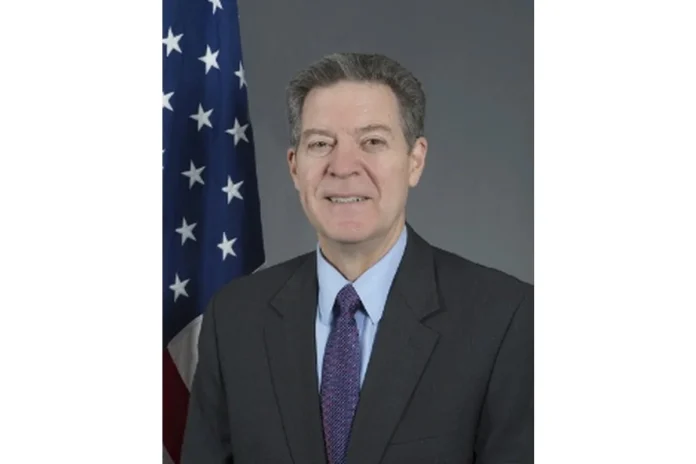
Sam Brownback Bio
Samuel Dale Brownback (born September 12, 1956) is an American attorney, politician, and diplomat who served as a United States senator from Kansas from 1996 to 2011 and as the 46th governor of Kansas from 2011 to 2018. A Republican, Brownback also served as the United States Ambassador-at-Large for International Religious Freedom during the administration of President Donald Trump. He previously practiced law in Kansas, served as Kansas Secretary of Agriculture, and spent one term in the U.S. House of Representatives.
Brownback is widely known for his socially conservative positions, his advocacy for international religious freedom, and his 2008 bid for the Republican presidential nomination. After leaving the governorship, he was confirmed by the U.S. Senate in January 2018 to lead the State Department’s religious freedom office and was sworn in as ambassador on February 1, 2018. He later became the first Catholic to serve in that role, having converted to Catholicism in 2002.
Early Life and Background
Brownback was born on September 12, 1956, in Garnett, Kansas, and grew up on a family farm in Parker, Kansas. He is the son of Glen Robert Brownback and Nancy Brownback (née Cowden). Raised in rural eastern Kansas, he attended Prairie View High School before enrolling at Kansas State University, where he earned a Bachelor of Arts degree in agricultural economics in 1978.
After college, Brownback attended the University of Kansas School of Law and received his Juris Doctor in 1982. He then settled in Manhattan, Kansas, where he began his legal career as an attorney. His upbringing in a farming community and his training in agricultural economics shaped his long-standing interest in farm policy and rural economics.
Path to U.S. Politics
Brownback’s entry into public service began in 1986, when Democratic Governor John W. Carlin appointed him as Kansas Secretary of Agriculture. In that role, he worked closely with farmers and agricultural groups across the state, gaining valuable administrative experience. After leaving state government, he returned to the practice of law while preparing for a run for federal office.
In 1994, Brownback challenged his former boss, John W. Carlin, for Kansas’s 2nd congressional district seat and won in a landslide. His victory marked the start of a long career in national Republican politics and positioned him for a U.S. Senate bid just two years later.
Sam Brownback Career
Early Career (1994–1996)
Brownback represented Kansas’s 2nd congressional district in the U.S. House of Representatives for a single term, from 1995 to 1996. During his time in the House, he built a reputation as a conservative voice on fiscal and social issues and developed relationships with national Republican leaders.
In 1996, when Senator Bob Dole resigned to focus on his presidential campaign, Governor Joan Finney appointed Sheila Frahm to fill the seat temporarily. Brownback defeated Frahm in the Republican primary and then won the general election against Democrat Jill Docking by more than 112,000 votes, launching his Senate career.
Senate Career (1996–2011)
Brownback won a full six-year Senate term in 1998, defeating Democrat Paul Feleciano by nearly 245,000 votes. He was easily reelected in 2004, defeating former lobbyist Lee Jones by more than 470,000 votes. Throughout his Senate tenure, he served on the Judiciary Committee, the Appropriations Committee, the Joint Economic Committee, and the Commission on Security and Cooperation in Europe (the Helsinki Commission).
In 2000, Brownback joined Congressman Chris Smith in leading the effort to enact the Trafficking Victims Protection Act, which President Bill Clinton signed into law. In the mid-1990s, he hired Paul Ryan, who later became Speaker of the U.S. House, as his chief legislative director. His principal campaign donors during this period were Charles and David Koch of Wichita-based Koch Industries, who contributed more to Brownback than to any other political candidate.
2008 Presidential Campaign
In 2007, Brownback launched a campaign for the 2008 Republican presidential nomination, focusing on his faith and his calls to end what he described as the slavery of modern abortion. He withdrew from the race before the primaries began and endorsed Senator John McCain, the eventual Republican nominee.
Governorship (2011–2018)
Brownback declined to seek reelection to the Senate in 2010 and instead ran for governor of Kansas. He defeated Democrat Tom Holland by more than 260,000 votes and took office in January 2011 with a Republican-controlled legislature. His principal goals were reducing taxes and increasing education spending.
In May 2012, he signed one of the largest income tax cuts in Kansas history, eliminating state income tax on certain business profits and reducing individual income tax rates. The legislation was drafted with input from Koch-backed organizations and supply-side economist Arthur Laffer. The cuts contributed to major budget shortfalls, credit-rating downgrades in 2014, and slower-than-projected job growth.
Brownback also pursued a socially conservative agenda, signing multiple anti-abortion bills into law, declining a $31.5 million federal grant to set up a health insurance exchange, and signing the Health Care Freedom Act. In 2014, he narrowly won reelection against Democrat Paul Davis despite endorsements of Davis from more than 100 current and former Kansas Republican officials. By 2017, polls showed his approval rating had fallen to the mid-20s, making him one of the least popular governors in the country.
Ambassador for International Religious Freedom (2018–2021)
On July 26, 2017, President Donald Trump announced he would nominate Brownback to be U.S. Ambassador-at-Large for International Religious Freedom. After a prolonged Senate confirmation process that required Vice President Mike Pence to break a tie, Brownback was confirmed in January 2018. He resigned as governor effective January 31, 2018, and was sworn in as ambassador on February 1, 2018, becoming the first Catholic to hold the position.
As ambassador, Brownback traveled to Bangladesh to meet Rohingya refugees from Myanmar and visited camps in Darfur, Sudan. He repeatedly condemned China’s treatment of religious minorities, including Uyghurs, Tibetan Buddhists, Falun Gong practitioners, and Chinese Christians. In July 2020, the Chinese government sanctioned Brownback and three other U.S. politicians for criticizing human rights abuses in Xinjiang. His tenure ended on January 20, 2021.
Notable Events and Milestones
Brownback’s career has been marked by signature achievements such as co-authoring the Trafficking Victims Protection Act of 2000, his 2008 presidential bid, his 2012 tax-cut law that became known as the Kansas experiment, and his confirmation as the first Catholic to serve as U.S. Ambassador-at-Large for International Religious Freedom. He is also remembered for the 2017 legislative repeal of most of his signature tax cuts and for leaving office with one of the lowest approval ratings of any sitting governor.
Sam Brownback Family
Family Background and Personal Life
Brownback is the son of Glen Robert Brownback and Nancy Brownback (née Cowden). He grew up on a family farm in Parker, Kansas, alongside his siblings, in a household shaped by rural Kansas values and agricultural life.
He married Mary Stauffer in 1982, and the couple has five children: Abby, Andy, Elizabeth, Mark, and Jenna. Brownback converted to Catholicism in 2002 and has often connected his political and humanitarian work to his religious faith.