
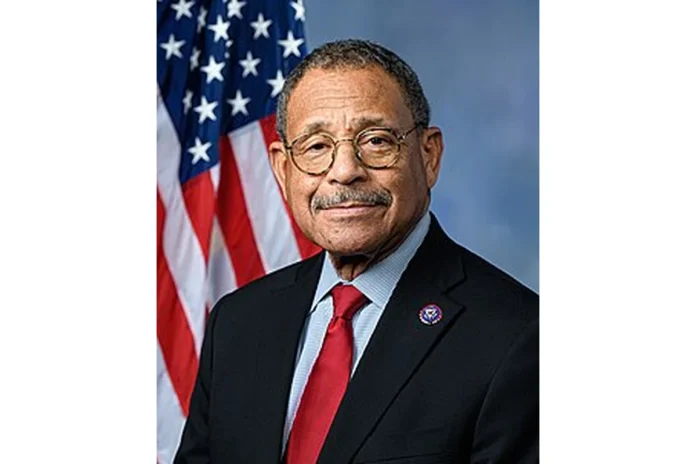
Sanford Bishop Bio
Sanford Dixon Bishop Jr. (born February 4, 1947) is an American lawyer and Democratic politician who has represented Georgia’s 2nd congressional district in the United States House of Representatives since 1993. A member of the Blue Dog Coalition and the Congressional Black Caucus, he is regarded as a moderate voice within the Democratic Party. He became the dean of Georgia’s congressional delegation after the death of fellow Georgia lawmaker John Lewis.
Bishop’s district covers much of southwestern Georgia and includes the cities of Albany, Thomasville, and large portions of Columbus and Macon. Before his time in Congress, he served in both chambers of the Georgia state legislature. He also practiced law in Columbus, Georgia, and served in the United States Army during the late 1960s and early 1970s.
Early Life and Background
Sanford Dixon Bishop Jr. was born in Mobile, Alabama, on February 4, 1947. He is the son of Sanford Dixon Bishop and Minnie B. Slade. His father was the first president of Bishop State Community College, and his family background placed a strong emphasis on education and public service. Growing up in the South during the era of segregation shaped his awareness of civic responsibility and helped guide his later career in law and government.
He earned a Bachelor of Arts degree from Morehouse College in 1968, majoring in political science and minoring in English. At Morehouse, he was a classmate of businessman and presidential candidate Herman Cain. He went on to receive a Juris Doctor from Emory University School of Law in 1971. While in college, he became active in civic organizations, and he has been recognized with the Distinguished Eagle Scout Award from the Boy Scouts of America for his career achievements.
Path to U.S. Congress
After completing law school, Bishop served in the United States Army from 1969 to 1971. He then opened a law practice in Columbus, Georgia, where he built a reputation as a local attorney. His early legal work introduced him to community leaders across southwestern Georgia and laid the groundwork for his later entry into state politics.
Bishop was elected to the Georgia House of Representatives in 1977, beginning a long career in public office. He served in the state House for more than a decade before winning a seat in the Georgia State Senate in 1990. After only one term in the state senate, he set his sights on a seat in the United States Congress, a path that would define the rest of his political life.
Sanford Bishop Career
Early Career (1977–1992)
Sanford Dixon Bishop Jr. began his political career in the Georgia House of Representatives in 1977, representing a district in southwestern Georgia. During his time in the state House, he built relationships with agricultural leaders, civil rights advocates, and Democratic Party officials across the region. His work focused on issues that affected rural communities, including education funding, infrastructure, and farm policy.
In 1990, Bishop was elected to the Georgia State Senate, where he served for two years. His success in the state legislature prepared him for a national run when redistricting following the 1990 Census reshaped Georgia’s 2nd congressional district into a black-majority seat. The changes created an opportunity, and Bishop entered the 1992 Democratic primary for the seat.
U.S. House of Representatives Breakthrough (1992–2000)
In the 1992 Democratic primary, Bishop finished second behind six-term incumbent Charles Hatcher in a crowded six-way race. When Hatcher failed to reach the 50 percent threshold required to win outright, the two candidates met in a runoff election. Bishop attacked Hatcher over his role in the House banking scandal and went on to defeat him 53 percent to 47 percent. In the general election, he defeated Republican Jim Dudley 64 percent to 36 percent, winning his first term in Congress.
He won his second term in 1994 after a competitive primary, and he continued to build seniority in the House. After the U.S. Supreme Court ruled in 1995 that Georgia’s redistricting had violated the equal protection clause of the Fourteenth Amendment, Bishop’s district was redrawn to include more white voters. Despite the new political makeup, he won a third term with 54 percent of the vote. He continued to win reelection through the 1990s, establishing himself as a reliable voice for his district.
U.S. House of Representatives Era (2001–Present)
Throughout the 2000s and 2010s, Sanford Dixon Bishop Jr. cemented his reputation as a moderate Democrat willing to work across the aisle. He has been a member of the Congressional Black Caucus and the Blue Dog Coalition, a group of moderate to conservative House Democrats. During the 114th Congress, he was ranked the 16th most bipartisan member of the House in a Bipartisan Index developed by The Lugar Center in collaboration with Georgetown University.
Bishop has also been a key figure on agricultural policy. He serves on the House Appropriations Committee and chairs the Subcommittee on Agriculture, Rural Development, Food and Drug Administration, and Related Agencies. He has worked to protect federal price supports for peanuts, an important crop in southwestern Georgia. As of 2022, he had voted with President Joe Biden 100 percent of the time, according to FiveThirtyEight. In 2025, he was one of 46 House Democrats who joined all Republicans in voting for the Laken Riley Act.
Notable Events and Milestones
One of the most notable moments of Bishop’s career came on October 10, 2002, when he was one of only four members of the Congressional Black Caucus to vote for the joint resolution authorizing the use of force in Iraq. In 2007, he endorsed Barack Obama for president and co-chaired the Georgia for Obama campaign. He also caused controversy in 1997 by cosponsoring a constitutional amendment to protect religious expression on public property, a stance that drew criticism from within his own party. In 2020, the Office of Congressional Ethics released a report alleging that he had misused more than $90,000 in campaign funds for personal expenses, leading to a House Ethics Committee investigation.
Sanford Bishop Career Wins
Since first being elected to the United States House of Representatives in 1992, Sanford Dixon Bishop Jr. has won seventeen consecutive terms in Congress. His victories include a strong first win in 1992, several unopposed or dominant reelection campaigns, and a series of hard-fought races against Republican challengers in competitive cycles.
U.S. House of Representatives Highlights
Bishop’s first congressional victory came in 1992, when he defeated Jim Dudley 64 percent to 36 percent. His closest reelection came in 2010, when he defeated Republican State Representative Mike Keown by just 51 percent to 49 percent in a difficult year for incumbent Democrats. After redistricting in 2012 made the 2nd district a black-majority seat, he defeated Republican John House with 63 percent of the vote.
More recent wins include a 59.1 percent victory over Greg Duke in 2018, a 61.2 percent win over the same challenger in 2020, a 59.6 percent win over Herman West Jr. in 2022, a 55 percent win over Chris West in 2022, and a 56.3 percent win over Wayne Johnson in 2024. His long streak of consecutive wins has made him one of the longest-serving members of the Georgia delegation.
Other Wins and Achievements
Beyond his congressional victories, Bishop has earned recognition for his service to his community. He has received the Distinguished Eagle Scout Award from the Boy Scouts of America, a distinction given to Eagle Scouts who have achieved notable career success. He is also a Life Member of Kappa Alpha Psi fraternity, a member of the Shriners, and a 33rd degree Mason. He became the dean of Georgia’s congressional delegation following the death of Representative John Lewis.
Sanford Bishop Family
Family Background and Education Lineage
Sanford Dixon Bishop Jr. was raised in a family with a strong tradition of education and public service. His father, Sanford Dixon Bishop, was the first president of Bishop State Community College in Mobile, Alabama, and his mother was Minnie B. Slade. Growing up in such an environment helped shape his lifelong commitment to learning, civic involvement, and helping others in his community.
Personal Life
Bishop is married to Vivian Creighton, who served as the Municipal Clerk of Columbus, Georgia, from 1993 to 2021. The couple has been involved in community and political life throughout Bishop’s career. In 2007, Vivian Creighton Bishop co-chaired the Georgia Women for Hillary committee during Hillary Clinton’s presidential campaign, while Bishop endorsed and co-chaired the Georgia effort for Barack Obama. The couple resides in Albany, Georgia, where Bishop is a member of Mount Zion Baptist Church.