

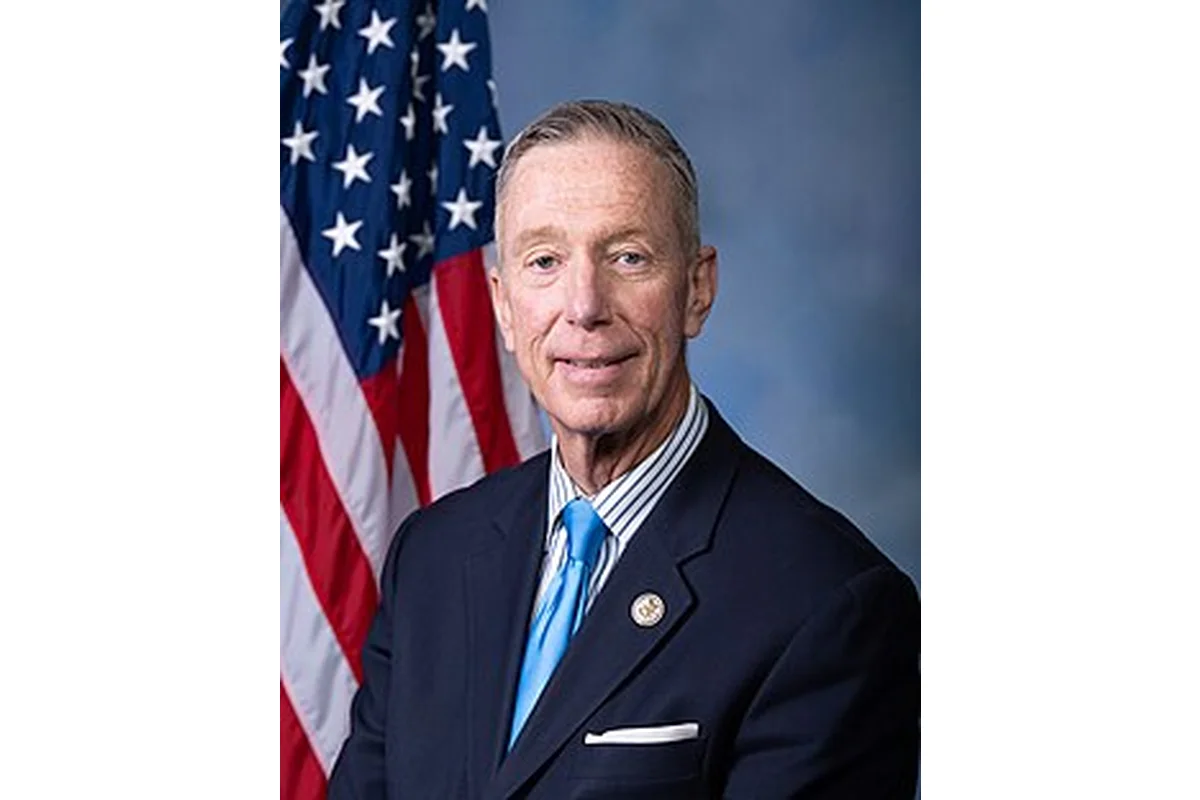
Stephen Lynch Bio
Stephen Francis Lynch (born March 31, 1955) is an American politician, lawyer, and businessman who has represented Massachusetts in the U.S. House of Representatives since 2001. A member of the Democratic Party, he currently serves the state’s 8th congressional district, which includes much of southern Boston and nearby suburbs. Before entering Congress, Lynch built a career as an ironworker, labor leader, attorney, and state legislator in Massachusetts.
Raised in South Boston, Lynch is the son of an ironworker and a post office worker. He entered the ironworking trade after high school, eventually becoming the youngest president of Iron Workers Local 7 at age 30. He went on to earn a bachelor’s degree from the Wentworth Institute of Technology, a Juris Doctor from Boston College Law School, and a Master in Public Administration from Harvard University’s Kennedy School of Government.
Early Life and Background
Stephen Francis Lynch was born on March 31, 1955, in the South Boston neighborhood of Boston, Massachusetts. He was the fourth of six children, raised alongside his five sisters in the Old Colony Housing Project. His father, Francis Lynch, was an ironworker, and his mother, Anne, worked at the post office. Both parents came from fourth-generation South Boston families, which gave Lynch a deep connection to the neighborhood that continues to shape his public life.
Lynch attended St. Augustine Elementary School and South Boston High School, where he graduated in 1973. During high school vacations he began working in construction alongside his father, an experience that introduced him to the ironworking trade. After graduation, Lynch became an apprentice ironworker and spent the next six years working on high-altitude structural ironwork across the country for employers including General Motors and U.S. Steel. He developed a strong commitment to organized labor that has remained a defining theme of his career.
Path to US Politics
Lynch’s path into politics began with his rise through the labor movement. In the early 1980s he was elected to the executive board of Iron Workers Local 7, and at age 30 he became the youngest president in the local’s history. While serving as union president, he attended classes at night and on weekends at the Wentworth Institute of Technology, earning a bachelor’s degree in construction management in 1988.
Later that year, Lynch led a three-week labor strike against the Associated General Contractors, an action that ultimately ended with the union international signing a contract without his approval. The dispute led to a lawsuit but also sharpened his reputation as a determined labor advocate. He then enrolled at Boston College Law School, where he earned his Juris Doctor in 1991, and later completed a master’s degree at Harvard’s Kennedy School of Government in 1999. These credentials prepared him for a transition from the trade floor to the courtroom and, eventually, to elected office.
Stephen Lynch Career
Early Career (1994–2001)
Lynch entered electoral politics in 1994 when he challenged incumbent state representative Paul J. Gannon in the 4th Suffolk district. Presenting himself as a conservative labor advocate, Lynch won the Democratic primary by 600 votes and went on to win the general election. As a state representative, he led opposition to a proposed football stadium on the South Boston waterfront and worked against the construction of a controversial asphalt plant in South Bay.
In 1995 Lynch’s advocacy for South Boston helped him win a special election to the Massachusetts Senate, where he succeeded longtime Senate President William Bulger. He won the March 1996 primary with 56 percent of the vote and was sworn in on May 1, 1996. Lynch was reelected unopposed in 1996, 1998, and 2000, and in 1997 he was named Senate Chairman of the Joint Committee on Commerce and Labor, expanding his influence in state policy debates.
9th Congressional District Breakthrough (2001)
When longtime U.S. Representative Joe Moakley announced in 2001 that he would not seek a 17th term due to leukemia, Lynch shifted his plans from a run for lieutenant governor to a congressional campaign. Moakley’s death in May 2001 triggered a special election for the 9th district seat, and Lynch quickly became the leading candidate after lawyer Max Kennedy withdrew from the race in June 2001.
On September 11, 2001, Lynch won the Democratic primary with 39 percent of the vote. The general election, conducted in the shadow of the September 11 attacks, ended with Lynch defeating Republican state Senator Jo Ann Sprague 65 percent to 33 percent on October 16, 2001. He was sworn into the 107th Congress on October 23, 2001, with the ceremony delayed because the anthrax attacks had shut down Congressional office buildings.
8th Congressional District Era (2013–Present)
After redistricting in 2013, Lynch’s territory was redrawn into Massachusetts’s 8th congressional district, which includes the southern fourth of Boston and many of its southern suburbs. He has continued to win reelection in this district, building a reputation as a strong advocate for working families and local manufacturing.
Throughout his tenure, Lynch has served on the House Financial Services Committee and the Oversight and Government Reform Committee. He is a co-founder and co-chair of the Congressional Labor and Working Families Caucus and has used these positions to champion pro-labor legislation, infrastructure investment, and constituent services. In early 2025, Lynch attracted national attention during a public rally where he argued with constituents who urged him to oppose conservative legislation and challenged them to run to replace him.
Notable Events and Milestones
Lynch ran for the Democratic nomination in the 2013 special election for the U.S. Senate, ultimately losing to Representative Ed Markey in the April 30 Democratic primary. Earlier, in 2010, he considered but declined to seek the Democratic nomination for the Senate seat left vacant by the death of Senator Ted Kennedy. By the start of the 117th Congress in January 2021, Lynch had become the last remaining incumbent House Democrat to have voted against the Affordable Care Act. According to a FiveThirtyEight analysis, he voted with President Joe Biden’s stated position 100 percent of the time during the 117th Congress.
Stephen Lynch Career Wins
Stephen Lynch has compiled a steady record of electoral victories in Massachusetts, beginning with his state-level campaigns and continuing through more than two decades in the U.S. House of Representatives. His wins reflect durable support in South Boston and the surrounding suburbs, built on a platform of labor advocacy, manufacturing investment, and strong constituent service.
U.S. House of Representatives Highlights
Lynch first won his U.S. House seat in a 2001 special election for Massachusetts’s 9th congressional district, defeating Republican Jo Ann Sprague 65 percent to 33 percent. He has been repeatedly reelected since then, with the district redrawn into the 8th district in 2013. In the 2001 Democratic primary, he finished first with 39 percent of the vote, setting the stage for his congressional career.
Other Wins & Achievements
At the state level, Lynch won a special election to the Massachusetts Senate in 1995 and was sworn in on May 1, 1996, after taking 56 percent of the vote in the Democratic primary. He was reelected unopposed in 1996, 1998, and 2000, and earlier captured a seat in the Massachusetts House of Representatives in 1994. His rise to become the youngest president of Iron Workers Local 7 at age 30 marked one of his earliest and most notable leadership achievements.
Stephen Lynch Family
Family Background and Political Lineage
Lynch is the son of Francis Lynch, an ironworker, and Anne Lynch, a post office worker. Both parents came from fourth-generation South Boston families, which gave him a strong sense of neighborhood identity. He is first cousins with Boston-based restaurateur Barbara Lynch, another well-known figure with South Boston roots.
Personal Life
Lynch married Margaret Shaughnessy in 1992 after dating her for ten years. Shaughnessy, an aide to state Senator Marian Walsh, is a South Boston native who majored in graphic design at the Massachusetts College of Art and Design. The couple lives in South Boston with their daughter and a niece, and for most of his career, Lynch has been listed in the Congressional member’s roll as representing South Boston.