
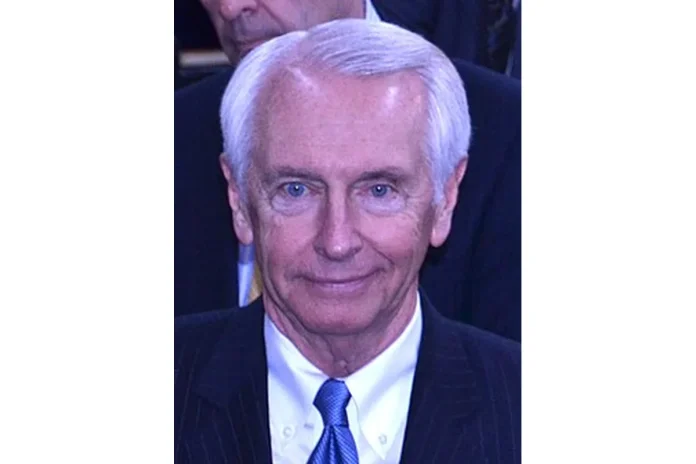
Steve Beshear Bio
Steven Lynn Beshear, widely known as Steve Beshear, is an American attorney and Democratic politician who served as the 61st governor of Kentucky from 2007 to 2015. A graduate of the University of Kentucky, where he earned both a Bachelor of Arts in history and a Juris Doctor, Beshear built a long career in state government, holding office as a state representative, attorney general, and lieutenant governor before reaching the governorship. After leaving office he remained active in public policy, teaching leadership at the Harvard T.H. Chan School of Public Health and delivering the Democratic response to a presidential address to Congress in 2017. His son, Andrew Graham Beshear, was elected the 63rd governor of Kentucky in 2019, continuing the family’s tradition of public service.
Early Life and Background
Steven Lynn Beshear was born on September 21, 1944, in Dawson Springs, a small town in Hopkins County, Kentucky. He is the third of five children born to Orlando Russell Beshear and Mary Elizabeth Joiner Beshear. His father owned a furniture store, operated a funeral home, and served as mayor of Dawson Springs, while his mother was active in the local Christian Church. His father, grandfather, and uncle were Primitive Baptist lay ministers, and Beshear attended both his father’s church and his mother’s church during his childhood years. As a boy, he often accompanied his uncle Fred Beshear as he campaigned around the county in races for the Kentucky House of Representatives, an early exposure to politics that shaped his future career.
Beshear graduated as valedictorian of a class of 28 at Dawson Springs High School in 1962. He then enrolled at the University of Kentucky, where he earned a Bachelor of Arts degree in history in 1966. While in college, he was elected student body treasurer and later served as student body president from 1964 to 1965. He was a member of the Delta Tau Delta social fraternity and the Phi Beta Kappa honor society. In 1968, he graduated with honors from the University of Kentucky College of Law. The following year, in 1969, he married Jane Klingner, his wife of more than five decades. The couple later joined Crestwood Christian Church in Kentucky.
Path to US Politics
After law school, Beshear and his wife moved to New York City, where he worked for the Wall Street law firm of White & Case. He also served as an intelligence specialist in the United States Army Reserve, performing some of the duties of a Judge Advocate General. After roughly two and a half years in New York, the family returned to Kentucky, where Beshear joined the Lexington law firm of Harbison, Kessinger, Lisle, and Bush. In 1974, he founded his own firm, Beshear, Meng, and Green, which he led until entering public office.
Beshear began his political career in 1973 when he was elected to represent the 76th District, covering Fayette County, in the Kentucky House of Representatives. During his first term, his colleagues named him the most outstanding freshman legislator. He won re-election in 1975 and 1977, building a reputation as a consumer advocate who championed environmental protections and worked to end the practice of commercial bail bonding. These early accomplishments in the state legislature established him as a rising figure in Kentucky Democratic politics and prepared the way for his run for state attorney general.
Steve Beshear Career
Early Career (1973-1987)
Beshear’s first major statewide role came in 1979, when he was elected the 44th attorney general of Kentucky after winning the Democratic primary and defeating Republican Ron Snyder by a wide margin. When outgoing Attorney General Robert F. Stephens resigned to accept an appointment to the Kentucky Supreme Court, Beshear was appointed to fill the vacancy before his term officially began. As attorney general, he created the state’s first Medicaid fraud division and took a leading role in the Leviticus Project, an eight-state coalition aimed at prosecuting organized crime in the country’s coal fields. He also issued a notable advisory opinion requiring the removal of copies of the Ten Commandments from public school classrooms following the U.S. Supreme Court’s decision in Stone v. Graham.
Limited to one term as attorney general by the state constitution, Beshear successfully ran for lieutenant governor in 1983, winning a crowded Democratic primary and the general election. Serving under Governor Martha Layne Collins, he formed and chaired the Kentucky Tomorrow Commission, a privately financed panel of 30 members that produced more than 100 recommendations for the state’s future growth and development. In 1987, Beshear entered a competitive Democratic gubernatorial primary, but finished third behind Wallace Wilkinson and former governor John Y. Brown Jr. Following the loss, he returned to private legal practice in Lexington for the next two decades, with the exception of an unsuccessful 1996 challenge to U.S. Senator Mitch McConnell.
2007 Gubernatorial Campaign (2007 Election)
Beshear returned to electoral politics in 2007, drawn back by the political vulnerability of incumbent Republican Governor Ernie Fletcher, whose administration faced an extended investigation by Attorney General Greg Stumbo over violations of the state’s merit system. Announcing his candidacy in December 2006 with state senator Daniel Mongiardo as his running mate, Beshear pledged to return integrity to the governor’s office and made the expansion of casino gambling a central pillar of his campaign, arguing it could generate hundreds of millions of dollars in new revenue for education and other programs. After winning a hard-fought six-candidate Democratic primary with 40.9 percent of the vote, just enough to avoid a runoff, he faced Fletcher in the general election.
In the November 2007 general election, Beshear defeated Fletcher by a vote of 619,567 to 435,856, becoming the 61st governor of Kentucky. Eight of the state’s leading newspapers endorsed his candidacy, and polling throughout the race showed a comfortable lead built on voter dissatisfaction with the Fletcher administration and broad public support for a constitutional amendment on casino gambling. His victory returned the governor’s office to Democratic control after eight years of Republican leadership and set the stage for an ambitious first term focused on budget stabilization and policy reform.
Governorship Era (2007-2015)
Upon taking office, Beshear faced a projected $434 million budget deficit and ordered $78 million in immediate budget cuts, a decision that sparked a public dispute with Republican Senate President David Williams. He pursued a broad policy agenda that included energy reform, school accountability, and a major push to implement the Affordable Care Act in Kentucky. In 2008, he divided the state’s Environmental and Public Protection Cabinet to form a new Energy and Environmental Cabinet and released the state’s first comprehensive energy plan, emphasizing solar, wind, biomass, and other renewable sources. His administration also worked to bring a ZAP electric vehicle manufacturing plant to Franklin, Kentucky, though the project ultimately stalled after a key investor pulled out.
Beshear’s signature legislative achievement came with the implementation of the Affordable Care Act, where Kentucky became a national leader in establishing a state-run health insurance exchange, Kynect. The expansion of Medicaid and the creation of the exchange dramatically reduced the rate of uninsured Kentuckians and became a central talking point for the governor in the years that followed. He was re-elected in November 2011, winning close to 56 percent of the vote against Senate President David Williams and Independent candidate Gatewood Galbraith. Term-limited by the Kentucky Constitution, Beshear left office in December 2015 and was succeeded by Republican Matt Bevin.
Notable Events and Milestones
One of the defining moments of Beshear’s post-governorship was his selection to deliver the Democratic response to President Donald Trump’s address to a joint session of Congress on February 28, 2017. Chosen in part because of his success implementing the Affordable Care Act in Kentucky, Beshear used the platform to emphasize bipartisan values and healthcare access, though the response received mixed reviews and was widely covered in national media. During 2017, he also served as a Richard L. and Ronay A. Menschel Senior Leadership Fellow at the Harvard T.H. Chan School of Public Health, where he taught a course titled A Governor’s Perspective on Leadership. His son, Andy Beshear, went on to defeat Matt Bevin in 2019, becoming the 63rd governor of Kentucky and extending the family’s political legacy.
Steve Beshear Career Wins
Across more than four decades in public life, Steven Lynn Beshear won every statewide race he entered following his return to electoral politics in 2007, including two consecutive gubernatorial victories. His electoral success rested on broad coalition-building, strong support among rural and working-class voters, and a reputation for consumer advocacy dating back to his earliest days in the Kentucky House of Representatives. Beshear’s two gubernatorial wins, in 2007 and 2011, were the cornerstone of a career that also included earlier victories for state representative, attorney general, and lieutenant governor.
Kentucky Gubernatorial Highlights
Beshear won his first gubernatorial election in 2007, defeating incumbent Republican Ernie Fletcher by roughly 184,000 votes in a race defined by the Fletcher administration’s merit system controversy and Beshear’s pledge to put a casino gambling amendment before voters. He followed that victory with a strong re-election performance in 2011, capturing nearly 56 percent of the vote against Senate President David Williams and Independent Gatewood Galbraith. Both wins reflected Beshear’s appeal across party lines and his standing as one of the most successful Democratic governors in modern Kentucky history.
Steve Beshear Family
Family Background and Political Lineage
Beshear was raised in a deeply rooted Western Kentucky family with a strong tradition of both public service and religious leadership. His father, Orlando Russell Beshear, served as mayor of Dawson Springs, owned a furniture store, and operated a funeral home. His father, grandfather, and uncle were Primitive Baptist lay ministers, instilling in young Steve a sense of civic duty that carried into his own political career. His uncle, Fred Beshear, ran multiple times for the Kentucky House of Representatives, and Steve often accompanied him on the campaign trail as a boy, an early formative experience that foreshadowed his future in state government.
Personal Life
Steven Lynn Beshear married Jane Klingner in 1969, and the couple has two sons, Jeffery Scott Beshear and Andrew Graham Beshear. Andrew, widely known as Andy Beshear, followed in his father’s footsteps by entering public service and was elected the 63rd governor of Kentucky in 2019, defeating sitting Republican governor Matt Bevin. The Beshears attend Crestwood Christian Church in Kentucky, where they have been longtime members. After leaving the governorship in 2015, Steve Beshear continued to live in Kentucky with his wife, remaining active in public policy and teaching at the Harvard T.H. Chan School of Public Health.