
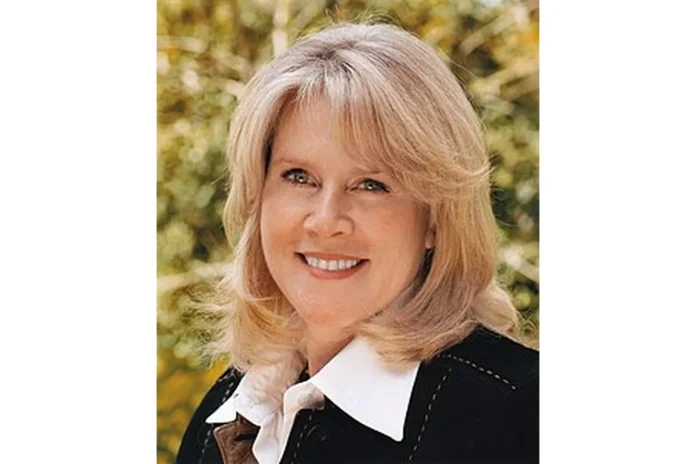
Tipper Gore Bio
Mary Elizabeth “Tipper” Gore (née Aitcheson; born August 19, 1948) is an American social issues advocate, author, and photographer who served as the second lady of the United States from 1993 to 2001. As the wife of Al Gore, the 45th vice president, she became one of the most visible advocates of her generation, focusing her public work on mental health awareness, homelessness, and the welfare of children and women. She is also widely known for co-founding the Parents Music Resource Center in 1985, a group that pushed for parental advisory labels on music with explicit content. Beyond her time in the White House, Gore has campaigned for LGBT rights and AIDS awareness, published photography books, and remained active in nonprofit and public service work.
Born in Washington, D.C., and raised in Arlington, Virginia, Gore built her career at the intersection of politics, advocacy, and the arts. Her experience as a photographer, drummer, and mental health counselor shaped a wide-ranging public life that continues to influence American conversations about family, music, and well-being.
Early Life and Background
Mary Elizabeth Aitcheson was born in Washington, D.C., on August 19, 1948. She is the daughter of John Kenneth “Jack” Aitcheson Jr., a plumbing-supply entrepreneur who owned J & H Aitcheson Plumbing Supply, and his first wife, Margaret Ann (née Carlson) Odom, whose first husband had been lost during World War II. After her parents divorced, Tipper was raised primarily by her mother and grandmother. Her mother gave her the lifelong nickname “Tipper,” drawn from a lullaby she had once heard.
Gore grew up in Arlington, Virginia, where she attended St. Agnes School, a private Episcopal school now known as St. Stephen’s & St. Agnes School, in nearby Alexandria. She played basketball, softball, and field hockey, and she joined an all-female band called the Wildcats as a drummer, an early hint of her lifelong love of music. In 1965, while still a teenager, she met Al Gore at his senior prom. Although she attended the dance with one of his classmates, the two began dating immediately afterward, beginning a relationship that would shape the rest of her public life.
Path to Public Advocacy
When Al Gore left for Harvard University, Gore enrolled at Garland Junior College, later transferring to Boston University, where she earned a Bachelor of Arts degree in psychology in 1970. On May 19, 1970, she married Al Gore at the Washington National Cathedral, and the couple settled into a life that would soon blend family, politics, and public service. She later pursued a master’s degree in psychology at Vanderbilt University’s George Peabody College, completing it in 1975.
Her transition into national advocacy began gradually. She worked part-time as a newspaper photographer for Nashville’s The Tennessean and continued as a freelance photographer in Washington after her husband was elected to the U.S. House of Representatives in 1976. The family moved into the public spotlight, and Gore used her platform to organize fellow political spouses around social issues, eventually forming groups that addressed homelessness, mental health, and family welfare.
Tipper Gore Career
Early Career (1976–1984)
Tipper Gore’s earliest public work grew out of her role as a congressional spouse. Soon after Al Gore was elected to the U.S. House of Representatives in 1976, she established the Congressional Wives Task Force, a group that examined and wrote about social issues. In 1984, she began volunteering in homeless shelters in the Washington area, an experience that reshaped her understanding of poverty in America and gave her a new focus for her advocacy.
Homelessness quickly became a central cause. She founded a group called Families for the Homeless, which worked to raise funds and awareness for people without stable housing. These early efforts in the 1980s laid the groundwork for the larger national campaigns she would lead during her years in the White House.
Parents Music Resource Center (1985–1990s)
In 1985, Tipper Gore co-founded the Parents Music Resource Center (PMRC) with Sally Nevius, Pam Howar, and Susan Baker, wife of then-Treasury Secretary James Baker. The group formed after Gore heard her then 11-year-old daughter Karenna playing Prince’s song “Darling Nikki” and grew concerned about the lack of information parents had about explicit content in popular music. The PMRC’s goal was to increase parental and consumer awareness of music containing explicit content by encouraging voluntary labeling of albums with Parental Advisory stickers.
The PMRC’s coalition included the National PTA and the American Academy of Pediatrics, and its efforts led the recording industry to voluntarily place warning labels on releases with violent or sexually explicit lyrics. The campaign drew strong criticism from musicians, including Frank Zappa, John Denver, Jello Biafra, and Dee Snider of Twisted Sister, who argued the labels were a form of censorship. Gore consistently maintained that her goal was consumer information, not censorship, and described herself as a strong believer in the First Amendment.
Second Lady of the United States (1993–2001)
As second lady from 1993 to 2001, Gore served as a mental health policy advisor to the president. Her work focused on diminishing the stigma surrounding mental illness and bringing attention to the need for affordable mental health care. In 1990, before her time in the White House, she had founded Tennessee Voices for Children to advance youth services for mental health and substance abuse, and she also co-chaired the National Mental Health Association’s Child Mental Health Interest Group.
During the Clinton administration, Gore hosted the first White House Conference on Mental Health in 1999 and launched the National Mental Health Awareness Campaign (NMHAC) to encourage Americans to seek treatment for mental illness. She frequently spoke about her own experience with depression and treatment following the near-fatal injury of her son Albert. Beyond mental health, she served as special advisor to the Interagency Council on the Homeless and as the national spokesperson for the “Back to Sleep” SIDS awareness campaign. In 1994, she visited a refugee camp and an orphanage in Zaire to assist in the aftermath of the Rwandan genocide, and in 1998, she traveled to Honduras following Hurricane Mitch to volunteer and bring medical supplies.
Advocacy for the LGBT Community and AIDS
Gore has been a long-time advocate for the LGBT community. In 1993, she represented the Clinton administration in the Washington, D.C. AIDS Walk, becoming one of the highest-ranking public officials ever to participate in the event. She continued to support such walks in later years, serving as an honorary chair of the Nashville AIDS Walk & 5K Run in 2013. In 2008, she was a public opponent of California’s Proposition 8, which sought to ban same-sex marriage. In 2014, she created an exhibition of her photographs at the Wall Space Gallery to support the Pacific Pride Foundation, an organization serving the HIV/AIDS and LGBTQ communities of Santa Barbara, California.
Photography, Music, and Public Service
A photographer since the 1970s, Gore has published several books of photography. Her photos have been included in exhibits, and her prints have been sold by Mitchell Gold Co. stores. She has also remained an active musician. In high school, she played drums in an all-female band called the Wildcats, and she has continued to perform publicly, sitting in on drums with members of the Grateful Dead during the Spring 2009 tour, appearing at the 2000 Equality Rocks concert, playing with Willie Nelson at Farm Aid that same year, and joining Herbie Hancock at the 25th Thelonious Monk International Jazz Competition in 2012.
In 2002, supporters urged her to run for the vacant U.S. Senate seat in Tennessee once held by her husband, but she declined. As of 2012, she served as co-chair of the advisory board of the Diana Basehart Foundation, which assists homeless and low-income people with animal care. She continues to promote mental health initiatives and other social causes through advocacy, writing, and public speaking.
Tipper Gore Family
Family Background and Public Lineage
Tipper Gore was born into a family shaped by both entrepreneurship and wartime loss. Her father, John Kenneth “Jack” Aitcheson Jr., built a plumbing supply business in the Washington area, while her mother, Margaret Ann (née Carlson) Odom, had lost her first husband during World War II. After her parents divorced, Gore was raised by her mother and grandmother, an upbringing that informed her lifelong interest in family stability and the welfare of children.
Personal Life
Tipper Gore married Al Gore on May 19, 1970, at the Washington National Cathedral. The couple were baptized at Mount Vernon Baptist Church in Arlington, Virginia, in 1980, where Tipper served as a deaconess. They have four children: Karenna Aitcheson Gore (born 1973), Kristin Carlson Gore Kulash (born 1977), Sarah LaFon Gore Maiani (born 1979), and Albert Arnold Gore III (born 1982), along with several grandchildren. In June 2010, the Gores announced their marital separation, describing it as a mutual decision made after long and careful consideration. Reports in 2012 indicated that both were dating other people but remained on friendly terms, reuniting a few times a year for family gatherings at the Gore family seat in Carthage, Tennessee.