

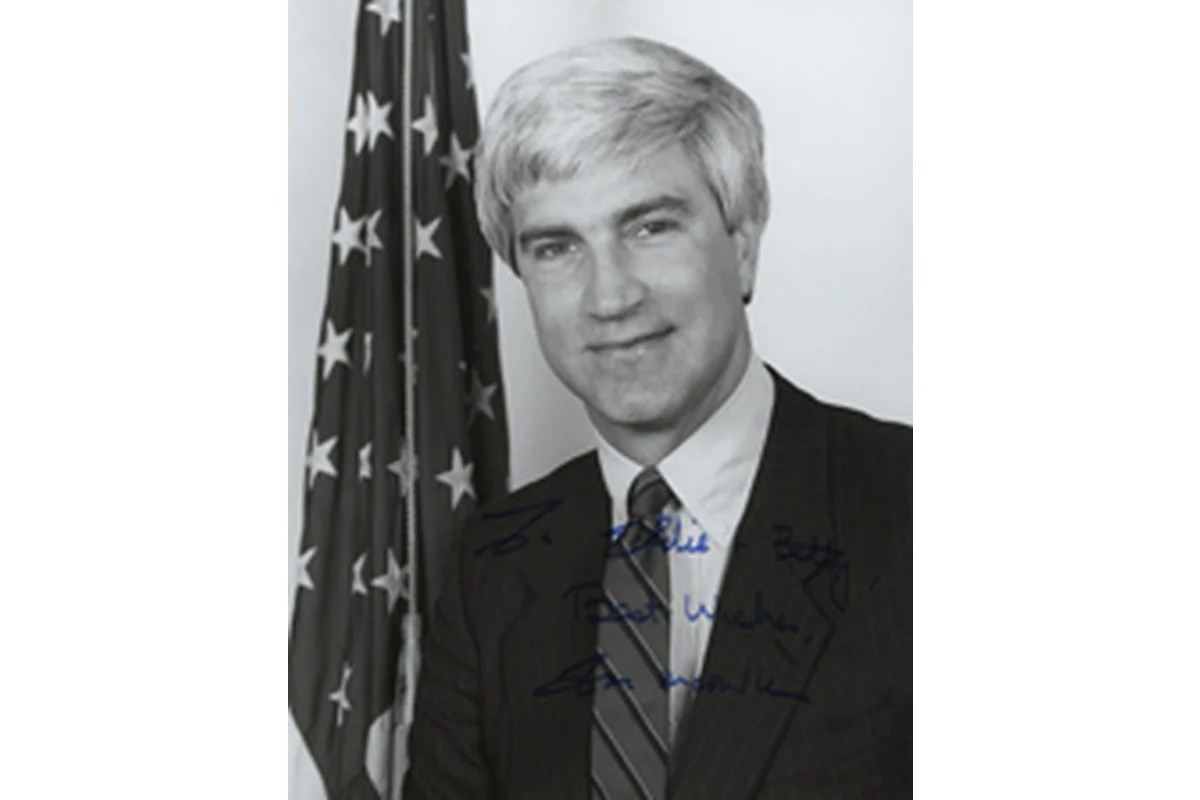
Tom McMillen Bio
Charles Thomas McMillen (born 26 May 1952) is an American politician, businessman, and former professional basketball player whose career has spanned athletics, public service, and sports policy leadership. A Rhodes Scholar, he earned a Bachelor of Science degree from the University of Maryland and later studied at University College, Oxford. He represented Maryland’s 4th congressional district in the United States House of Representatives from 1987 to 1993 as a member of the Democratic Party, and has continued to serve in influential roles within American sports governance.
Standing 6 feet 11 inches tall, McMillen is widely regarded as the tallest member ever to serve in the United States Congress. Following his time in elected office, he transitioned into business and advisory positions, including leading the Lead1 Association, an organization that represents athletic directors at Football Bowl Subdivision universities.
Early Life and Background
Charles Thomas McMillen was born on 26 May 1952 in Elmira, New York, in the United States. He grew up in Mansfield, Pennsylvania, where he attended Mansfield High School and became one of the most highly regarded young basketball talents in the country. In 1970, he was ranked as the number one high school basketball player in the United States, drawing recruitment interest from several of the most prominent college coaches of the era.
McMillen ultimately chose to attend the University of Maryland, College Park, where he played for the Terrapins from 1971 to 1974. He was a significant early recruit for head coach Lefty Driesell, beating out respected rivals Dean Smith of the University of North Carolina and John Wooden of the University of California, Los Angeles. In 1972, while still a college player, McMillen was a member of the United States Olympic basketball team that competed at the Munich Games, where the squad lost a controversial gold medal game to the Soviet Union.
McMillen earned his Bachelor of Science degree from the University of Maryland in chemistry, completing his studies in 1974. He then accepted a prestigious Rhodes Scholarship, which took him to University College, Oxford, where he continued his education and played for the Oxford University basketball team. During that period, he also commuted to Italy to play for the Italian club Virtus Bologna, gaining international professional experience before entering the National Basketball Association.
Path to US Politics
After completing his Rhodes Scholarship at Oxford, McMillen returned to the United States and began a professional basketball career that would last more than a decade. Selected with the ninth overall pick in the 1974 National Basketball Association draft by the Buffalo Braves, he also was chosen in the first round of the 1974 American Basketball Association draft by the Virginia Squires. He signed with the Braves but delayed his National Basketball Association debut in order to study at Oxford as a Rhodes Scholar.
Over an eleven-year professional career in the National Basketball Association, McMillen played for the Buffalo Braves, the New York Knicks, the Atlanta Hawks, and the Washington Bullets. He retired from professional basketball in 1986 in order to pursue a career in public service. His interest in politics had developed alongside his academic and athletic accomplishments, and he transitioned into electoral politics shortly thereafter.
In 1986, McMillen ran for the United States House of Representatives and won election as a Democrat to represent Maryland’s 4th congressional district. He began his service in Congress in 1987, becoming one of the few former professional athletes to hold a seat in the federal legislature at the time.
Tom McMillen Career
Early Career (1975-1986)
McMillen began his National Basketball Association career in 1975 with the Buffalo Braves after returning from his studies at University College, Oxford. Over the following years, he developed into a reliable forward, eventually playing for the New York Knicks, the Atlanta Hawks, and the Washington Bullets. His combination of height, athleticism, and academic background made him a distinctive figure in the league during the late 1970s and early 1980s.
During his time in professional basketball, McMillen also pursued international opportunities, playing for Virtus Bologna in Italy while studying at Oxford. His professional career concluded in 1986, when he stepped away from the game to focus on a new chapter in public service.
Congressional Career (1987-1993)
Tom McMillen was elected to the United States House of Representatives in 1986 and served as the Democratic representative for Maryland’s 4th congressional district from 1987 to 1993. His first congressional campaign received financial support from real estate developer and future president Donald Trump. During his three terms in Congress, McMillen became known for his interests in education, science policy, and sports issues.
After the 1990 census, Maryland’s 4th district was redrawn as a black-majority district under a Justice Department mandate. McMillen’s home in Crofton was placed in a reconfigured Eastern Shore-based 1st district, represented by first-term Republican Wayne Gilchrest. Although McMillen performed strongly in the more urbanized portions of the new district, he was unable to overcome Gilchrest’s margins on the Eastern Shore, and he lost his bid for reelection in 1992.
Sports Policy and Public Service Era (1993-Present)
Following his time in Congress, McMillen took on several leadership roles at the intersection of sports, health, and public policy. President Bill Clinton appointed him to chair the President’s Council on Physical Fitness and Sports, a position he held until November 1997, when he resigned after the Federal Bureau of Investigation raided a separate healthcare business he was running. No prosecution was ever brought in connection with the raid.
On March 22, 2011, McMillen was appointed as chairman of the inaugural Board of Directors of the President’s Foundation on Sports, Physical Fitness, and Nutrition. He is also the author of Out of Bounds, a book that critically examines the unhealthy influence of sports on ethics, and he served on the Knight Foundation’s Commission on Intercollegiate Athletics, which investigated abuses within college sports. In 2007, he was appointed to the University System of Maryland’s Board of Regents, where he served until June 30, 2015. He was again appointed to the Board of Regents in March 2023, succeeding Gary L. Attman.
In September 2015, McMillen was selected to lead the Division I-A Athletic Directors’ Association as the organization relocated from Dallas to Washington, D.C. He has continued to serve as President and Chief Executive Officer of the renamed Lead1 Association, which advocates for athletic directors at Football Bowl Subdivision universities.
Notable Events and Milestones
Among McMillen’s most significant career milestones are his election to the United States Congress in 1986, his appointment to chair the President’s Council on Physical Fitness and Sports under President Bill Clinton, and his 2011 appointment as chairman of the President’s Foundation on Sports, Physical Fitness, and Nutrition. He is widely regarded as the tallest member ever to serve in the United States Congress, standing 6 feet 11 inches tall, which is roughly two feet taller than Maryland Senator Barbara Mikulski.
Tom McMillen Family
Family Background and Public Service Connections
McMillen has built a family life that complements his long career in public service. He is married to Dr. Judith Niemyer, and the couple have lived in Fauquier County, Virginia, since 2010. His tall stature, intelligence, and discipline shaped by his academic and athletic experiences have carried into his family life and his continued service to community and country.
Personal Life
Beyond his roles in politics and sports leadership, McMillen has been an active presence in national conversations about athletic ethics, education, and physical fitness. He has authored published work on the influence of sports on ethics and has contributed to several national commissions examining college athletics. His life reflects a steady progression from academic and athletic distinction to legislative service and institutional leadership.