
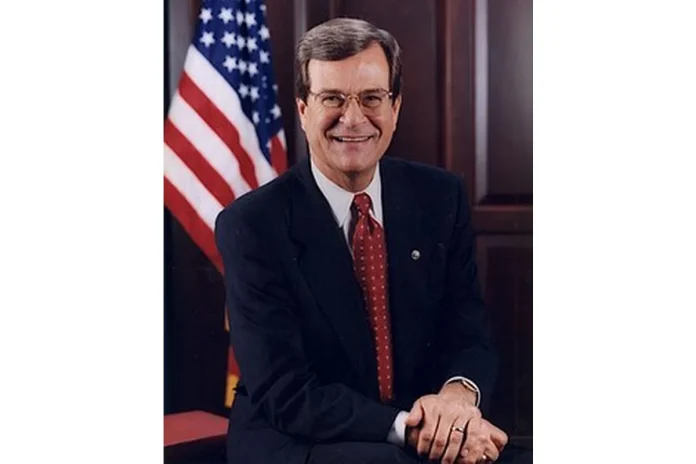
Trent Lott Bio
Chester Trent Lott Sr., known publicly as Trent Lott, is an American lobbyist, lawyer, author, and politician who represented Mississippi in both chambers of the United States Congress for more than three decades. A longtime Republican, he served in the U.S. House of Representatives from 1973 to 1989 before winning election to the U.S. Senate, where he served from 1989 to 2007. During his Senate career, Lott became one of the most powerful figures in American politics, holding the positions of Senate Majority Whip, Senate Majority Leader on two occasions, and Senate Minority Leader.
After leaving the Senate, Lott co-founded a prominent lobbying firm and has remained active in policy work, focusing on energy, transportation, national security, and congressional reform. He is also an author whose memoir offers an inside look at his political life and the controversies that shaped his final years in office.
Early Life and Background
Chester Trent Lott Sr. was born on 9 October 1941 in Grenada, Mississippi, and spent his early years in the small nearby community of Duck Hill. His father, Chester Paul Lott, sharecropped a stretch of cotton land, while his mother, the former Iona Watson, worked as a schoolteacher. Lott later described his early teachers in Duck Hill as among the best he ever had, crediting the public schools of rural Mississippi for shaping his early education. The family later moved to Pascagoula when Lott was in the sixth grade, where his father found work at a shipyard.
Lott attended the University of Mississippi in Oxford, where he earned a Bachelor of Arts degree in public administration in 1963 and a Juris Doctor degree in 1967. He was active in campus life, serving as a field representative for the university, president of his Sigma Nu fraternity, and a cheerleader on the same squad as Thad Cochran, who would later become a U.S. Senator from Mississippi.
Path to US Politics
Lott’s entry into national politics came through a staff position. From 1968 to 1972, he served as an administrative assistant to U.S. Representative William M. Colmer of Mississippi, who also chaired the House Rules Committee. Working closely with Colmer gave Lott firsthand experience in legislative procedure and built the relationships that would launch his own congressional career.
When Colmer retired in 1972 after four decades in the House, he endorsed Lott as his successor in Mississippi’s 5th Congressional District, even though Lott ran as a Republican. Lott won the seat handily, riding the political coattails of President Richard Nixon’s landslide victory in that year’s presidential election. He was one of the first Republicans elected to Congress from Mississippi since Reconstruction, marking the beginning of his long rise through the ranks of American political life.
Trent Lott Career
Early Career (1973–1988)
As a freshman in the U.S. House, Lott secured a seat on the powerful House Judiciary Committee, where he initially voted against the three articles of impeachment drawn up against President Richard Nixon. After the release of the Watergate transcripts, however, Lott reversed his position and announced he would support impeachment. He was easily re-elected six more times in his district, including one race in 1978 when he ran unopposed, becoming a fixture of Mississippi politics.
From 1981 to 1989, Lott served as House Minority Whip, making him the first Southern Republican to hold such a senior leadership position in the House. He also served as Mississippi’s state chairman for Ronald Reagan’s 1980 presidential campaign, further cementing his standing in the rising Reagan-era Republican coalition of the South.
Senate Era (1989–Present)
Lott won election to the U.S. Senate in 1988, succeeding the long-serving John C. Stennis, and took office the following year. He became Senate Majority Whip in 1995 when Republicans took control of the upper chamber, and in 1996 he won the position of Senate Majority Leader after Bob Dole resigned from the Senate to focus on his presidential campaign. Lott defeated his Mississippi colleague Thad Cochran in that leadership race by a vote of 44 to 8, promising a more aggressive style of leadership.
As Majority Leader, Lott managed the Senate’s impeachment trial of President Bill Clinton in 1999. After the 2000 elections produced a 50–50 split in the Senate, control briefly changed hands when Vice President Al Gore’s tie-breaking vote handed Democrats a temporary majority, but Lott was restored as Majority Leader seventeen days later when Dick Cheney became Vice President. In 2001, he became Senate Minority Leader after Vermont Senator Jim Jeffords switched his party affiliation to Independent and caucused with the Democrats.
Late Senate Years and Resignation (2002–2007)
Following Republican gains in the 2002 midterm elections, Lott was on track to become Senate Majority Leader again. However, on 5 December 2002, at the 100th birthday celebration of Senator Strom Thurmond, Lott made remarks praising Thurmond’s 1948 segregationist presidential bid, saying the country would have avoided many problems if others had followed Mississippi’s lead. The comments triggered significant controversy, and on 20 December 2002, Lott resigned as Senate Republican Leader.
Lott remained in the Senate for several more years, and on 15 November 2006, he regained a leadership position as Senate Minority Whip. He also voted with a bipartisan group of senators on issues such as stem cell research and Amtrak funding. He resigned his Senate seat effective 18 December 2007, citing both personal considerations and the lobbying restrictions of the new Honest Leadership and Open Government Act.
Post-Senate Career
After leaving the Senate, Lott co-founded the Breaux-Lott Leadership Group, a strategic advice, consulting, and lobbying firm, with former Louisiana Senator John Breaux in January 2008. The firm was later acquired by Patton Boggs, which itself merged with Squire Sanders in 2014 to form Squire Patton Boggs. Lott was eventually let go by that firm in June 2020 and joined the lobbying firm Crossroads Strategies shortly afterward. He has also served as a Senior Fellow at the Bipartisan Policy Center, focusing on energy, transportation, national security, and congressional reform.
Notable Events and Milestones
Among the signature moments of Lott’s career was his rise from Mississippi staff aide to one of the most powerful Republicans in Washington, including becoming the first Southern Republican to serve as House Minority Whip. He also coined the term “nuclear option” in 2003 to describe a parliamentary strategy. His 2005 memoir, Herding Cats: A Life in Politics, offered candid reflections on his career, including the controversy surrounding his 2002 remarks.
Trent Lott Career Wins
Trent Lott compiled a lengthy record of electoral victories during his time in Congress, winning multiple re-election campaigns in both the House and the Senate, often by wide margins. He served sixteen years in the U.S. House of Representatives and eighteen years in the U.S. Senate before resigning in late 2007.
House of Representatives Wins
Lott won his first House race in 1972 and went on to win re-election seven more times, serving Mississippi’s 5th District from 1973 to 1989. In 1974, he won a second term in a blowout despite a difficult national environment for Republicans following the Watergate scandal, and he later ran unopposed in 1978. His long string of comfortable House victories established him as a dominant figure in southern Mississippi politics.
Senate Wins
Lott first won his U.S. Senate seat in 1988, defeating Democratic Congressman Wayne Dowdy by almost eight points. He was re-elected three more times, in 1994, 2000, and 2006, and rarely faced substantive Democratic opposition in his later campaigns. In his final Senate race in 2006, he won with 64 percent of the vote against state representative Erik R. Fleming.
Trent Lott Family
Family Background and Personal Life
Lott was born into a working-class family in Grenada, Mississippi, and raised partly in nearby Duck Hill, where his father sharecropped cotton and his mother taught school. His upbringing in small-town Mississippi shaped his early political outlook and his enduring ties to the state.
Personal Life
Trent Lott married Patricia Thompson on 27 December 1964, and the couple has two children: Chester Trent “Chet” Lott Jr. and Tyler Lott. Lott is a Freemason, holding the Grand Cross in the Southern Jurisdiction of the United States in the Ancient and Accepted Scottish Rite. He is also a former cheerleader, an avid Ole Miss supporter, and has been honored as an Honorary Patron of the University Philosophical Society at Trinity College Dublin.