

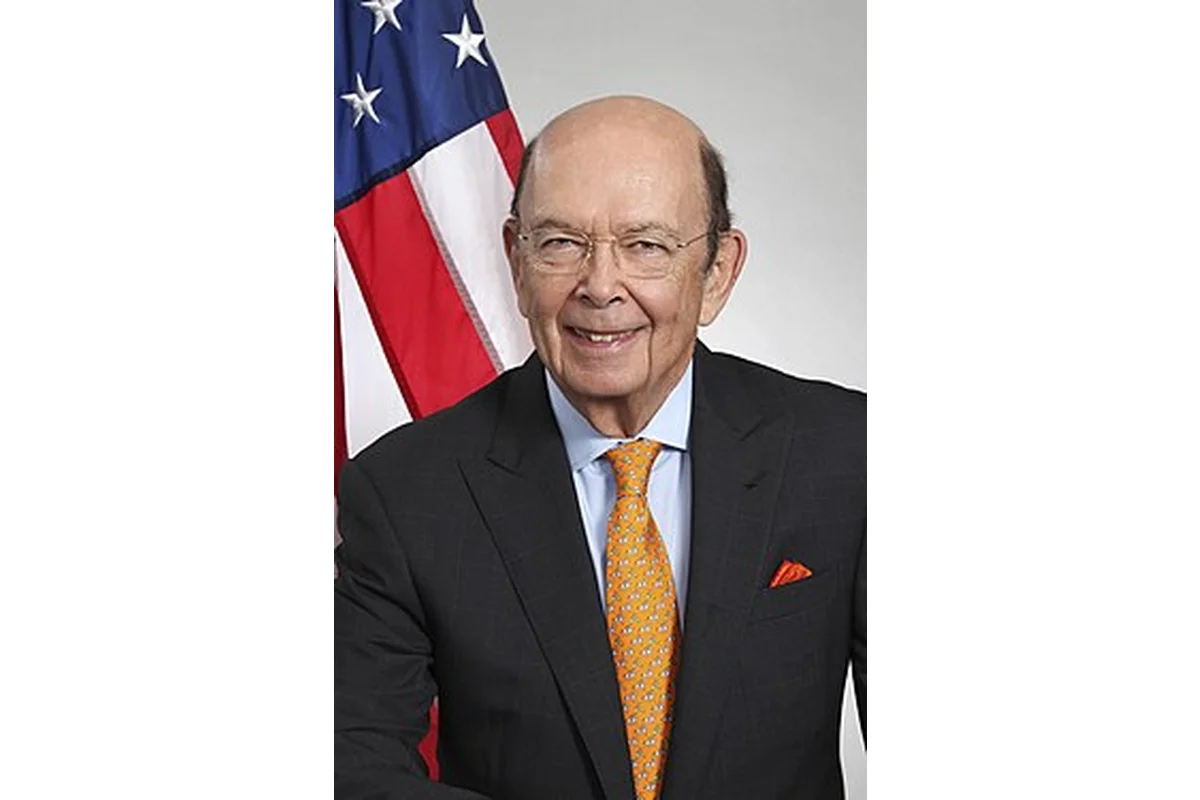
Wilbur Ross Bio
Wilbur Louis Ross Jr. is an American businessman, investor, and politician who served as the 39th United States Secretary of Commerce from 2017 to 2021. Before entering government, he built a long career in investment banking, working on some of the largest corporate restructurings in modern American history. He later founded WL Ross & Co, where he specialized in buying and reviving struggling companies in steel, coal, textiles, and automotive parts. His reputation for working with troubled firms earned him the well-known nickname “King of Bankruptcy.” A member of the Republican Party since 2016, he is among the most closely watched businessmen to have joined a presidential cabinet in recent decades.
Early Life and Background
Wilbur Louis Ross Jr. was born on November 28, 1937, in Weehawken, New Jersey, and grew up in nearby North Bergen, New Jersey. His father, Wilbur Louis Ross, was a lawyer who later became a judge, and his mother, Agnes O’Neill, was of Irish descent. She had been valedictorian at Sacred Heart Academy in Hoboken and taught third grade in North Bergen for 40 years. Coming from a family that valued public service, law, and education, Ross was raised in a stable household in the New York metropolitan area.
Ross attended Xavier High School, a Catholic college-preparatory school in Manhattan, where he graduated in 1955. At Xavier, he was active in school life, running track and serving as captain of the rifle team. He then enrolled at Yale College, his father’s alma mater, earning a Bachelor of Arts degree in 1959. During his time at Yale, he edited a literary magazine and worked at the university radio station. He later continued his studies at Harvard Business School, where he completed a Master of Business Administration degree in 1961.
Path to US Politics
After finishing business school, Ross began his career on Wall Street, joining the investment world at a time when corporate finance was rapidly changing. He spent more than two decades at N M Rothschild & Sons in New York, eventually leading the firm’s bankruptcy restructuring practice. In that role, he worked on some of the most important corporate failures of the late 20th century, including the bankruptcies of Drexel Burnham Lambert, Texaco, Public Service of New Hampshire, and Eastern Air Lines.
During the 1990s, Ross became more directly involved in public matters. New York City Mayor Rudy Giuliani appointed him as his privatization adviser, and he helped push to privatize the city’s public broadcasting stations and parts of the Port Authority of New York and New Jersey. President Bill Clinton also appointed him to the board of the U.S. Russia Investment Fund. Although he was long registered as a Democrat, Ross became a registered Republican in November 2016. Shortly after, President-elect Donald Trump announced him as his nominee for Secretary of Commerce.
Wilbur Ross Career
Early Career (1961–2000)
Wilbur Ross’s first job on Wall Street came in 1963, when he joined Wood, Struthers & Winthrop, where he liquidated the portfolio of a venture capital affiliate. He then moved to Faulkner, Dawkins & Sullivan, an institutional securities research firm, eventually rising to president of its investment banking operation. That firm was later sold to what became Shearson Lehman, giving Ross early experience in the rapidly consolidating securities industry.
In 1976, Ross joined the New York office of Rothschild & Co, beginning a 24-year tenure that would define his professional reputation. As a senior managing director, he led the firm’s bankruptcy restructuring advisory practice and became involved in eight of the 25 largest bankruptcies in American history to that point. Among the most notable cases was his representation of investors in Donald Trump’s three Atlantic City casinos in the 1980s. Working with Carl Icahn, Ross helped negotiate a deal that allowed Trump to retain control of the casinos and avoid foreclosure. By the late 1990s, Ross had become one of the most sought-after restructuring bankers in the country.
WL Ross & Co Breakthrough (2000–2006)
In 2000, Wilbur Ross left Rothschild to found WL Ross & Co, raising $450 million to acquire his former fund and make new investments. The firm quickly earned strong returns, averaging 30 percent annually by 2003. Ross focused on buying distressed companies in industries like steel, coal, textiles, and automotive parts, often acquiring them for pennies on the dollar, restructuring operations, and later selling them at significant profits.
One of his most high-profile deals was the formation of International Steel Group in 2002, which acquired the assets of bankrupt Ling-Temco-Vought for $325 million. A year later, the firm acquired bankrupt Bethlehem Steel, with Ross shifting the companies’ pension liabilities to the government-backed Pension Benefit Guaranty Corporation. In 2005, Ross sold International Steel Group to Mittal Steel Company for $4.5 billion, personally earning $260 million on a $3 million investment. The same year, he also combined Burlington Industries and Cone Mills to form International Textile Group, and he acquired a controlling stake in Safety Components International. In 2006, Ross sold WL Ross & Co to Amvescap, the parent company of Invesco.
Secretary of Commerce Era (2017–2021)
On November 30, 2016, President-elect Donald Trump announced Ross as his nominee for Secretary of Commerce. The United States Senate confirmed him on February 27, 2017, in a 72–27 vote, and he was sworn in the following day. At 79, Ross became the oldest first-time Cabinet appointee in American history, surpassing the previous record set by Secretary of Commerce Philip Klutznick in 1980.
As Secretary of Commerce, Ross played a central role in shaping the Trump administration’s trade policy. He was involved in decisions to impose tariffs on steel and aluminum imports from the European Union, Canada, and Mexico, and he supported President Trump’s confrontational approach to trade with China. Ross also oversaw the United States Census Bureau and was at the center of the controversial effort to add a citizenship question to the 2020 Census, a move that was ultimately blocked by the Supreme Court. He departed office in January 2021 at the end of the Trump administration, and in July 2021, the Chinese government sanctioned him as part of reciprocal counter-sanctions.
Notable Events and Milestones
Among the most defining moments of Ross’s career was his 2017 confirmation as Secretary of Commerce at the age of 79, making him the oldest first-time Cabinet appointee in U.S. history. His tenure was marked by high-profile involvement in trade policy, the contested 2020 Census citizenship question, and questions about conflicts of interest and financial disclosures. In 2019, the House of Representatives held Ross in contempt of Congress, only the second time in U.S. history that a sitting Cabinet member had received such a designation.
Wilbur Ross Career Wins
Wilbur Ross built his reputation on a series of highly successful restructurings of troubled companies in core American industries. Over more than four decades, he helped reshape major sectors of the U.S. economy and generated substantial returns for his investors, earning him the nickname “King of Bankruptcy.”
WL Ross & Co Highlights
Among Ross’s most celebrated achievements was the 2005 sale of International Steel Group to Mittal Steel Company for $4.5 billion, which delivered a return of roughly 12.5 times his original investment. He also combined Burlington Industries and Cone Mills into International Textile Group, acquired Safety Components International, and founded International Coal Group, which was later sold to Arch Coal for $3.4 billion in 2011. His investment in Bank of Cyprus in 2014, made jointly with other investors, made him vice-chairman of the largest bank in Cyprus.
Other Wins & Achievements
Beyond business, Ross received several major honors in recognition of his public and private work. In 1999, he was awarded the Order of Industrial Service Merit medal by South Korean President Kim Dae Jung for his assistance during the 1997 Asian financial crisis. In 2014, he received the American Irish Historical Society Gold Medal in recognition of his work in Ireland and Irish-American causes. The Japanese government also awarded him the Order of the Rising Sun, Gold and Silver Star for his service as Chairman of the Board of New York’s Japan Society and his relief efforts after the 2011 Tōhoku earthquake and tsunami.
Wilbur Ross Family
Family Background and Political Lineage
Wilbur Ross was raised in a family that valued law, education, and public service. His father, Wilbur Louis Ross, was a lawyer who later became a judge, and his mother, Agnes O’Neill, was a dedicated elementary school teacher for four decades. He grew up alongside siblings in the close-knit New Jersey communities of Weehawken and North Bergen before moving on to a Catholic preparatory school and two of the nation’s most prestigious universities.
Personal Life
Ross married Judith Nodine in 1961, and the couple had two daughters, Jessica Colby Ross and Amanda Colby Ross, before divorcing in 1995. Later that year, he married Betsy McCaughey, the former Lieutenant Governor of New York, divorcing in 2000. On October 9, 2004, Ross married his current wife, Hilary Geary Ross, a society writer for Quest magazine. The couple has lived in Washington, D.C., where Ross has owned property since 2016.